
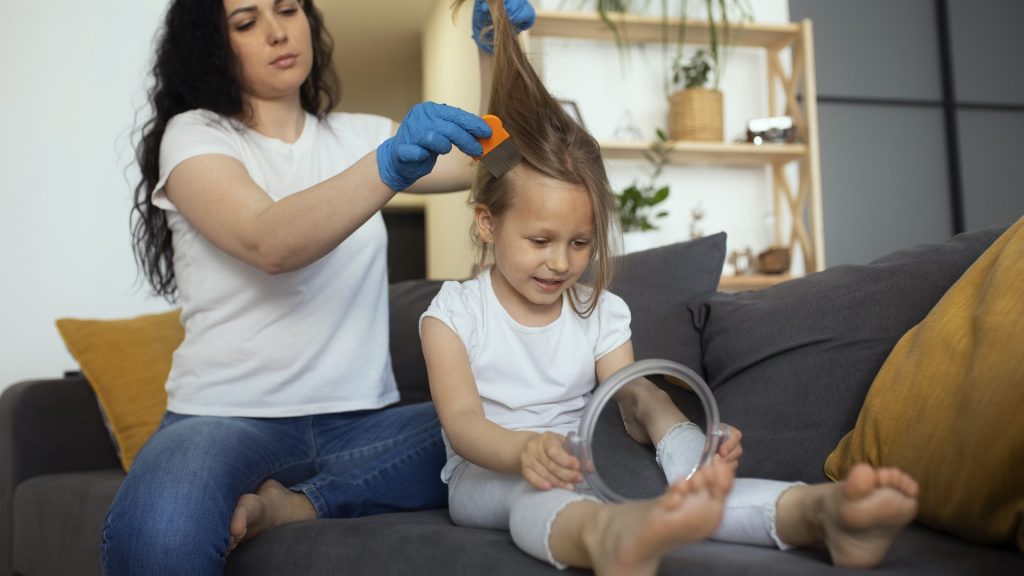
A louse can reach your child’s head through head-to-head contact and start feeding right away, and at first you may see and feel nothing. The Centers for Disease Control and Prevention says nits hatch in about a week; the American Academy of Pediatrics says lice reach adulthood 9 to 12 days after hatching. Itching can take 4 to 6 weeks the first time. So a head check is the earliest way to know, and one clean check is not a final all-clear: lice are small, move quickly and avoid light.
This article walks through the lice exposure timeline: when nits and nymphs appear, what the CDC and AAP say about hatching and multiplying, why itching lags, when we suggest checking again, and what a clean check does not rule out.
The Lice Exposure Timeline at a Glance
| When | What the CDC and AAP say is happening | Source |
|---|---|---|
| Day 0, the contact | Head-to-head contact is the most common way to get head lice (CDC) and the main way they spread (AAP). Lice move by crawling and cannot hop or fly. A person can have lice and no symptoms. | CDC, AAP |
| Within days | An adult female can lay about six eggs each day (CDC), up to 10 a day (AAP), attached to hair close to the scalp, usually within 4 to 6 mm (AAP). | CDC, AAP |
| About one week | Nits hatch into nymphs: about a week, range 6 to 9 days (CDC); 7 to 12 days depending on the surrounding temperature (AAP). | CDC, AAP |
| One to two weeks later | Nymphs become adults: about seven days to mature (CDC); about 9 to 12 days after hatching, roughly 12 to 14 days from egg to adult (AAP). | CDC, AAP |
| About three weeks | The cycle can repeat every 3 weeks if head lice are left untreated (AAP). An adult can live about 30 days on a head (CDC), about 28 days (AAP). | CDC, AAP |
| 4 to 6 weeks | A first-time itch may begin: four to six weeks for itching to appear the first time (CDC); up to 4 to 6 weeks before the scalp becomes sensitive to lice saliva (AAP). | CDC, AAP |
Here is how we suggest using that table: write down the date of the contact, because every later check is counted from it. Check that day. Check again at about one week, when the first nits could be hatching. Then keep checking until the 4 to 6 week itch window has passed. That is our practical reading of the sourced timings, not a CDC or AAP instruction.
How Long After Lice Exposure Do You See Nits or Eggs?
Nits can be on the hair within days of the contact, as soon as an adult female starts laying, but neither source gives a day count from contact to the first nit you can see. The CDC says an adult female can lay about six eggs each day; the AAP says up to 10 a day. Both describe the same placement: the AAP says lice lay and attach their eggs to hair close to the scalp, usually within 4 to 6 mm, and that eggs do not survive if they are farther away. Nits attach with a sticky substance that holds them firmly in place.
That placement is also how you read what you find. The CDC says nits attached more than a quarter inch from the base of the hair shaft are almost always hatched or dead, so a speck sitting well out along the hair is probably from an older problem. And a nit on its own is not proof of live lice: the CDC says finding a live nymph (a baby louse) or adult louse on the scalp or hair is the best way to diagnose an infestation, and that misdiagnosis of head lice is common. If you are not sure what you are holding, here is what a lice egg looks like up close.
Is There an Incubation Period for Lice?
Not in the way a cold or the flu has one. The CDC describes head lice as parasitic insects that feed on human blood, and says head lice do not transmit any disease. There is no germ taking hold, so neither the CDC nor the AAP publishes an incubation period for a lice exposure, and we are not going to invent one.
The question points to one of two real waits. The first is hatching: the CDC puts it at about a week, with a range of 6 to 9 days, and the AAP at 7 to 12 days depending on the surrounding temperature. The second is the itch. The CDC says it may take four to six weeks for itching to appear the first time a person has head lice, which is one reason lice can be present before anyone notices. If you want the mechanics, here is why lice make your head itch.
How Fast Do Lice Multiply?
Fast enough that one check is not a plan. Here is the whole published pace of a head lice life cycle, with each figure credited to the page it comes from.
- Eggs per day: about six eggs each day from an adult female (CDC); up to 10 a day (AAP).
- Hatching: about a week, range 6 to 9 days (CDC); 7 to 12 days depending on temperature (AAP).
- Growing up: nymphs take about seven days to mature into adult lice (CDC); nymphs become adults about 9 to 12 days after hatching, roughly 12 to 14 days from egg to adult (AAP).
- Adult lifespan on a head: about 30 days (CDC); about 28 days (AAP).
- Repeat: the cycle can repeat every 3 weeks if head lice are left untreated (AAP).
We do not multiply those figures into a count of lice or nits, because neither page gives one. What they give you is timing. An adult female can be laying within days, the first of those nits can hatch about a week later, and the lice that hatch can be adults a week or two after that. That is exactly why a second check about a week after the contact is worth more than a single look on day one: there is simply more to find. For the stage-by-stage detail, read the stages of the head lice life cycle.
What Are the Chances of Getting Lice After an Exposure?
Neither the CDC nor the AAP publishes a percentage, so we will not give you one either. What they do say still narrows the question a lot.
The CDC says the most common way to get head lice is head-to-head contact with a person who already has head lice, and the AAP says the main way they spread is close, prolonged head-to-head contact. Head lice move by crawling and cannot hop or fly (CDC), so a louse cannot jump or fly from one head to another. Shared items are a much smaller route: the AAP says there is a very small chance head lice will spread by sharing items such as combs, brushes, hats and sports helmets, and the CDC says catching lice from a wig or hairpiece is extremely unlikely. Away from a head the clock is short, with the CDC giving two days if lice fall off a person and cannot feed, and the AAP saying they cannot survive more than 1 day without a blood meal. So the contact that matters is hair to hair, which is also why the CDC says getting head lice is not related to cleanliness of you or your environment. For more, read how a child catches head lice.
Can Someone Pass Lice On Before They Start Itching?
Yes. The CDC says people with head lice may not have symptoms, particularly with a first infestation or when an infestation is light, so no itching does not mean no lice, in your child or in the person they were with. That is the awkward part of a lice exposure: the people who can pass lice on may be the ones who do not know yet.
Neither page gives a point at which a person starts being able to pass head lice on, so there is no waiting period to quote. What the AAP does say is practical: all household members and close contacts should be checked and treated for head lice if necessary. In a house with more than one child, that means checking everyone, not only the child you know was in contact, and we have written separately about whether siblings should be checked.
Why Does Itching Take Weeks to Start?
Because the itch is an allergic reaction, not a reaction to movement. The CDC says the itching is an allergic reaction to louse bites, and that it may take four to six weeks for itching to appear the first time a person has head lice. The AAP puts it from the other side: it may take up to 4 to 6 weeks after lice get on the scalp before the scalp becomes sensitive to the lice saliva. Itching is the most common symptom (CDC), and the AAP says most of the itching happens behind the ears or at the back of the neck, which is where we suggest looking first.
Two other things follow. The AAP says itching caused by head lice can last for weeks, even after the lice are gone, so an itchy scalp after treatment is not by itself proof that treatment failed. And itching is not the only sign: the CDC also lists a tickling feeling or a sensation of something moving in the hair, irritability and sleeplessness, and sores on the head caused by scratching, which can sometimes become infected with bacteria normally found on your skin. There is more on why lice make your head itch if you want the detail.
What Happens in the First 24 to 48 Hours After Lice Exposure?
Possibly nothing you can see or feel. The CDC describes head lice as parasitic insects that feed on human blood and says they move by crawling, so a louse that transferred during contact is on the scalp and feeding. If it is an adult female, the CDC says she can lay about six eggs each day and the AAP says up to 10, attached to hair close to the scalp. None of that has to produce a symptom: the CDC says people with head lice may not have symptoms, particularly with a first infestation or when an infestation is light.
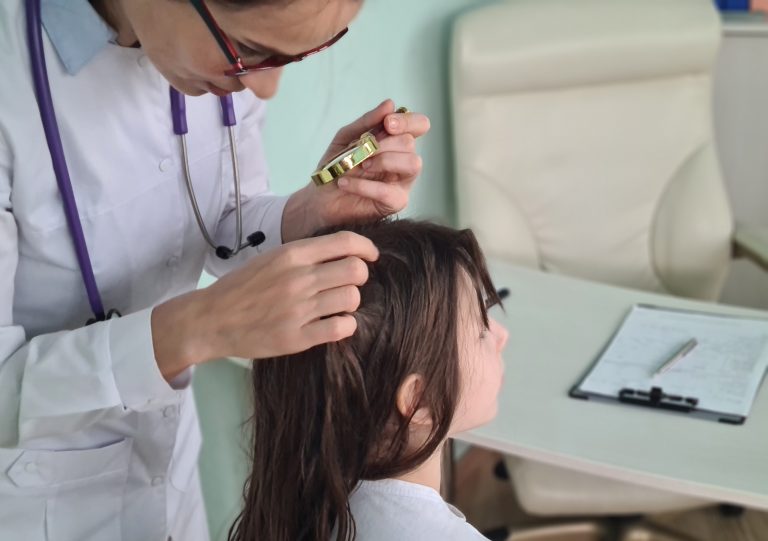
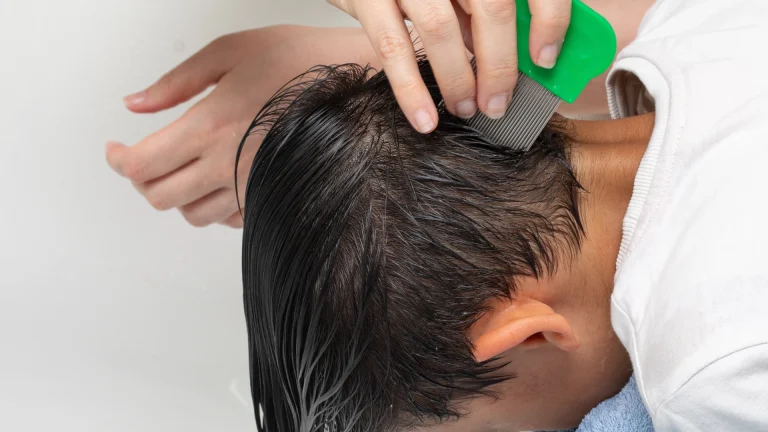
A careful check that day is still worth doing, because the CDC says finding a live nymph or adult louse on the scalp or hair is the best way to diagnose a head lice infestation. Just know what you are up against. The CDC says that because adult and nymph lice are very small, move quickly and avoid light, they may be difficult to find, and that misdiagnosis of head lice infestation is common. Our suggestion is to work in good light and in small sections rather than a quick look, and here is how to check your child’s hair for lice.
When Should You Check Again After an Exposure?
Our suggestion is three points: a check on the day you hear about the contact, another at about one week, and then regular checks until the 4 to 6 week itch window has passed. Neither the CDC nor the AAP publishes a re-check schedule for an exposure. This one is ours, built from their numbers.
The day-of check can find a louse that is already there, and the CDC calls a live nymph or adult the best way to diagnose. The one-week check lines up with hatching: about a week, range 6 to 9 days (CDC), or 7 to 12 days (AAP), so a nit laid in the first days may have become a nymph. Carrying on past that covers the gap the CDC describes, where first-time itching may take four to six weeks to appear. The AAP says household members and close contacts should be checked too, and the CDC says that if you are not sure whether a person has head lice, see your healthcare provider. If cases are going around a group your child is part of, here is how often to check during an outbreak.
How Long Have I Had Lice? What You Find Can Hint at It
You cannot date an infestation exactly, but two sourced details narrow it. The first is distance from the scalp: the CDC says nits attached more than a quarter inch from the base of the hair shaft are almost always hatched or dead, and that if only such nits are found and no live lice, the infestation is probably old and does not need treatment. The second is the itch delay: because the CDC says first-time itching may take four to six weeks to appear, a child who has just started scratching may have had lice for weeks.
So one live louse close to the scalp is a different picture from old casings sitting well out along the hair, but neither gives you a date. The CDC says that if you are not sure whether a person has head lice, see your healthcare provider. We have also written about whether one louse counts as an infestation.
What Happens If a Lice Exposure Goes Untreated?
The cycle keeps going. The AAP says the cycle can repeat every 3 weeks if head lice are left untreated, and that if your child has head lice you should work quickly but safely to treat your child and keep the lice from spreading. What untreated lice are not is dangerous in themselves: the CDC says head lice do not transmit any disease and therefore are not considered a health hazard. The complication it does name is scratching, which can cause sores on the head that can sometimes become infected with bacteria normally found on your skin.
On treatment, the CDC says both prescription and over-the-counter medications treat head lice infestations, and its treatment page says to consult your healthcare provider before treating young children. The same page sets the follow-up: after each treatment, check hair and remove nits and lice every 2 to 3 days for the next 2 to 3 weeks. That follow-up is the easy part to let slide, which is why we wrote about still finding nits after treatment and when crawling after treatment means a recheck. For the longer view, see what happens if you don’t treat lice.
Frequently Asked Questions About Lice Exposure
How soon after exposure can you see signs of lice?
There may be nothing to see in the first days. Nits can be laid close to the scalp within days of contact, and the CDC says they hatch in about a week, range 6 to 9 days, while the AAP says 7 to 12 days. A first-time itch is slower: the CDC says it may take four to six weeks to appear. A head check is the earliest way to know.
How long after a lice exposure should I do a head check?
Our suggestion is to check on the day you hear about it, again at about one week, when the first nits could be hatching, and then regularly until the 4 to 6 week itch window has passed. Neither the CDC nor the AAP publishes a re-check schedule after a lice exposure; this one is ours, built from their hatching and itch timings.
How fast do lice multiply?
The CDC says an adult female can lay about six eggs each day; the AAP says up to 10. Nits hatch in about a week, range 6 to 9 days (CDC), or 7 to 12 days (AAP). Nymphs then take about seven days to mature (CDC), or become adults 9 to 12 days after hatching (AAP). The AAP says the cycle can repeat every 3 weeks if lice are left untreated.
Why did my child not itch right away?
Because itching is an allergic reaction that takes time to develop. The CDC says the itch is an allergic reaction to louse bites and that it may take four to six weeks for itching to appear the first time a person has head lice. The AAP says it may take up to 4 to 6 weeks after lice get on the scalp before the scalp becomes sensitive to the lice saliva.
How long can lice live if they fall off the head?
Not long. The CDC says head lice will die within two days if they fall off a person and cannot feed, and the AAP says they cannot survive more than 1 day without a blood meal. On a head, an adult can live about 30 days (CDC) or about 28 days (AAP). Here is more on how long lice survive off the scalp.
Are you in the clear if the first check finds nothing?
Not yet, and no CDC or AAP page gives a date after which you are in the clear. The CDC says adult and nymph lice are very small, move quickly and avoid light, so they may be difficult to find, and that people may have no symptoms with a first or light infestation. First-time itching can take four to six weeks. That is why we suggest a repeat check instead of treating one clean look as final.
Worried About a Recent Lice Exposure?
You do not have to wait for itching to find out where you stand. A head check is a short, calm way to answer the question. Lice Lifters of Chester County offers head checks and professional lice treatment that is non-toxic and takes one visit, for families in West Chester, Downingtown, Exton, Malvern, Phoenixville, Coatesville and across Chester County. If your child may have been in contact with lice, book a head check and we will take a careful look.