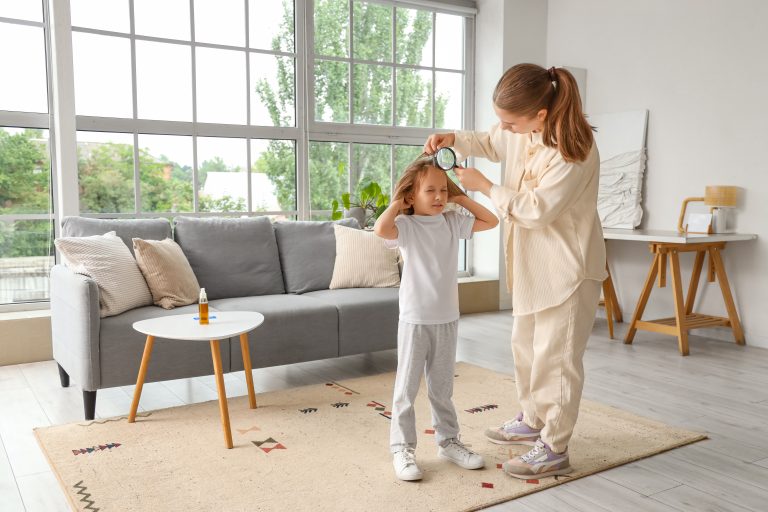
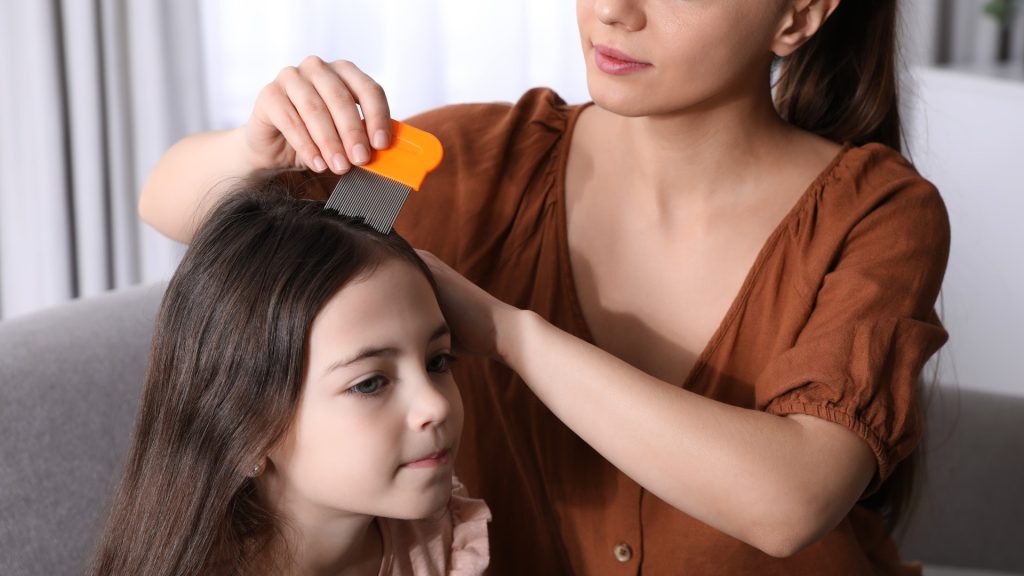
Use a lice comb on wet hair, one small section at a time: set the fine teeth against the scalp, pull through to the ends, then wipe the comb on a wet paper towel and look at what came off. That is the comb-out method the American Academy of Pediatrics (AAP) describes. After a treatment, the AAP and the CDC’s treatment guidance say to check and remove nits and lice every 2 to 3 days for 2 to 3 weeks. A comb finds and removes; it works alongside treatment.
The reason to comb carefully is what treatment can leave behind. The CDC notes that nits may stay in hair after treatment, even when successful treatment kills the crawling lice, and it points to nit combs for removing nits and lice from the hair shaft. A nit takes about a week to hatch, so a section skipped today can hold a young louse by next week. The AAP adds that removing nits may help ease a child’s or teen’s embarrassment.
Which Comb Do the CDC and AAP Point To?
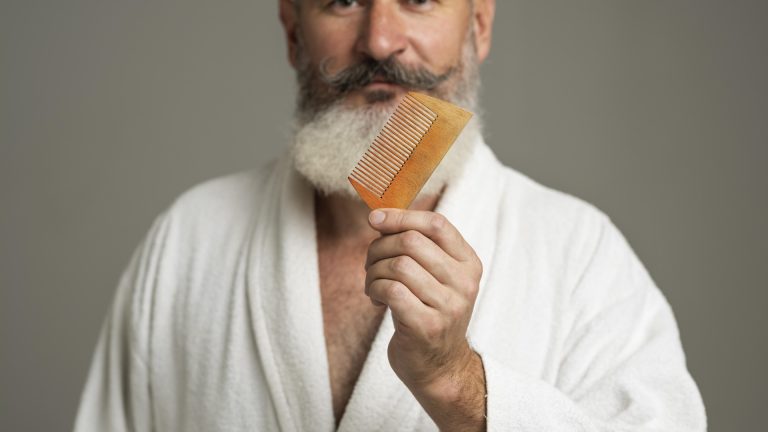
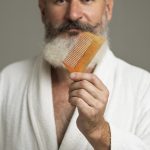
Both point to a fine-toothed louse or nit comb, and both describe it by its close-set teeth rather than by what it is made of. The CDC says a fine-toothed louse comb may help you find lice, and its treatment guidance adds that flea combs made for cats and dogs are also effective. The AAP asks for a fine-tooth comb, such as a louse or nit comb. If you searched for how to use a metal lice comb, the answer is the same method: what matters is fine, close-set teeth, so the steps below apply to whichever fine-tooth comb you have.
Set everything out before anyone sits down, so the session does not stall halfway through:
- A fine-tooth louse or nit comb.
- A brightly lit room. The AAP’s own checking advice starts by seating the child in one.
- A magnifying lens, if you have one. The CDC says a lens may help you find crawling lice or nits.
- Water to wet the hair, plus paper towels you can dampen for wiping the comb.
- Clips or hair ties to keep finished sections apart from the hair you have not reached yet.
Give each person their own comb while lice are in the house. The CDC advises against sharing combs, brushes or towels.
How Do You Comb Out Lice and Nits, Section by Section?
Wet the hair, comb it in small sections from the scalp outward, and inspect the comb and towel after every pass until the whole head is done. The AAP lays the method out in four steps:
- Wet the hair.
- Comb through the hair in small sections with a fine-tooth louse or nit comb.
- After each comb-through, wipe the comb on a wet paper towel, then look closely at the scalp, the comb and the towel.
- Repeat steps 2 and 3 until every part of the hair has been combed.
Where each stroke begins matters. The AAP explains that lice lay and attach their eggs to hair close to the scalp and that eggs do not survive farther than 4 to 6 mm from it, and the CDC tells you to look for nits attached firmly within a quarter inch of the base of the hair shaft. Start every pass with the teeth against the scalp so the comb begins where the eggs are, not partway down the strand.
Two areas deserve a slow first look. The AAP names the hairline at the back of the neck and the area behind the ears as the easiest places to search, and the CDC says, “You will often see nits on hair behind the ears and near the back of the neck.” Starting there gives you an early read, but step 4 still applies: the whole head gets combed, including the crown and the temples.
Expect live lice to be hard to catch. The AAP notes that live lice are hard to find because they avoid light and move quickly. If a scurrying louse makes you doubt the comb, our post on how fast lice actually move explains what you are up against. The comb-out itself starts with wet hair; a quick look on dry hair is a different job, and whether to check for lice on wet or dry hair covers when each one fits.
What Are You Looking at on the Comb?
Sort whatever lands on the towel into three groups, live lice, nits and look-alikes, and judge each by size, shape and whether it was stuck to a hair. The descriptions below come from the AAP and the CDC’s overview of head lice.
| What you find | How the CDC and AAP describe it | What it tells you |
|---|---|---|
| Adult louse | About 2 to 3 mm long, roughly the size of a sesame seed; pale and gray in the AAP’s description, with color that may vary | A live louse. The CDC calls finding a live adult or nymph the best way to diagnose head lice. |
| Nymph (young louse) | Looks like an adult but much smaller, about the size of a pinhead | Also a live louse. The CDC says nymphs take about seven days to mature into adults. |
| Nit (egg) | Oval, about 0.8 mm long and 0.3 mm wide, yellow to white; held to the hair by a sticky substance | Within a quarter inch of the scalp, worth attention. Farther out, the CDC says nits are almost always hatched or dead. |
| Dandruff, dirt or hair spray droplets | Easy to mistake for nits, but not attached to the hair | Not lice. The AAP’s test is attachment: nits are firmly attached, these particles are not. |
The attachment test works best on the strand itself, before the comb pulls a speck loose. Something that slides off a hair with a light touch is not behaving like a nit, while a speck fixed in place near the scalp deserves a closer look under the lens. The CDC is candid that “misdiagnosis of head lice infestation is common,” and it suggests seeing a healthcare provider if you are not sure.
If the towel shows a single louse or a couple of nits, read whether one louse or a few nits counts as an infestation. Light hair adds its own wrinkle: the AAP notes that some nits blend in with hair color, which is why we wrote about how nits hide in blonde hair.
Should You Use Conditioner When Combing for Nits?
Not before lice medicine. The CDC says, “Do not use a combination shampoo/conditioner, or conditioner, before using lice medicine,” and it lists recent conditioner on the hair among the reasons a lice treatment can fail.
The AAP comb-out steps do not include conditioner either; they call for wet hair and a fine-tooth comb.
Timing after medicine matters as well. The CDC advises against re-washing the hair for 1 to 2 days after the lice medicine is removed. Read the box or label before anything goes on the hair; the AAP stresses following manufacturer instructions exactly as written. If the label and your combing plans seem to pull in different directions, ask your child’s doctor before going ahead.
How Many Days Should You Keep Combing?
Keep combing every 2 to 3 days for 2 to 3 weeks after each treatment. MedlinePlus states the purpose plainly: “Do this for 2-3 weeks to be sure that all lice and nits are gone.”
That window comes from how lice develop. The CDC and the AAP give slightly different ranges, shown side by side here:
| Stage | CDC | AAP |
|---|---|---|
| Egg to hatching | About a week (6 to 9 days) | 7 to 12 days, depending on the surrounding temperature |
| Hatched louse to adult | About seven days | About 9 to 12 days after hatching |
| Life of an adult on the head | About 30 days | About 28 days |
Put together, a nit missed on one day can hatch and grow within the next week or two, which is why the guidance spreads combing across weeks instead of relying on one long session.
If you have seen a fixed calendar of numbered combing days, the CDC and the AAP describe a rhythm of every 2 to 3 days instead. Mark the dates on a calendar and keep going for the full 2 to 3 weeks, even when a session turns up nothing.
Combing does not decide whether to treat again; the medicine’s label and your doctor do. The CDC explains that some medicines kill both lice and eggs, while others kill lice but not eggs and call for a second treatment about a week later (7 to 9 days, depending on the drug). Our post on what kills lice eggs goes deeper into that difference.
Can You Use a Nit Comb on Yourself?
Yes, with patience and good light. MedlinePlus speaks to the reader directly: “You should comb your hair to remove nits and lice every 2-3 days.” Its guidance on finding lice adds that you may need a magnifying lens and a fine-toothed comb, and its encyclopedia entry advises parting the hair all the way down to the scalp in very small sections.
On your own head, the hard part is seeing the very places the AAP calls easiest to search: the back hairline and behind the ears. A hand mirror held facing a bathroom mirror lets you see the back of your head, and a second adult can see far more than you can. Work in narrow sections, clipping each finished one out of the way so you do not lose your place, and inspect the towel after every pass the same way you would for a child.
If you are combing yourself because your child has lice, the CDC advises checking all household members and other close contacts. Our guide to checking yourself for head lice at home covers solo checks in more detail.
Frequently Asked Questions
Can you use lice shampoo two days in a row?
Follow the label rather than repeating a treatment the next day on your own. The CDC says to treat again only if live, crawling lice are present several days after treatment, to talk to a healthcare provider before re-treating, and not to use extra amounts of any lice medication unless your physician and pharmacist instruct it. The AAP asks parents to check with the child’s doctor before beginning a second or third medicine.
What does it mean if lice are still on the comb after treatment?
It depends on how they behave. The CDC says that if a few lice are still moving slowly 8 to 12 hours after treatment, you do not need to reapply the medicine, since it takes time to kill all the lice. If you find no dead lice, or the lice seem as active as before, the CDC says the medicine may not be working, and your provider may suggest a different one.
How do you use a nit comb on long hair?
Use the same four steps, with more sections and closer attention near the roots. Because eggs are laid near the scalp, the start of each stroke on long hair counts for more than the ends. Work out tangles before the fine comb goes in so its teeth can travel the full length, and clip each finished section away. For medicine, the CDC notes that shoulder-length hair or longer might need a second bottle.
How do you clean a lice comb between uses?
Soak it in hot water of at least 130 degrees Fahrenheit for 5 to 10 minutes, which is the CDC’s advice for combs and brushes used by a person with lice. MedlinePlus gives the same 5 to 10 minute soak. During a session, wiping the teeth on a wet paper towel after each pass keeps them clear and shows you exactly what the comb pulled out.
Can combing alone get rid of head lice?
Not reliably, according to the AAP, which says “the comb-out method usually doesn’t work on its own to get rid of head lice.” In its guidance, combing supports a treatment by helping remove nits and eggs afterward. The AAP recommends calling your pediatrician before treatment and notes that your pediatrician can help you choose an appropriate treatment option for your child.
Can you use a lice comb just to check for lice?
Yes; the AAP describes using a fine-tooth comb to search the scalp section by section. A live louse is the finding that counts. When the only nits found sit more than a quarter inch from the scalp and no lice turn up, the CDC says the infestation is probably old and does not need treatment. For a full walkthrough, see how to check your child’s hair for lice.
How Lice Lifters of Chester County Can Help
If the comb keeps turning up lice, or two to three weeks of combing is more than your family’s schedule can hold, Lice Lifters of Chester County can take it from here. Our team checks the whole family, not only the child who was scratching, since lice found on one head can be on another. We provide a non-toxic treatment in one visit, and same-day appointments are available. Our 30 Day Guarantee applies when the whole family is checked. You can read about our professional lice treatment before you come in, and when you are ready, book a head check for your family. There is nothing to be embarrassed about; as MedlinePlus puts it, personal hygiene and cleanliness have nothing to do with getting head lice.