
After head lice bites, what the CDC and AAP describe is a reaction. Itching, which the CDC links to an allergic reaction to louse bites, comes with a tickling feeling in the hair and sores from scratching. Those signs point you toward the hair. A live louse, not a red spot, is what confirms lice.
Getting this right matters in both directions. The AAP says head lice medicine “should be used only when it is certain that your child has living head lice,” and the CDC notes that “Misdiagnosis of head lice infestation is common.” Treating a bug bite or irritated skin as lice means putting a lice drug, which the CDC describes as an insecticide, on a scalp that does not need it. Missing real lice gives them time to multiply, which is why the AAP calls regular checks “a good way to spot head lice before they have time to multiply.”
Head lice are a nuisance rather than a health threat. A calm check of the hair, at home or with Lice Lifters of Chester County, can answer the question that a bump on the skin cannot.
Do Lice Leave Bite Marks You Can See?
Lice do bite, and what parents notice is the reaction to those bites. The CDC describes head lice as “parasitic insects that feed on human blood,” and the AAP says they “feed on small amounts of blood from the scalp.” MedlinePlus lists frequent itching, “caused by an allergic reaction to the bites,” among the symptoms.
The signs the CDC, the AAP and MedlinePlus list are these:
- Itching, which the CDC calls “the most common symptom of head lice infestation.”
- A tickling feeling, or a sense of something moving in the hair.
- Sores on the head caused by scratching.
- Irritability and trouble sleeping. MedlinePlus explains that “head lice are most active in the dark.”
So when you find small red spots or sores along the hairline, the fair reading is that the skin is irritated, and scratching may be part of the reason. Lice are one possible cause. The spot itself will not tell you whether they are there.
The reverse holds too. The CDC says “People with head lice may not have symptoms, particularly with a first infestation or when an infestation is light.” Calm, smooth skin at the back of the neck does not rule lice out, any more than a few bumps rule them in.
Where on the Body Will You Actually See Lice Bites?
The signs of head lice center on the head, because that is where the lice mostly live. MedlinePlus describes them as “tiny insects that live on the skin covering the top of your head (scalp)” and adds that they “may also be found in the eyebrows and eyelashes.” The AAP places itching “on the areas where head lice are present.”
Within the scalp, two spots deserve the first look. The AAP says “Most of the itching happens behind the ears or at the back of the neck,” and the CDC says “You will often see nits on hair behind the ears and near the back of the neck.” The AAP also calls the hairline at the back of the neck and behind the ears the easiest place to find lice. That makes it a sensible place to start when you part the hair.
Spots on the arms, legs, hands, feet or tummy sit well outside where head lice live. Lice get around only by crawling, and the CDC says they “will die within two days if they fall off a person and cannot feed.” Our post on how long head lice survive off the scalp explains that timeline. If your child has itchy spots away from the head, ask your child’s doctor what is behind them rather than assuming lice.
Lice Bite or Mosquito Bite? Why the Bump Can’t Decide It
You cannot tell a lice bite from a mosquito bite by the bump alone. What separates them is the insect and where it lives. These clues come from the CDC and AAP:
- Head lice crawl. They “cannot hop or fly,” so an insect you watched fly off your child was not a head louse.
- Head lice live in the hair close to the scalp. A bump on a hand, an ankle or a big toe sits far from where they feed.
- Head lice need people. The CDC says “Animals do not get or spread head lice,” so a dog or cat at home is not where they came from.
- Head lice pass from person to person. The AAP says “The main way that head lice spread is from close, prolonged head-to-head contact.” A recent sleepover or close play with someone who has lice makes a hair check worthwhile.
If pets are in the picture and you are wondering about fleas, our guide to telling fleas from lice in your child’s hair lays out the differences.
Your child’s doctor is the person to ask about a bite itself, such as how big a reaction is normal or when one needs attention. The CDC gives the same advice for lice: “If you are not sure if a person has head lice, see your healthcare provider.”
When Do Lice Bites Actually Start to Itch?
On a first infestation, the itch can start weeks after the lice arrive. The CDC says “It may take four to six weeks for itching to appear the first time a person has head lice.” The AAP explains the delay: it can take that long “before the scalp becomes sensitive to the lice saliva and begins to itch.”
Those quiet weeks are not idle ones for the lice. According to the CDC, an adult female “can lay about six eggs each day,” nits take about a week to hatch, and nymphs take about seven days to mature into adult lice. The AAP adds that the cycle “can repeat every 3 weeks if head lice are left untreated.” By the time a child starts scratching, eggs, young lice and adults may all be in the hair.
Two practical points follow. First, the contact behind a new itch may not be recent, so think back further than last weekend when you wonder where lice came from. Second, others in your home may be at the same silent stage. The CDC advises you to “Check all household members and other close contacts for head lice.” Symptoms are not a reliable guide to who needs a look.
None of this reflects on your home or your parenting. The CDC says “Getting head lice is not related to cleanliness of you or your environment,” and the AAP adds that it doesn’t matter whether hair is clean or dirty.
What Confirms Lice When the Bites Can’t
A live louse confirms lice. The CDC puts it plainly: “Finding a live nymph (baby louse) or adult louse on the scalp or hair is the best way to diagnose a head lice infestation.” Spotting one takes patience, since the AAP warns that live lice “avoid light and move quickly.”
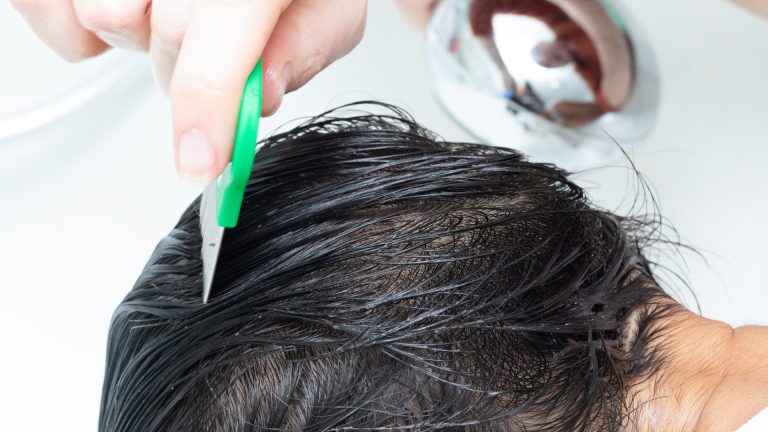
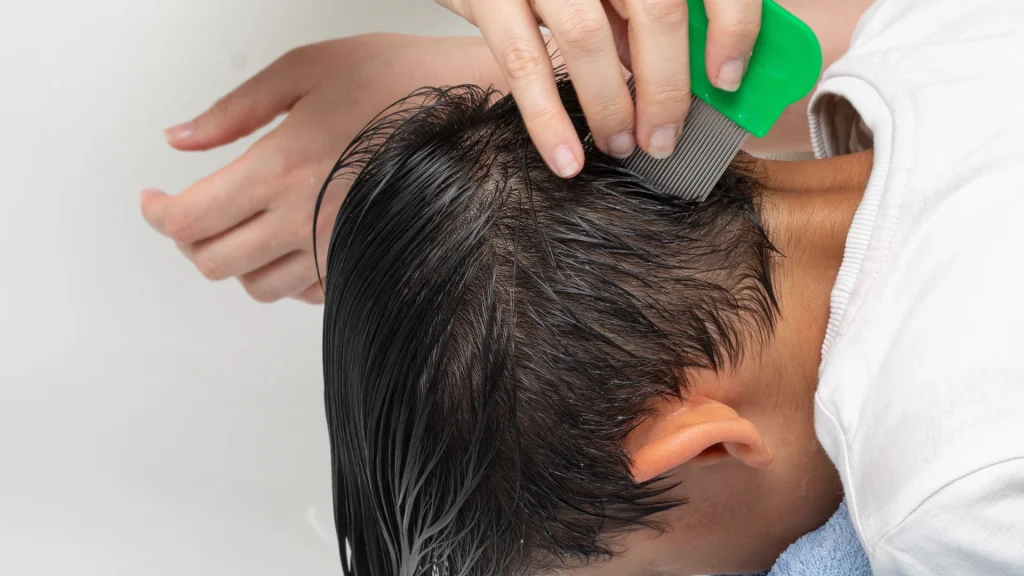
The AAP describes a check in a brightly lit room. You part the hair and look for crawling lice and nits one section at a time, with a fine-tooth louse or nit comb to help. For a wet comb-out, the AAP describes these steps:
- Wet the hair.
- Comb through it in small sections.
- Wipe the comb on a wet paper towel after each pass.
- Examine the scalp, the comb and the towel.
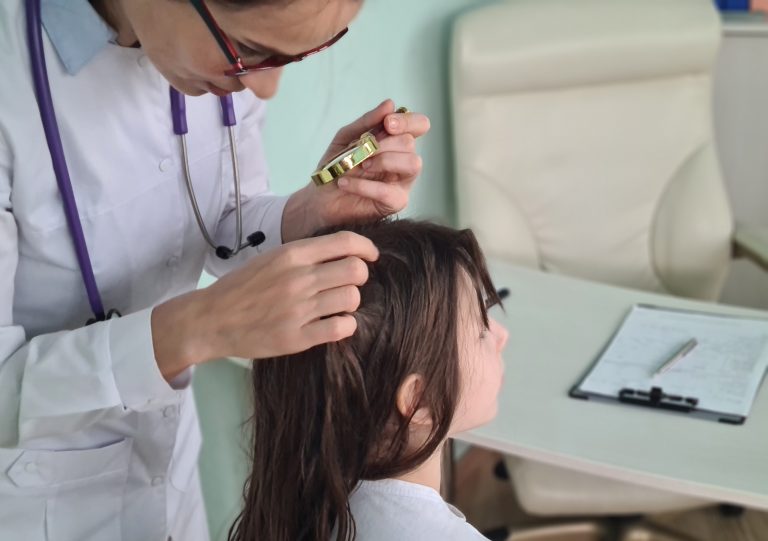
The CDC adds that “a magnifying lens may help to find crawling lice or nits.” Our step-by-step guide to checking your child’s hair for lice goes through it in detail. If you have heard about using a black light, read what a black light can and cannot show first.
Telling a nit from a flake comes down to grip. The AAP says “nits are firmly attached to hair, while dandruff, dirt or other particles are not.” It adds that some nits blend in with a child’s hair color. Distance from the scalp matters too. The CDC says nits attached more than a quarter inch from the base of the hair shaft “are almost always hatched or dead.”
The table below sums up what each finding means.
| What you find | What it looks like | What it tells you |
|---|---|---|
| Adult louse | About the size of a sesame seed (2 to 3 mm); pale and gray, though color can vary | A live louse confirms an active infestation |
| Nymph (young louse) | Like an adult, but about the size of a pinhead (1.5 mm) | Also a live louse, so lice are active |
| Nit close to the scalp | Oval, about 0.8 mm long, yellow to white, stuck firmly within a quarter inch of the scalp | The sign the CDC says to look for when no crawling lice are seen |
| Nit farther out | Firmly attached, more than a quarter inch from the scalp | With no live lice found, the CDC says the infestation is probably old and does not need treatment |
| Speck that slides off | Dandruff, dirt or a hair spray droplet | Not a nit |
| Red spot or sore | Irritated or scratched skin | Neither confirms nor rules out lice |
Bite marks show up only in the last row. The spot tells you where to look. The comb and a good light tell you what is there.
Scratched Spots and a Lingering Itch: When to Call the Doctor
Call your child’s doctor about any scratched spot that worries you. The CDC says sores from scratching “can sometimes become infected with bacteria normally found on your skin,” and MedlinePlus says the same. The doctor can look at the skin and tell you what it needs.
The lice themselves do not threaten your child’s health. The CDC says “Head lice do not transmit any disease and therefore are not considered a health hazard,” and the AAP says they “don’t cause serious illness or carry any diseases.” The broken skin is the part to keep an eye on.
Two more facts help once lice have been found. The AAP notes that “itching caused by head lice can last for weeks, even after the lice are gone.” An itch on its own does not prove lice remain, and our post on how to know if lice are completely gone covers what to look for instead. The CDC’s treatment guidance also says “Some medications may cause itching or a mild burning sensation.” That is worth knowing if the itch changes after a product is used.
If scratching has left scabs, mention them to your child’s doctor before choosing any treatment. The AAP asks parents to “Check with your child’s doctor before beginning any head lice treatment.” If you and the doctor do choose a product, the CDC says to “Use the lice medicine as directed on the box or label.” We also look at how scabs affect that choice in lice treatment for a scabbed scalp.
Frequently Asked Questions
What do lice bite marks look like on a child’s scalp?
A parent can notice itching, a tickling feeling in the hair and sores wherever the child has been scratching. Those signs overlap with other skin irritation. The dependable test is in the hair, where finding a live louse settles the question.
Are lice bumps on the head dangerous?
The bumps and sores are not a sign of disease, since head lice carry none, but scratched skin deserves attention. Broken skin from scratching can pick up bacteria, according to both the CDC and MedlinePlus. If a sore looks worse or simply concerns you, your child’s doctor is the right call. As for the lice, the AAP says they don’t put your child at risk for any serious health problems.
Can head lice bite a child’s face?
The CDC says head lice are found mostly on the head but also on the eyebrows and eyelashes. For itchy spots across the cheeks, chin or forehead, or anything around the eyes, ask your child’s doctor. The CDC also says lice medications should be kept out of the eyes.
What do nit bites look like?
There is no separate nit bite to look for. A nit is a louse egg attached to a hair, and the CDC traces the itch to an allergic reaction to louse bites. The AAP describes nits as small white or yellow-brown specks held firmly near the scalp. It also notes that after the eggs hatch, the empty shells stay on the hair shaft.
What do head lice look like in the hair?
Adult head lice are tiny crawling insects about the size of a sesame seed, with pale gray bodies whose color can vary. Young lice, called nymphs, look like adults but are about the size of a pinhead. They dodge light and move fast, which is why the CDC says they may be difficult to find and suggests a fine-toothed louse comb to help.
Is a red bump near the hairline from a mosquito or from lice?
The bump itself cannot answer that, so the hair has to. Head lice crawl rather than fly and stay close to the scalp, so a live louse in the hair points to lice. A careful comb-through that finds nothing makes other causes worth considering. If the hair turns up nothing and the bump still bothers you, check in with your child’s doctor.
Do lice bites on the scalp mean my child needs treatment?
Not by themselves. The CDC says to treat head lice when there is an active infestation, and an itchy spot does not establish one, though a live louse does. If you find no lice and the only nits sit more than a quarter inch from the scalp, the CDC considers the infestation probably old. Before starting any product, talk it through with your child’s doctor.
Can a child have lice without bite marks or itching?
Yes. The CDC notes this is particularly possible with a first or light infestation. On a first infestation, the scalp can take weeks to start reacting to lice saliva, so a calm, unmarked neck proves little either way. When one person in the home has lice, the CDC suggests checking every household member and close contact, whatever their symptoms.
How Lice Lifters of Chester County Can Help
If you have looked through the hair and still are not sure what you are seeing, a professional head check can give you a clear answer. At Lice Lifters of Chester County, we check the whole family, not only the child who is scratching, because lice can be present before anyone itches. If we find lice, our professional lice treatment is non-toxic and done in one visit, and same-day appointments are available. Our 30 Day Guarantee applies when the whole family is checked. Questions about the skin itself, such as a scratched spot or a bump away from the hairline, belong with your child’s doctor. When you are ready, book a head check with our clinic and we will take it from there.