Some kids get lice repeatedly because the first case never fully ended or because lice reached them again from someone close by. The CDC lists the reasons head lice treatment can fail: misdiagnosis, using conditioner or a combination shampoo/conditioner before lice medicine, not following treatment instructions, lice resisting the medication, and reinfestation after successful treatment. None of these has anything to do with how clean your child is. Each points to a step a family can check, from the product label to every head in the house.
Head lice are a nuisance rather than a danger. The CDC’s overview of head lice notes that they “do not transmit any disease and therefore are not considered a health hazard,” and the AAP’s guide for parents reminds families that “anyone can get head lice.” A second or third case is a pattern to work out calmly, not a verdict on your parenting.
Which Explanation for Repeat Head Lice Fits the Evidence?
The explanation that fits public health guidance is incomplete or incorrect treatment, reinfestation from close contacts, or a follow-up treatment that was skipped. Here is how the familiar theories compare with what the CDC and AAP say.
| Theory | What the sources say |
|---|---|
| Not washing hair enough with regular shampoo | Does not fit. The CDC says getting head lice “is not related to cleanliness of you or your environment.” |
| Sharing hats and combs | A minor route. The AAP describes “a very small chance” of spread through shared combs, brushes, hats and sports helmets. |
| Incomplete or incorrect treatment | Fits. The CDC lists not following treatment instructions and lice resisting the medication among the reasons treatment can fail. |
| Skipping follow-up treatment | Fits. When a medicine kills lice but not eggs, the CDC says to treat again about a week after the first treatment (7 to 9 days depending on the drug). |
| Reinfestation from close contacts | Fits. The CDC calls head-to-head contact with someone who has lice “the most common way to get head lice.” |
Keeping combs, brushes, towels and hats unshared is still sensible advice from the CDC. Those items are simply a smaller risk than direct hair-to-hair contact, which the CDC names as the main way head lice spread.
Why Can Lice Seem to Come Back After Treatment?
Lice seem to come back when a treatment missed part of the life cycle, when a product was used differently than its label directs, or when what you are seeing is not a new case at all. According to the CDC, nits take about a week (6 to 9 days) to hatch, nymphs need about seven days to mature, and adults can live on a person’s head for about 30 days. The AAP adds that an adult female can lay up to 10 eggs a day.
That is why the product label matters. The CDC explains, “Some medicines kill lice and eggs; retreatment is usually not required for these.” Other medicines, the CDC says, kill lice but are not effective at killing eggs, so retreatment is recommended. The CDC also lists using conditioner, or a combination shampoo and conditioner, before lice medicine as a reason treatment can fail. The AAP asks parents to follow package directions exactly as written and to check with the child’s doctor before beginning any treatment, and the CDC says to talk to a healthcare provider before re-treating.
Resistance can also play a part. The AAP says head lice “can be resistant to the active ingredients in over the counter (OTC) treatments in some communities” and that the likelihood of resistance varies across the country, adding that your pediatrician can help you choose an appropriate option for your child.
When It Is Not Really a New Case
Some signs that look like a relapse have other explanations. The AAP notes that itching from head lice “can last for weeks, even after the lice are gone.” The CDC says successful treatment kills crawling lice even though nits may stay in the hair, and that nits more than a quarter inch from the base of the hair shaft “are almost always hatched or dead.” It also warns, “Misdiagnosis of head lice infestation is common.” If flakes are the worry, our guide to telling lice from dandruff walks through the difference. A repeat case can also turn out to be one case that never fully ended.
Where Do New Lice Come From After Treatment Works?
New lice come from another person’s head through close hair-to-hair contact, so one family member or friend with an unnoticed case can start the cycle again for a child whose own treatment worked. The CDC advises checking all household members and other close contacts, then treating everyone who has lice, plus the people they share a bed with, at the same time. A sibling who isn’t scratching may still need a look: the CDC says people “may not have symptoms, particularly with a first infestation or when an infestation is light.”
Sleepovers, sports and playground games all involve the kind of contact the CDC asks children to avoid. MedlinePlus adds a reminder not to share items that go on the head, such as headphones, hair ties and helmets.
Your home is a much smaller factor; the CDC calls the risk from a louse that has fallen onto a rug, carpet or furniture “very small.” It also says spending much time and money on housecleaning “is not necessary to avoid reinfestation.” Its suggested steps are short:
- Machine wash and dry clothing, towels and bed linens used in the two days before treatment, using hot water (130 degrees Fahrenheit) and high heat drying.
- Seal items you can’t wash or dry clean in a plastic bag for two weeks.
- Soak combs and brushes in hot water (at least 130 degrees Fahrenheit) for 5 to 10 minutes.
- Skip fumigant sprays and fogs, which can be toxic if inhaled or absorbed through the skin.
Why Do Some Kids Get Lice More Than Others?
Some kids get lice more than others because they spend more time head to head with other people, not because of anything to do with hygiene. MedlinePlus, from the NIH, reports that “Children ages 3-11 and their families get head lice most often,” and explains, “This is because young children often have head-to-head contact while playing together.”
If your daughter keeps getting lice, the CDC offers one possible reason: “Some studies suggest that girls get head lice more often than boys, probably due to more frequent head-to-head contact.” Sleepovers, hugs and huddled-up games bring heads close, and because lice “cannot hop or fly,” per the CDC, that closeness is how they travel.
Hair texture may also play a part. The CDC says lice “may have claws that are better adapted for grasping the shape and width of some types of hair, but not others,” and that in the United States, infestation is much less common among African American persons than among people of other races. We cover this in more detail in our post on lice and hair types, and we also look at whether short hair prevents lice.
What Does Finding More Than One Louse in a Kid’s Hair Mean?
Finding even one live louse confirms head lice, so seeing more than one means the infestation is active, and the CDC says to treat an active infestation. The CDC calls finding a live nymph or adult louse “the best way to diagnose a head lice infestation,” and the AAP advises parents to “work quickly but safely” once lice are found so they don’t spread.
The lice you spot may come in different sizes. Adults are roughly 2 to 3 mm long, about the size of a sesame seed, while nymphs are closer to the size of a pinhead. Because lice avoid light and move quickly, as the AAP notes, the ones you see may not be all that are there.
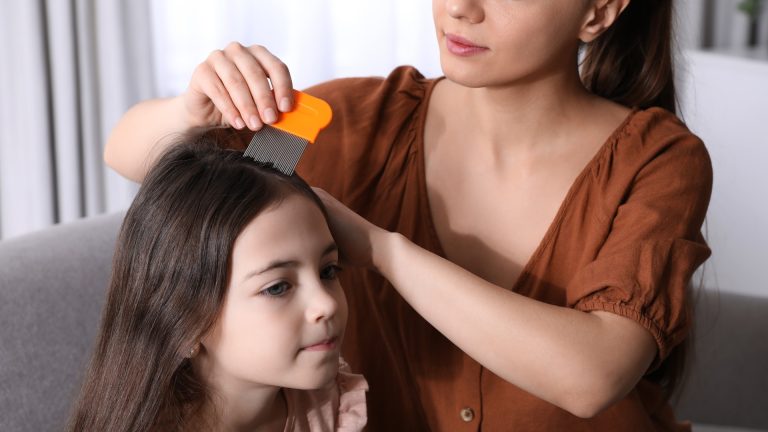
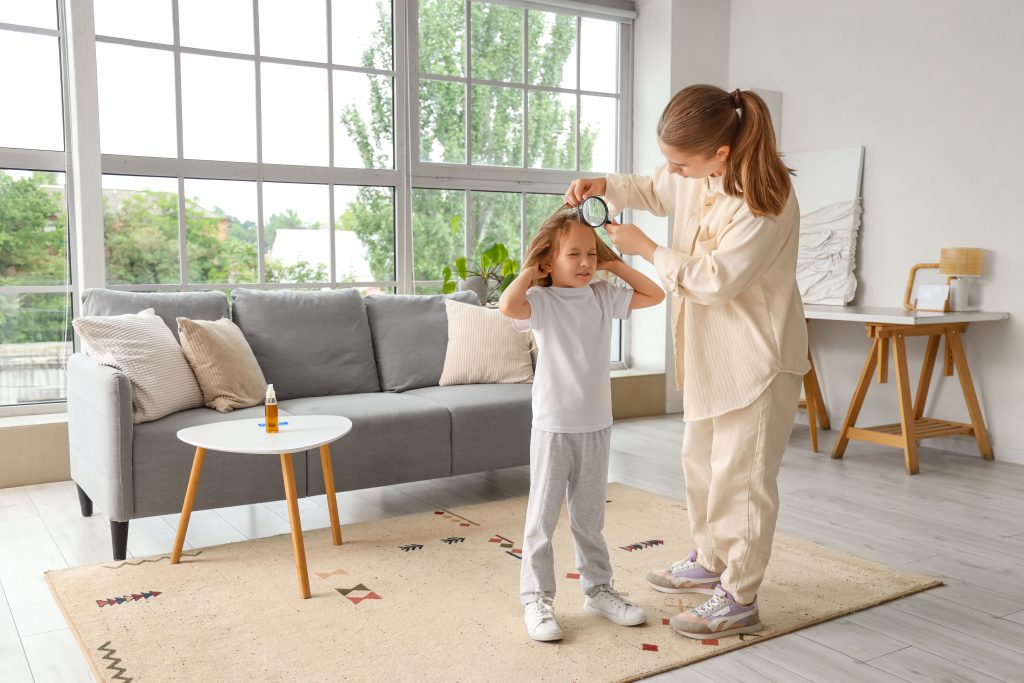
A slow, sectioned comb-through gives a fuller picture. The AAP describes wetting the hair, combing small sections with a fine-tooth louse or nit comb and wiping the comb on a wet paper towel after each pass. The easiest places to find nits, it says, are the hairline at the back of the neck and behind the ears. For a full walkthrough, see how to check your child’s hair for lice, and if you aren’t sure what you found, the CDC suggests seeing a healthcare provider.
Frequently Asked Questions
Can you get lice more than once?
Yes, a child can get head lice more than once. The CDC includes “Reinfestation after successful treatment” among the reasons treatment can appear to fail, which means a treated head can pick up new lice through fresh contact. A friend, cousin or teammate with an unnoticed case can be the source. Quick head checks in the weeks after any household case help you spot a new one early.
Why does my child keep getting lice after treatment?
Finding lice after treatment points to an unfinished first infestation, a new one picked up from someone close, or a mix-up with something that only looks like lice. The CDC says to treat again only if there are live, crawling lice several days after treatment. Checking every household member and close friend helps rule out a new exposure, and your child’s doctor can advise if a product does not seem to work.
How do you remove lice from hair permanently?
No treatment keeps lice away for good, because a new exposure can start a new infestation. What treatment can do is end the current case, and the CDC advises checking hair and removing nits and lice every 2 to 3 days for 2 to 3 weeks after each treatment. After that, keeping heads apart during play and checking hair regularly are practical ways to catch a new case early.
Why do nits keep coming back?
Nits that keep showing up may be old, empty shells rather than new eggs. The AAP explains that after eggs hatch, the empty nits stay on the hair shaft, held in place by a sticky substance. It also notes, “Eggs are usually found within 4 to 6 mm of the scalp and do not survive if they are farther away.” If you find nits near the scalp and aren’t sure what they mean, ask your child’s doctor.
My daughter keeps getting lice. What can I do?
Start by checking every household member and close contact, not only your daughter. The AAP says all of them should be checked and treated for head lice if necessary, and suggests asking your child’s doctor if treatments you have tried have not gotten rid of lice. Keeping brushes, hair ties and hats unshared trims one of the smaller routes, and regular head checks help you spot lice before they multiply.
How Lice Lifters of Chester County Can Help
When lice keep turning up, it helps to look at every head in the house at once. At Lice Lifters of Chester County, we check the whole family, not only the child who is scratching, so a quiet case in a parent or sibling has a chance to be found. Our professional lice treatment is non-toxic and done in one visit, and same-day appointments are available when you want answers quickly. The 30 Day Guarantee applies when the whole family is checked. If you are tired of starting over, book a head check, and we will walk you through what comes next.