
One live louse is an infestation, but a few nits may not be. The CDC’s head lice guidance calls finding a live nymph or adult louse the best way to diagnose head lice, so a single crawling bug counts. Nits depend on where they sit. If you see no live lice and the only nits are more than a quarter inch from the scalp, the CDC says the infestation is probably old and does not need treatment. That difference decides what you do next.
Can You Have Just One Louse, or Are There More?
You might have just one, but finding one louse can’t prove it’s alone. Head lice move by crawling and mainly spread by direct contact with the hair of a person who has lice. What a home check can’t do is rule out others. The CDC explains that adult and nymph lice are very small, move quickly and avoid light, which can make them difficult to find. The American Academy of Pediatrics (AAP) says it plainly: “Live lice are hard to find.”
A calm scalp doesn’t settle the question either. People with head lice may have no symptoms, the CDC notes, particularly with a first infestation or when an infestation is light. The AAP adds that it may take up to 4 to 6 weeks after lice get on the scalp before it becomes sensitive to lice saliva and starts to itch. So a child who isn’t scratching could still have more lice than the one you spotted.
None of this calls for alarm. The CDC says head lice do not transmit any disease and are not considered a health hazard, and that getting them is not related to cleanliness. One louse is a reason to look closer, and nothing about it reflects on your home or your parenting.
How Do You Look for More After Finding One?
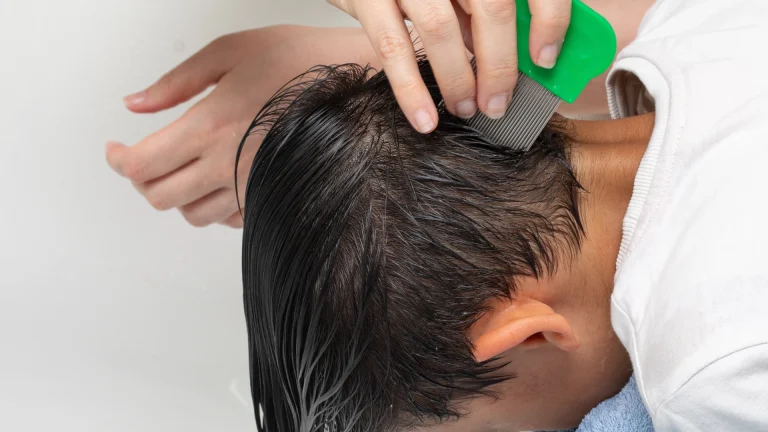
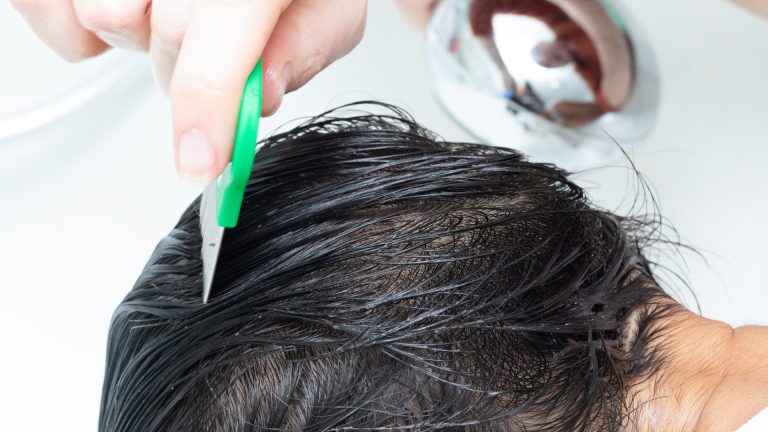
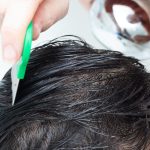
Comb through wet hair one small section at a time in a brightly lit room, which is the check the AAP describes. It takes patience, but it gives you a far better look than a quick glance at the part line. The steps are simple:
- Seat your child in a bright room and wet their hair.
- Run a fine-tooth louse or nit comb through the hair in small sections.
- After each pass, wipe the comb on a wet paper towel, then look carefully at the scalp, the comb and the towel.
- Repeat until you have combed through all of the hair.
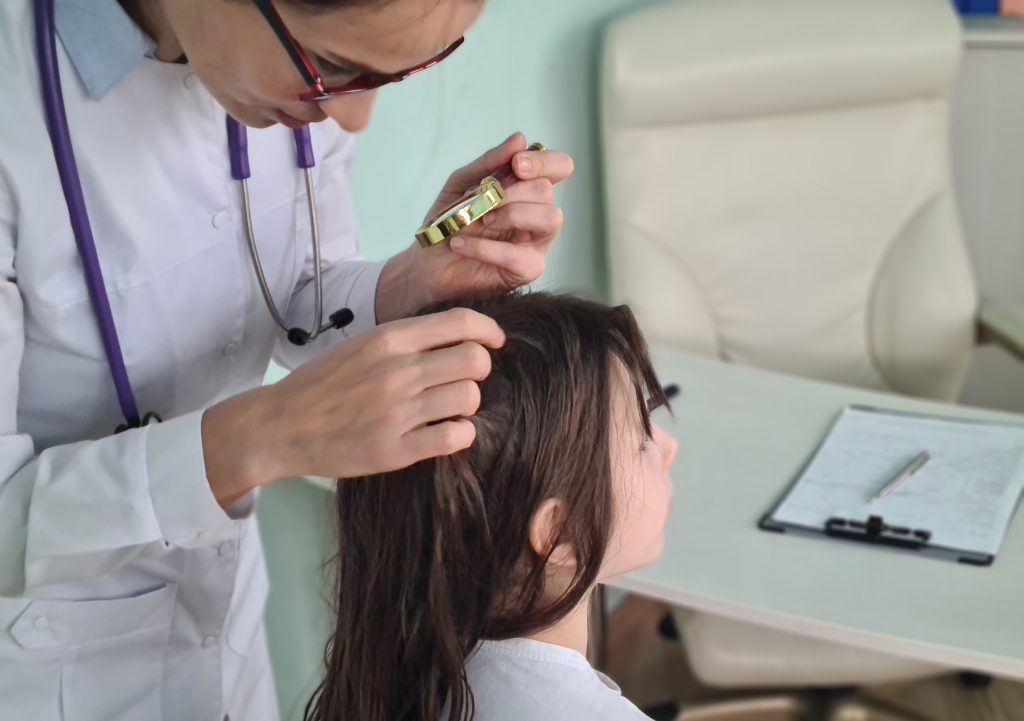
Spend extra time low on the head. As the CDC puts it, “You will often see nits on hair behind the ears and near the back of the neck.” A magnifying lens may help you spot crawling lice or nits, and our walkthrough on how to check your child’s hair for lice covers the search in more detail. If the louse turned up in your own hair, ask another adult to run the same check, since you can’t see the back of your own neck.
Think of combing as a way to look, not a complete fix. The AAP cautions that “the comb-out method usually doesn’t work on its own to get rid of head lice,” so pulling out the one louse you found doesn’t end the question.
Are a Few Nits Enough to Call It an Infestation?
A few nits don’t settle it by themselves, because where they sit and how firmly they hold tell you more than the count does. Start with the attachment test. The AAP says nits are firmly attached to hair, while dandruff, dirt and other particles are not. That test matters because the two are easy to confuse, and the CDC states that “misdiagnosis of head lice infestation is common.”
Next, look at the distance from the scalp. Lice lay and attach their eggs close to it, and the CDC says nits attached more than a quarter inch from the base of the hair shaft “are almost always hatched or dead.” Our post on what a quarter inch of hair can tell you explains how to read that distance. Empty nits can also stay behind, since the AAP says they remain on the hair shaft after the eggs hatch.
Here is how those findings line up:
| What you found | What the CDC or AAP says | Next step |
|---|---|---|
| A live louse or nymph | The CDC calls this the best way to diagnose an infestation | Check household members and close contacts, and talk to your child’s doctor before any treatment |
| Nits firmly attached within a quarter inch of the scalp, no crawling lice | The CDC says to look for these when you do not see crawling lice | See your healthcare provider if you are not sure |
| Only nits more than a quarter inch from the scalp, no lice | The CDC says the infestation is probably old and does not need treatment | Keep up regular checks, which the AAP calls a good way to spot lice early |
| Specks that slide or brush off | The AAP says dandruff, dirt and similar particles are not firmly attached, unlike nits | Keep looking for live lice, and ask your healthcare provider if you are still unsure |
Hair color can make all of this harder. The AAP notes that some nits may blend in with a person’s hair color, which is one reason nits in blonde hair deserve a slower look.
How Quickly Can One Louse Become More?
An adult female can lay several eggs a day, so a head with one laying louse can hold a new generation within a few weeks. The CDC and AAP give slightly different figures for each stage.
| Stage | CDC | AAP |
|---|---|---|
| Eggs per adult female per day | About six | Up to 10 |
| Time for an egg to hatch | About a week (range 6 to 9 days) | 7 to 12 days, depending on temperature |
| Time from hatching to adult | About seven days | About 9 to 12 days |
| Life span | About 30 days on a person’s head | About 28 days |
The AAP says this cycle can repeat every 3 weeks if head lice are left untreated. That timeline is why a single find deserves follow-up even when the rest of the head looks fine. Off the head, the picture is far less worrying. The CDC says lice will die within two days if they fall off a person and cannot feed, and it calls the risk of getting lice from one that has landed on a rug, carpet or furniture “very small.”
Who Else Needs a Check, and Who Needs Treatment?
Everyone in your household and every close contact needs a check, while treatment is for people found to have lice and anyone who shares a bed with them. That’s the CDC’s guidance, and it asks that they be treated at the same time. The AAP agrees that household members and close contacts should be checked and treated if necessary, so a single louse on one child doesn’t automatically mean a round of medicine for everybody.
Before starting any treatment, talk with your child’s doctor. The AAP advises that step, and says head lice medicine should be used only when it is certain that your child has living head lice. If you do use a product, the CDC says to use it as directed on the box or label. Your doctor can also help if a treatment you’ve tried hasn’t worked.
Your home needs less work than that first jolt might suggest. The CDC advises machine washing and drying clothing, towels and bed linens the person wore or used during the two days before treatment, with a 130 degrees Fahrenheit wash and a high heat dry. Items you can’t wash or dry clean can be sealed in a plastic bag for two weeks. Combs and brushes that person used can soak in hot water of at least 130 degrees Fahrenheit for 5 to 10 minutes. The CDC also says not to use fumigant sprays or fogs, which are not necessary and can be toxic if inhaled or absorbed through the skin.
Frequently Asked Questions
How many head lice is an infestation?
One live louse or nymph is enough. The CDC’s description of a diagnosis rests on finding something alive rather than reaching a set number, so a head with one crawling louse and a head with several both qualify. A low number can even go unnoticed for a while, since a light infestation may cause no symptoms.
I found one louse but nothing else. What does that mean?
If the louse was alive, it counts as an active infestation even when no eggs turn up. Eggs are easy to miss, since the AAP describes them as about the size of a knot in thread. Finish checking the whole head, look over everyone at home, and ask your doctor or your child’s doctor what to do next.
Does a single nit mean my child has lice?
Not by itself. A lone speck could be an empty shell, a dead egg or something else entirely, such as a hair spray droplet. If it is stuck firmly close to the scalp, keep searching the rest of the head for anything crawling. When you still can’t tell, your healthcare provider can take a look.
What does a single louse look like?
An adult louse is a small crawling insect about the size of a sesame seed, roughly 2 to 3 mm long. The AAP says, “Their bodies are usually pale and gray, but their color may vary.” A nymph looks similar but is closer to the size of a pinhead. Neither one can hop or fly, so a speck that jumps is not a louse.
How long do head lice eggs take to hatch?
About a week, though the CDC gives a range of 6 to 9 days and the AAP gives 7 to 12. Because eggs take time to hatch, one look isn’t the end of it. After each treatment, the CDC advises checking hair and removing nits and lice every 2 to 3 days for the next 2 to 3 weeks.
How common are head lice?
The CDC estimates that 6 to 12 million infestations occur each year in the United States among children 3 to 11 years of age. The AAP adds that anyone can get head lice. If you found one on your child, your family has plenty of company, and the find says nothing about how well you care for them.
How Lice Lifters of Chester County Can Help
If you found one louse or a few specks and would like a second set of eyes, Lice Lifters of Chester County can look with you. Our team checks the whole family, so you aren’t left guessing about who else has lice. If we find an active case, our clinic provides professional lice treatment that is non-toxic and done in one visit. We offer same-day appointments, and our 30 Day Guarantee applies when the whole family is checked. There’s no need to settle the question alone, and there’s nothing to feel embarrassed about. When you’re ready, book a head check and bring everyone who lives in your home.