Neither hot water, a hot shower nor washing your hair every day is on the CDC’s or the American Academy of Pediatrics’ list of head lice treatments. Both point parents to lice medicine instead. Heat does have a real job during a lice case, but that job is on laundry, combs and brushes, not on a child’s head. And clean hair does not keep lice away, because getting head lice is not related to how clean anyone is.
Below is a quick-answer table, then a section for each question parents ask: hot water, temperature, nits, washing your hair every day, clean hair, hair dryers and saunas, laundry and combs, and what actually treats head lice.
Heat and Washing vs. Lice at a Glance
| Question | Short answer | What the sources say |
|---|---|---|
| Does hot water kill lice on the head? | Not listed as a treatment on any of the four pages. | CDC: head lice can survive under water for several hours. AAP: rinse the medicine off with warm water (not hot water). |
| Does hot water or heat kill nits? | Nothing in these sources says it does. | AAP: nits attach to the hair with a sticky substance that holds them firmly in place. CDC: some medicines kill lice and eggs, others are not effective at killing eggs. |
| Does washing hair every day kill lice? | Not listed as lice control on any of the four pages. | CDC: do not use conditioner before lice medicine, and do not re-wash the hair for 1 to 2 days after removing it. AAP: do not shampoo for 24 to 48 hours afterward. |
| Can a hair dryer, flat iron or sauna kill lice? | Not listed as a treatment, and we do not recommend trying it. | None of the four pages mentions a hair dryer, a flat iron, a sauna or a hot tub. AAP: the most effective way to treat head lice is with head lice medicine. |
| What heat is used for clothes and bedding? | A hot wash and a hot dryer. | CDC: use the hot water (130 degrees Fahrenheit) laundry cycle and the high heat drying cycle. MedlinePlus: wash with hot water and dry using the hot cycle of the dryer. |
| Do combs and brushes need heat? | Yes, by soaking. | CDC: soak them in hot water (at least 130 degrees Fahrenheit) for 5 to 10 minutes. MedlinePlus: soak combs and brushes in hot water for 5 to 10 minutes. |
| Does clean hair keep lice away? | No. | CDC: getting head lice is not related to cleanliness of you or your environment. AAP: it doesn’t matter if the hair is clean or dirty. MedlinePlus: personal hygiene and cleanliness have nothing to do with getting head lice. |
Those answers come from four pages, checked on October 28, 2026: the CDC page About Head Lice, the CDC page on Treatment of Head Lice, the American Academy of Pediatrics guide for parents, and MedlinePlus from the National Library of Medicine. The rest of this article works through each question in turn.
Does Hot Water Kill Lice?
Not according to the CDC, AAP or MedlinePlus. None of the four pages lists hot water, a hot bath or a hot shower as a way to treat head lice on a head. The only hot-water instructions in them are for items rather than hair: the hot water laundry cycle for clothes and bedding, and soaking combs and brushes. The single instruction about water and a child’s hair runs in the opposite direction. The American Academy of Pediatrics tells parents to place the child’s head over a sink and rinse the medicine off with warm water, not hot water.
Underneath the hot water question sits a second one: would a long, hot shower drown them? The CDC says head lice can survive under water for several hours, and a shower or a bath lasts minutes. We cannot tell you that hot water drowns lice, and we are not going to tell you it does not. What we can tell you is that these pages do not list bathing or showering as a treatment, so it is not the step to build your plan around. We also looked at whether a regular shower can get rid of lice in more detail.
So if your question is “should I turn the water up,” the answer is no. Keep bath and shower water at a comfortable temperature, and put the effort into the steps the sources do list.
What Temperature Kills Lice?
The CDC, AAP and MedlinePlus pages give no temperature for killing lice on a head. That number is simply not on any of them, and that is the honest answer to this question. The one temperature these sources do name is 130 degrees Fahrenheit, and it belongs to laundry and to hair tools:
- The hot water laundry cycle at 130 degrees Fahrenheit, with the high heat drying cycle, for clothes, bedding and items used in the two days before treatment (CDC).
- Combs and brushes soaked in hot water, at least 130 degrees Fahrenheit, for 5 to 10 minutes (CDC). MedlinePlus gives the same 5 to 10 minutes in hot water without naming a number.
- A timeline instead of a temperature for lice off a person: the AAP says they can’t survive more than 1 day without a blood meal, and the CDC says they will die within two days if they fall off a person and cannot feed. Call it about a day or two.
Notice what is missing from that list. There is no scalp temperature, no safe number for a shower, no dryer setting and no sauna reading, and we are not going to invent one. Heat that matters to a load of laundry is not something to aim at a child’s head, and none of these sources asks you to.
What about a hot car or the sun?
Neither a hot car nor sitting in the sun appears anywhere on the four pages, so we are not going to guess at what either one does. Two facts from the sources are worth holding next to each other. Away from a person, lice die within about a day or two. And the CDC’s cleanup steps cover clothes, bedding and items used in the two days before treatment. Those are two separate statements, and we are not joining them into a method.
Does Hot Water or Heat Kill Nits?
Nothing in these pages says it does. Nothing says hot water loosens or kills nits on the hair. The AAP explains why they hold on so well: nits attach to the hair with a sticky substance that holds them firmly in place. The CDC does have one sentence about eggs and temperature, and it describes eggs that are off a person, which cannot hatch and usually die within a week if they are not kept at the same temperature as those found close to the scalp. That is not evidence that heat kills nits on a child’s head.
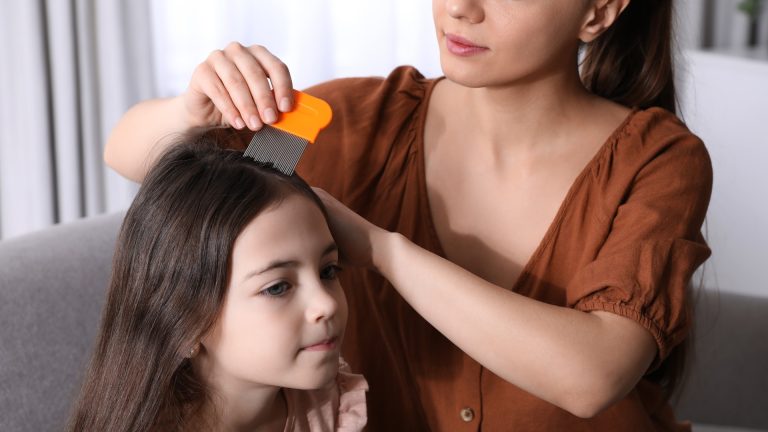
The sources point to medicine and combing instead. Some medicines kill lice and eggs, and retreatment is usually not required for those; others kill lice but are not effective at killing eggs, so retreatment is recommended (CDC). The CDC also says to use nit combs to remove nits and lice from the hair shaft and, after each treatment, to check the hair and remove nits and lice every 2 to 3 days for the next 2 to 3 weeks, while the AAP notes that the comb-out method usually doesn’t work on its own. We cover what kills lice eggs and how to use a lice comb at home in their own posts. And because the CDC notes that nits are often confused with other particles found in hair such as dandruff, hair spray droplets and dirt particles, it helps to tell head lice apart from dandruff before you start anything.
Does Washing Your Hair Every Day Kill Lice?
Not as a treatment. Not one of the four pages lists daily hair washing as a way to control head lice, and washing your hair every day is hygiene, not lice control.
There is a more practical point about shampoo during a lice case, and it runs opposite to the daily-washing instinct. The CDC says not to use a combination shampoo/conditioner, or conditioner, before using lice medicine, and not to re-wash the hair for 1 to 2 days after removing the lice medicine. It also lists recent application of combination shampoo/conditioner or conditioner to hair among the reasons a treatment can fail. The AAP says the same thing from the other end: do not shampoo for 24 to 48 hours afterward. So in the window around a treatment, extra washing can work against the thing you are counting on.
Read the directions that come with the medicine, and check with your child’s doctor before beginning any head lice treatment, which is what the AAP asks parents to do. The CDC adds that you should consult your healthcare provider before treating young children.
Parents also ask the reverse: did washing every day bring the lice, or did skipping a wash? Neither. Getting head lice is not related to cleanliness of you or your environment, as the CDC puts it. If you are standing in the drugstore aisle right now, it is worth a few minutes to make sure it’s lice before you buy shampoo.
Why Clean Hair Still Gets Lice
Clean hair can still get lice. The CDC says getting head lice is not related to cleanliness of you or your environment, and that head lice mainly spread by direct contact with the hair of a person infested with lice. They move by crawling; they cannot hop or fly. The AAP puts it in one line: it doesn’t matter if the hair is clean or dirty. MedlinePlus says personal hygiene and cleanliness have nothing to do with getting head lice.
That matters for two reasons. It takes the blame out of the room, which helps when a child is upset or a parent feels embarrassed. And it points your effort at hair-to-hair contact rather than at a shampoo schedule. If someone has told you otherwise, we worked through whether lice prefer clean or dirty hair separately.
Can a Hair Dryer, Flat Iron or Sauna Kill Lice?
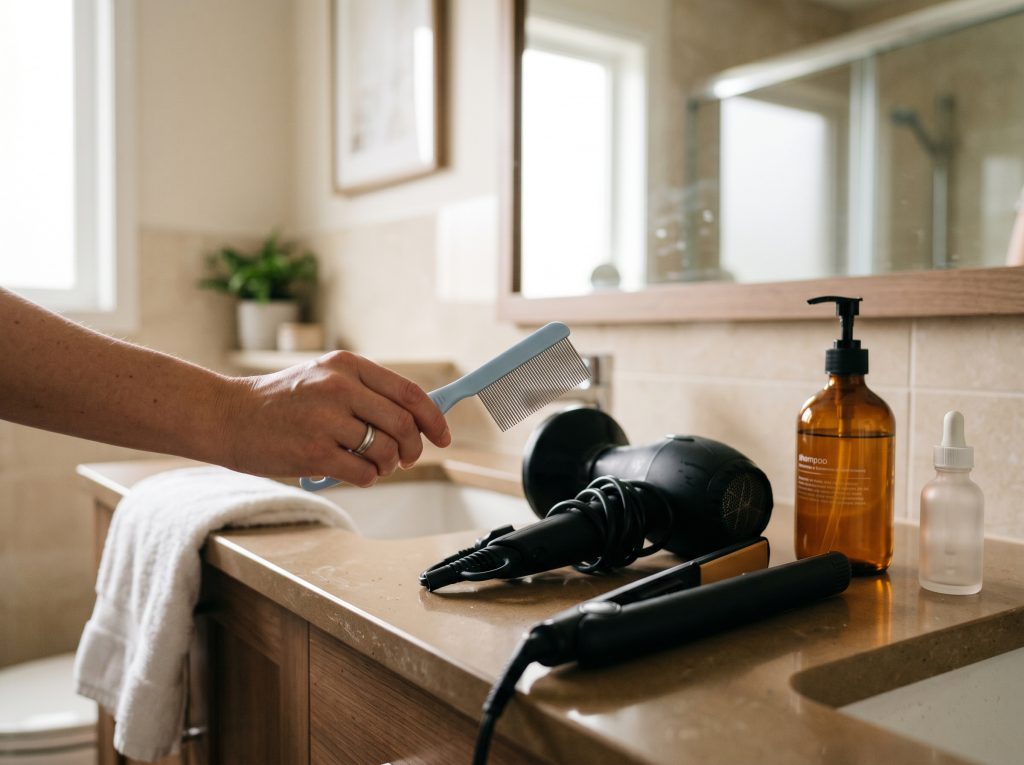
Not according to these sources. A hair dryer, a flat iron, a sauna and a hot tub appear nowhere on the four pages we checked, not as treatments and not at all, and we do not recommend trying any of them on a child’s head. Drying your child’s hair after a wash is ordinary grooming. Keep doing it the way you always have, but do not count it as a lice treatment and do not try to turn it into one.
On water and heat together, the CDC does say two things worth knowing: chlorine levels in pool water do not kill head lice, and head lice can survive under water for several hours. Nothing in these pages makes a hot tub a treatment either.
The flat iron question deserves more room than this section has, so we gave it a post of its own: whether a flat iron kills lice covers that question in full. What you will not find there, or here, is a temperature, a timing or a distance for any of these tools. The sources we trust do not publish one, and a child’s scalp is not the place to experiment. The AAP’s answer to what works is short: the most effective way to treat head lice is with head lice medicine.
Where Heat Actually Helps: Laundry, Combs and Bedding
Here is where heat earns its place. These are the steps the sources actually give, and every one of them is about items rather than hair:
- Machine wash and dry clothes, bedding, towels and items used by the person with lice in the two days before treatment, using the hot water laundry cycle at 130 degrees Fahrenheit and high heat drying (CDC). The AAP and MedlinePlus say the same in plainer terms: hot water, dried on high heat.
- If you can’t wash or dry clean an item, seal it in a plastic bag and store it for two weeks (CDC). The AAP lists the same two-week bag, or dry cleaning.
- Soak combs and brushes used by the person with lice in hot water, at least 130 degrees Fahrenheit, for 5 to 10 minutes (CDC). MedlinePlus gives 5 to 10 minutes in hot water as well.
- Vacuum the floor and furniture (CDC).
Then stop. The CDC says the risk of getting lice from a louse that has fallen onto a rug or carpet or furniture is very small, and that spending much time and money on housecleaning activities is not necessary to avoid reinfestation. It also says not to use fumigant sprays or fogs, which are not necessary to control head lice, and the AAP says not to spray pesticides in your home. Nothing here asks you to throw items away either: the AAP says you do not need to throw out the clothes, towels, hats or bed linens, and items that cannot be washed may be sealed in a plastic bag for 2 weeks or dry-cleaned. If you want the order of operations for a whole house, we laid out step-by-step cleanup after lice.
What Actually Treats Head Lice
Medicine is the answer these sources give. The CDC says you can treat head lice with medications, called pediculicides, that are either over-the-counter or by prescription, and that extra measures beyond medication are usually not necessary. The AAP says the most effective way to treat head lice is with head lice medicine, and to check with your child’s doctor before beginning any head lice treatment. It also sets one condition: head lice medicine should be used only when it is certain that your child has living head lice, which is another good reason to make sure it’s lice before you buy shampoo. Then look at the rest of the household, because the AAP says all household members and close contacts should be checked and treated for head lice if necessary.
Frequently Asked Questions About Heat and Hair Washing
Does hot water kill lice eggs (nits)?
No page we checked says it does. The AAP says nits attach to the hair with a sticky substance that holds them firmly in place. The CDC’s one sentence about eggs and temperature is about eggs away from a person, which cannot hatch and usually die within a week if they are not kept at the same temperature as those found close to the scalp. On a head, the sourced answer is medicine plus nit combing.
Can lice drown in hot water or a shower?
The CDC says head lice can survive under water for several hours, and a shower or bath lasts minutes. Bathing is not listed as a treatment on any of these pages, so it is not something to rely on in either direction. The only water instruction aimed at hair is the AAP’s: place your child’s head over a sink and rinse the medicine off with warm water, not hot water.
Will washing my child’s hair every day get rid of lice?
Not as a treatment. Daily washing does not appear on any of these pages as lice control. Around a treatment it can even get in the way: the CDC says not to use conditioner or a combination shampoo/conditioner before lice medicine, and not to re-wash the hair for 1 to 2 days after removing it, while the AAP says do not shampoo for 24 to 48 hours afterward. Wash for comfort, not as the treatment.
How hot should the water be for clothes and bedding?
The CDC gives one number: use the hot water laundry cycle at 130 degrees Fahrenheit and the high heat drying cycle for clothes, bedding and items used in the two days before treatment. The AAP and MedlinePlus say hot water and high heat drying without naming a temperature. That 130 degrees Fahrenheit figure belongs to laundry and to soaking combs and brushes, never to a head.
Does a hair dryer or a sauna kill lice?
Neither one appears on the CDC, AAP or MedlinePlus pages we reviewed for this update, as a treatment or otherwise, and we do not recommend trying either on a child. Drying hair after a wash is ordinary grooming, not a lice treatment. The AAP’s answer to what works is head lice medicine, chosen with your child’s doctor. We cover the flat iron version of this question in its own post.
What should I do with clothes, bedding and other items?
Machine wash and dry what the person with lice used in the two days before treatment, on the hot water and high heat cycles. Seal anything you can’t wash or dry clean in a plastic bag for two weeks. Soak combs and brushes. Vacuum the floor and furniture. Then stop: the CDC says spending much time and money on housecleaning is not necessary, and not to use fumigant sprays or fogs.
Not Sure What Will Work? Start With a Head Check
If you have looked through your child’s hair and you are still not sure what you are seeing, you do not have to settle it alone. A trained person can check and tell you whether it is lice. You can book a local head check with Lice Lifters of Chester County, or read about our professional lice treatment first. If it is lice, our Chester County team can remove lice in one visit.