

A crawling feeling after lice treatment is a reason to recheck the scalp, and it calls for treating again only when that careful look turns up a live, moving louse, not when the feeling stands alone. The CDC’s head lice page lists a tickling feeling, or a sensation of something moving in the hair, among the symptoms, and it also says that finding a live nymph or adult louse is the best way to diagnose an infestation. The feeling raises the question. The scalp answers it.
Guessing costs something either way. A second round of medicine on a scalp with no live lice puts a child through an insecticide for nothing, and the CDC says plainly that the drugs used to treat lice can be dangerous if misused or overused. Leaving a real survivor alone gives its eggs time to hatch. So the useful question is narrow: what does the scalp show, and what do the CDC and the AAP say to do about it?
What That Crawling Feeling Can and Cannot Tell You
The feeling is a symptom, not a verdict. The CDC’s symptom list also includes itching, irritability and sleeplessness, and sores on the head from scratching, and MedlinePlus adds trouble sleeping, because head lice are most active in the dark. So the sensation is real and it is on the official list. On its own, though, it cannot carry a decision.
The sensation also runs on its own clock. The CDC explains the itch as an allergic reaction to louse bites and notes it may take four to six weeks for itching to appear the first time a person has head lice. The AAP marks the other end: itching caused by head lice can last for weeks, even after the lice are gone. The CDC adds that some lice medications may cause itching or a mild burning sensation of their own. That gap between the insects and the feeling is what parents mean by phantom lice.
Both sources push the decision away from the feeling and onto what you can see. The CDC warns that misdiagnosis of head lice infestation is common, and that people with head lice may not have symptoms at all, particularly with a first infestation or a light one. A scalp can feel calm and still carry lice, and it can crawl and carry none. The AAP’s guidance for parents is blunt about the consequence: head lice medicine should be used only when it is certain that your child has living head lice.
How to Look Before You Treat Again
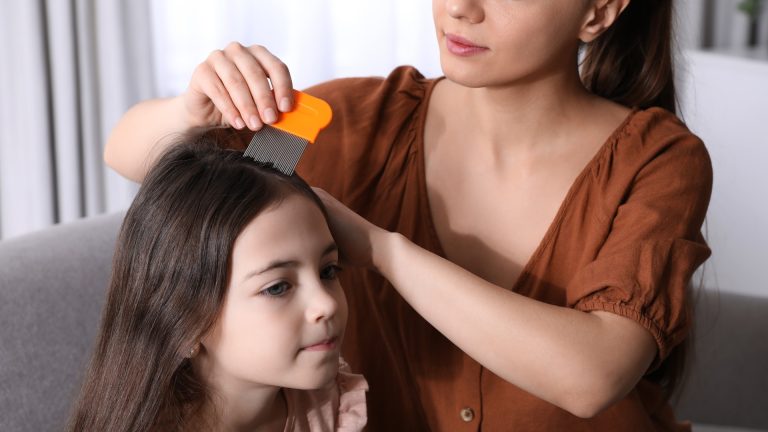
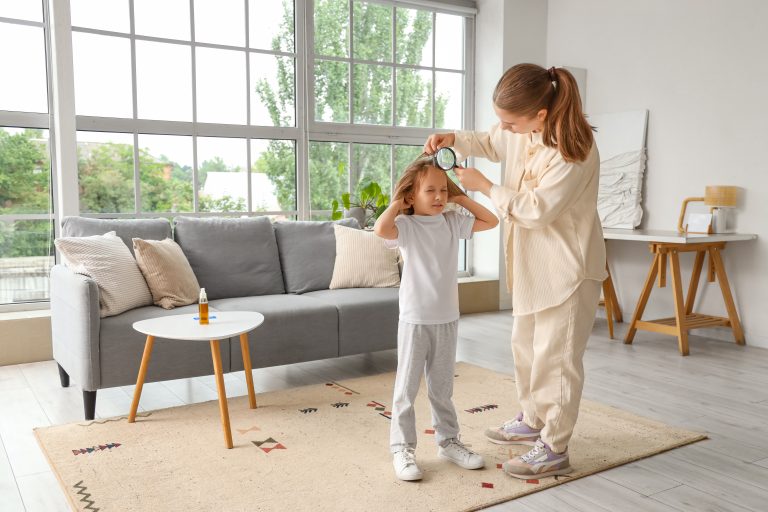
Look for a live, moving louse in good light, section by section, because that one finding changes what happens next. The AAP describes seating the child in a brightly lit room, parting the hair, and looking for crawling lice and for nits a section at a time, using a fine-tooth louse or nit comb to help search. MedlinePlus says to part the hair all the way down to the scalp in very small sections, and that a magnifying lens and a fine-toothed comb may be needed to find lice or nits.
For a closer pass, the AAP sets out a comb-out: wet the hair, comb through in small sections with a fine-tooth comb, wipe the comb on a wet paper towel after each pass, examine the scalp, the comb and the towel carefully, then repeat until all the hair is done. The AAP notes the comb-out helps with checking but usually does not get rid of head lice on its own. The CDC says flea combs made for cats and dogs also work.
Where you look matters as much as how. The AAP says the easiest place to find them is at the hairline at the back of the neck or behind the ears, and the CDC says nits turn up on hair behind the ears and near the back of the neck. Size is working against you: the CDC notes that lice are very small, move quickly and avoid light, and the AAP says live lice are hard to find for the same reasons.
A nit is not a live louse, and that difference decides whether anything needs treating. The CDC says nits may stay in hair after treatment, and that nits attached more than a quarter inch from the base of the hair shaft are almost always hatched or dead; the AAP says eggs are usually found within 4 to 6 mm of the scalp and do not survive farther away. Sorting the spent shells from viable eggs has its own tells, covered in how to spot dead nits after lice treatment, and the AAP notes nits can blend in with some hair colors, which is why nits in blonde hair are easy to miss.
Which Findings Call for a Second Treatment
With a medicine that kills both lice and eggs, treat again only when live, crawling lice are present several days after treatment, and the CDC’s treatment guidance says to talk to a healthcare provider before re-treating. The first hours are not the test. If a few lice are still moving slowly 8 to 12 hours after treatment, the CDC says you do not need to reapply the medicine, because it takes time to kill all the lice. If you find no dead lice at all, or the lice seem as active as before treatment, the CDC says the medicine may not be working.
What the one-week mark means depends on the medicine. The CDC says some medicines kill lice and eggs, so retreatment is usually not required; others kill lice but not eggs, so a second treatment is recommended about a week after the first, timed after all the nits have hatched but before new eggs are produced. For malathion, its clinical guidance sets the trigger as live lice still present 7 to 9 days after treatment. The AAP says to check with your child’s doctor before beginning a second or third medicine.
| What the check turns up | What the CDC and the AAP say |
|---|---|
| A tickling or moving feeling, and no live louse found | Finding a live nymph or adult louse is the best way to diagnose head lice; if you are not sure, see your healthcare provider. |
| A few lice moving slowly 8 to 12 hours after treatment | You do not need to reapply the medicine. It takes time to kill all the lice. |
| No dead lice found, or lice as active as before treatment | The medicine may not be working. Talk to a healthcare provider, who may suggest a different medicine. |
| Live crawling lice several days to a week after treatment | Treat again as the medicine’s label directs. Check with your child’s doctor before beginning a second or third medicine. |
| Nits still attached and no live lice | Nits may stay in hair after treatment, but successful treatment will kill crawling lice. |
One live louse found a week later is a finding, not a verdict, and it does change the plan; there is a separate look at whether one louse or a few nits counts as an infestation. The CDC also sets a limit on repetition: do not treat a person more than 2 to 3 times with the same medication if it is not working, and if crawling lice are still there after a full course of treatment and retreatment, consider an alternative medication. MedlinePlus says to use only one product at a time unless a provider says otherwise.
Five Reasons the CDC Gives for a Treatment Failing
When lice are still crawling after a full treatment, the CDC lists five causes, and only one of them is the lice outlasting the drug:
- Misdiagnosis
- Recent application of combination shampoo/conditioner or conditioner to hair
- Not following treatment instructions
- Head lice resisting the medication
- Reinfestation after successful treatment
Three of the five have nothing to do with the lice themselves. Misdiagnosis is an easy one to make, since the CDC says nits are often confused with dandruff, hair spray droplets and dirt particles, and the AAP says the way to tell is that nits are firmly attached to the hair while dandruff and dirt are not. Conditioner is on the list because the CDC says not to use a combination shampoo/conditioner, or conditioner, before using lice medicine.
Instructions are the third break point. The CDC says to use the medicine as directed on the box or label and to follow all provided instructions, and the AAP calls it essential for parents to read and follow manufacturer instructions exactly as written. The AAP adds that an adult applies the medicine, that children never apply it themselves, that a child should not be left alone with medicine in their hair, and that the rinse at the sink uses warm water, not hot. The CDC says to keep these medications out of the eyes and to flush immediately if they get in.
Resistance is real but unmeasured. The AAP says head lice can be resistant to the active ingredients in over-the-counter treatments in some communities, and that the likelihood of resistance varies across the country. The CDC says lice have developed some resistance to 1% permethrin while the prevalence of that resistance is unknown. The AAP also notes that over-the-counter treatments sometimes are not the most effective, and that parents sometimes treat their children with them up to 5 times before seeking help from their pediatrician.
Reinfestation is the quietest of the five, because it looks exactly like failure. The CDC says to check all household members and other close contacts, and to treat everyone infested, including anyone they share a bed with, at the same time; the AAP and MedlinePlus say the same. Head lice spread mainly by direct contact with the hair of a person who has them, so one unchecked head in the house can restart the count while everyone blames the medicine.
What Online Threads Get Right, and What They Get Wrong
The part parents get right in those late-night threads is the pattern: a scalp that still itches once the lice are gone, which is what the AAP describes. The remedies traded alongside it are another matter. The CDC says there is no scientific evidence that suffocating head lice with mayonnaise, olive oil, margarine, butter or similar substances works, MedlinePlus says there is no clear scientific evidence that home remedies suffocate lice, and the AAP says not to use petroleum jelly, mayonnaise, tub margarine, essential oils or olive oil, because no studies prove they work.
- Gasoline, kerosene, or medicines made for use on animals: the AAP says never use them, and MedlinePlus says gasoline and kerosene are dangerous and flammable.
- Anything plastic on a child’s head: the AAP says it is dangerous, and never to place a plastic bag on a child’s head.
- Fumigant sprays and fogs: the CDC says they are not necessary to control head lice and can be toxic if inhaled or absorbed through the skin, and the AAP says not to spray pesticides in your home.
The other thread staple is the deep clean. The CDC says spending much time and money on housecleaning is not necessary to avoid reinfestation, because head lice die within two days if they fall off a person and cannot feed, and the risk from one that has landed on a rug or a couch is very small. Its actual list is short: machine wash and dry what was worn or used in the two days before treatment, using the hot water cycle at 130 degrees Fahrenheit and high heat drying; seal what cannot be washed in a plastic bag for two weeks; soak combs and brushes in hot water of at least that temperature for 5 to 10 minutes; and vacuum where the person sat or lay. You do not need to throw those items away, the AAP says.
Frequently Asked Questions
If you have lice, can you feel them crawling?
Sometimes. The CDC lists a tickling feeling, or a sensation of something moving in the hair, among the symptoms, and head lice move by crawling rather than hopping or flying. An adult louse is only about the size of a sesame seed, though, and a nymph about the size of a pinhead, so a quiet scalp proves nothing and a busy one proves little.
What do people mean by phantom lice?
It is an informal name for a scalp that still itches or crawls when no live louse can be found. Two documented things sit behind it: the AAP says itching from head lice can last weeks after the lice are gone, and the CDC says some lice medicines may cause itching or a mild burning sensation. Neither means lice are still there.
What if the crawling feeling is always in one spot?
One spot is worth a careful look, not a conclusion. The CDC says nits turn up behind the ears and near the back of the neck, and the AAP says the same areas are where itching concentrates, so a fixed spot can simply be where lice would be. Part the hair there down to the scalp in very small sections, as MedlinePlus describes, and look for a live louse before deciding anything.
Can lice get into your brain?
No. The CDC describes head lice as parasitic insects that usually live on the scalp and feed on human blood, found mostly on the head but also on the eyebrows and eyelashes. It also says head lice transmit no disease and are not considered a health hazard. There is more on why head lice stay on the scalp rather than the body.
Will my head still itch after lice treatment?
It can. The CDC calls itching the most common symptom of head lice and traces it to an allergic reaction to louse bites, and the AAP says that itch can run for weeks after the lice are gone. Scratching can leave sores that sometimes become infected with bacteria normally found on the skin, which is worth a provider’s look and raises its own question: which lice treatments are safe on a scabbed scalp.
Can you use conditioner after lice treatment?
Check the label of the product used, because washing is part of the timing. The CDC says not to re-wash the hair for 1 to 2 days after removing lice medicine, and the AAP’s medicine table lists no shampooing for 24 to 48 hours afterward for several of the products in it. Conditioner before the medicine is a different matter: the CDC lists it among the reasons a treatment fails.
How long should we keep checking after treatment?
Two to three weeks, on a two to three day rhythm. After each treatment the CDC says to check the hair and remove nits and lice every 2 to 3 days for the next 2 to 3 weeks, and the AAP describes the same comb-out schedule. The AAP also calls regular checks a good way to spot head lice before they have time to multiply.
How Lice Lifters of Chester County Can Help
When a crawling feeling has outlasted the checks you can do at home, it helps to have someone else look. Lice Lifters of Chester County checks the whole family, because one unchecked head is how a case restarts. The treatment is non-toxic and finished in one visit, and same-day appointments are available when the question cannot wait. The 30 Day Guarantee applies when the whole family is checked. You can see how professional lice treatment works at our clinic, and when you would rather have someone look at the scalp than keep guessing, book a head check. The AAP also says to ask your child’s doctor if the treatments you have tried have not gotten rid of lice.