Start with your child’s doctor, because age limits do the deciding at this stage. The CDC says to consult your healthcare provider before treating young children, and the AAP says to check with your child’s doctor before beginning any head lice treatment. Of the medicines the CDC lists, permethrin lotion 1% is approved for children two months of age and older; the rest start at six months or later. Before any of that, confirm that live lice are really there.
Minimum Ages the CDC Lists for Lice Medicines
The medicine on the list that reaches lowest is permethrin lotion 1%, which the CDC’s clinical care guidance says is approved for use on children two months of age and older. Three more begin at six months: benzyl alcohol lotion 5%, ivermectin lotion 0.5%, and spinosad 0.9% topical suspension. Pyrethrins combined with piperonyl butoxide are approved for children two years of age and older, and malathion lotion 0.5% is intended for people six years of age and older. The AAP makes the same point from the other direction: several prescription treatments are safe to use on children as young as 6 months of age.
| Medicine the CDC lists | Youngest age listed | Effect on eggs, per the CDC |
|---|---|---|
| Permethrin lotion, 1% | Two months and older | Kills live lice but not unhatched eggs; can kill newly hatched lice for several days |
| Benzyl alcohol lotion, 5% | Six months and older | Kills lice but does not kill eggs |
| Ivermectin lotion, 0.5% | Six months and older | Does not kill eggs, but appears to prevent newly hatched lice from surviving |
| Spinosad 0.9% topical suspension | Six months and older | Kills live lice and unhatched eggs, so retreatment is usually not needed |
| Pyrethrins with piperonyl butoxide | Two years and older | Can only kill live lice, not unhatched eggs |
| Malathion lotion, 0.5% | Six years and older | Kills live lice and some lice eggs |
Both over-the-counter and prescription medicines treat head lice, and the AAP says a pediatrician can help you choose an appropriate treatment option for your child. Raise two things at that conversation: lice can be resistant to the active ingredients in over-the-counter treatments in some communities, with the likelihood varying across the country, and some prescription products call for only one application. Lindane is off the list entirely, no longer available in the United States or Canada because of its risk for severe side effects.
Make Sure It Is Really Lice Before Anything Touches the Scalp
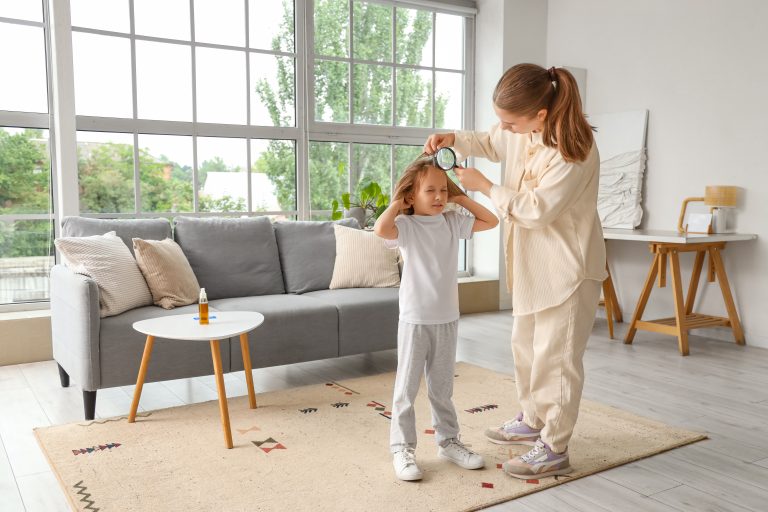
Treat only when it is certain that live lice are there. The AAP says head lice medicine should be used only when it is certain that your child has living head lice, and the CDC says misdiagnosis of head lice infestation is common. Finding a live nymph or adult louse on the scalp or hair is the best way to diagnose an infestation. Adult lice are roughly 2 to 3 mm long, about the size of a sesame seed, and a nymph is about the size of a pinhead. They avoid light and move quickly, so a fine-toothed comb and a magnifying lens help.
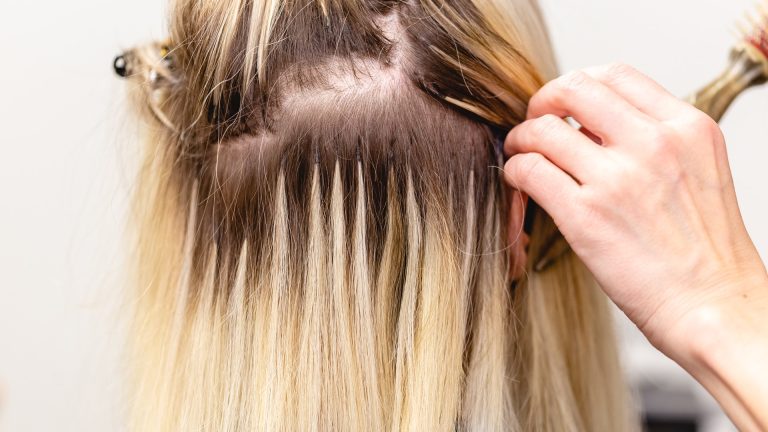
Nits are where parents get tripped up. The CDC says they are confused with dandruff, hair spray droplets and dirt particles, and the AAP gives the test that settles it: nits are firmly attached to the hair, while dandruff and dirt are not. Look behind the ears and near the back of the neck for nits attached within 1/4 inch of the base of the hair shafts; the AAP puts eggs within 4 to 6 mm of the scalp. If the only nits you find sit farther out than that, the CDC says the infestation is probably old and does not need treatment. If you are not sure, see your healthcare provider.
Where Combing Helps and Where It Falls Short
Combing is how you find lice and how you clear nits afterward, but the AAP says the comb-out method usually doesn’t work on its own to get rid of head lice. The most effective way to treat head lice, in the AAP’s words, is with head lice medicine. That matters at this age, because a plan built entirely on combing asks a lot of a child who cannot be talked into sitting still.
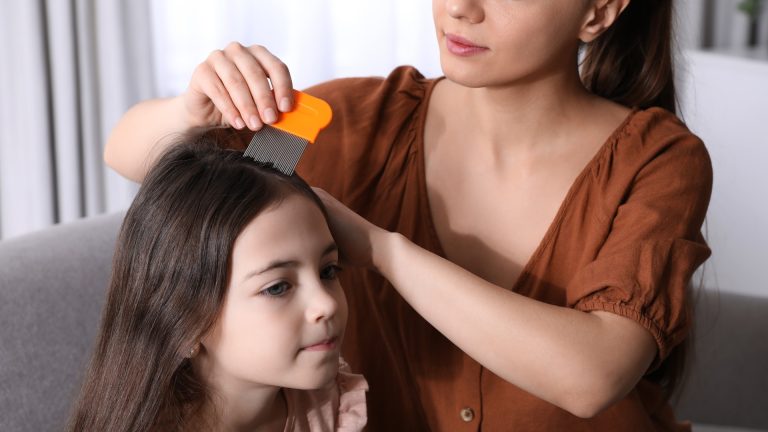
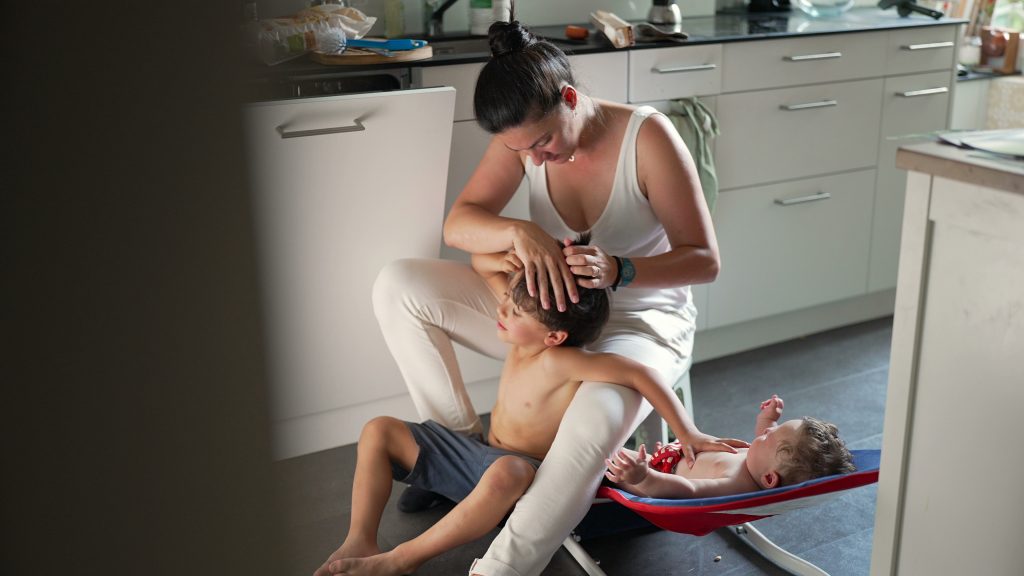
The AAP’s sequence is short. Seat your child in a brightly lit room, wet the hair, part it, and comb through in small sections with a louse or nit comb. After each pass, wipe the comb on a wet paper towel and examine the scalp, comb and towel. Repeat until all of the hair is done. After each treatment, the CDC says to check the hair and remove nits and lice every 2 to 3 days for the next 2 to 3 weeks.
Ask the doctor whether the option you land on calls for nit combing at all. The CDC says nit combing is not required with ivermectin lotion, and that you do not need to remove nits when treating with spinosad topical suspension. If combing is part of the week anyway and your child dislikes it, our post on sensory-friendly lice treatment options may help.
Safety Rules That Matter More at This Age
An adult applies the medicine, follows the label exactly as written, and stays with the child the whole time. The CDC and the AAP repeat these rules.
- Medicine should be applied by an adult; never let children apply it, and do not leave a child alone with medicine in his or her hair.
- Do not use a combination shampoo or conditioner before the lice medicine, and do not re-wash the hair for 1 to 2 days after removing it.
- Rinse the medicine off with your child’s head over a sink, using warm water, not hot water.
- Keep lice medications out of the eyes, and flush immediately if they get in.
- Do not use two head lice drugs at once, or extra amounts of any of them, unless a provider or pharmacist says to.
- Do not treat more than 2 to 3 times with the same medication if it isn’t successful; check with your child’s doctor before a second or third medicine.
- Never place a plastic bag on a child’s head.
The CDC puts the reason plainly: the drugs used to treat lice are insecticides and can be dangerous if misused or overused.
Home Remedies the CDC and AAP Tell Parents to Skip
The kitchen-cabinet cures have no evidence behind them. The CDC says it does not have scientific evidence that suffocating head lice with mayonnaise, olive oil, margarine, butter or similar substances is an effective form of treatment, and the AAP says not to use home remedies such as petroleum jelly, mayonnaise, tub margarine, essential oils or olive oil, because no studies prove they work. MedlinePlus puts it the same way: there is no clear scientific evidence that lice can be suffocated by home remedies.
Two of the ideas that circulate are worse than useless. Never use gasoline or kerosene, which MedlinePlus calls dangerous and flammable, and never use medicines made for use on animals. Do not spray pesticides in your home either; the CDC says fumigant sprays and fogs are not necessary to control head lice and can be toxic if inhaled or absorbed through the skin. If an oil is still on your list, our post on natural lice treatment and what works is worth a read before it goes near a toddler’s scalp.
Frequently Asked Questions
How did my toddler get head lice?
Mainly through head-to-head contact with a person who has lice. The CDC says the most common way to get head lice is head-to-head contact with a person who already has head lice, and that lice move by crawling and cannot hop or fly. MedlinePlus adds that young children often have head-to-head contact while playing together, and that personal hygiene and cleanliness have nothing to do with getting head lice.
Does everyone in the house need to be checked?
Yes. The CDC says to check all household members and other close contacts for head lice, and to treat everyone infested, plus anyone they share a bed with, at the same time. For a child this small that includes the adults who carry and hold them. An adult louse can live on a person’s head for about 30 days, so a head that gets skipped keeps the cycle running.
Will my toddler need a second treatment?
It depends on whether the medicine kills eggs. The CDC says that if your medication kills lice but not eggs, treat again about a week after the first treatment, and puts the second treatment at 7 to 9 days depending on the drug. Treat again only if live, crawling lice are there several days on, and talk to your provider first. Our notes on when crawling lice after treatment mean a recheck explain what to look for.
Can lice spread from the crib, the car seat, or stuffed animals?
The risk is very small. The CDC says head lice mainly spread by direct contact with the hair of an infested person, and that the risk from a louse that has fallen onto a rug, carpet or furniture is very small. Machine wash and dry what your child wore or used in the two days before treatment, using hot water at 130 degrees Fahrenheit and high heat drying. Seal what you cannot wash in a plastic bag for two weeks.
Why is my toddler still scratching after treatment?
Itching can outlast the lice. The AAP says itching caused by head lice can last for weeks, even after the lice are gone, and the CDC says some medications may cause itching or a mild burning sensation. Nits may stay in the hair after treatment, but successful treatment will kill crawling lice. If the scratching keeps up, our look at why a head stays itchy after lice treatment covers what else can cause it.
Would I even notice if a baby had lice?
Not necessarily. The CDC says people with head lice may not have symptoms, particularly with a first infestation or when an infestation is light, and that it may take four to six weeks for itching to appear the first time. Watch for what you can see instead: scratching, irritability and sleeplessness, and sores on the head from scratching, which can sometimes become infected with bacteria normally found on the skin.
How Our Clinic Can Help
Lice Lifters of Chester County can take the first step off your plate. We check every head in the household, not only the child who started the search. If live lice turn up, our professional lice treatment is non-toxic, safe for all ages, and finished in one visit, and same-day appointments are available when the day has already gone sideways. The 30 Day Guarantee applies when the whole family is checked. Your child’s doctor stays the right person to ask about any medicine for a child this young. When you are ready, book a head check and bring your questions along.