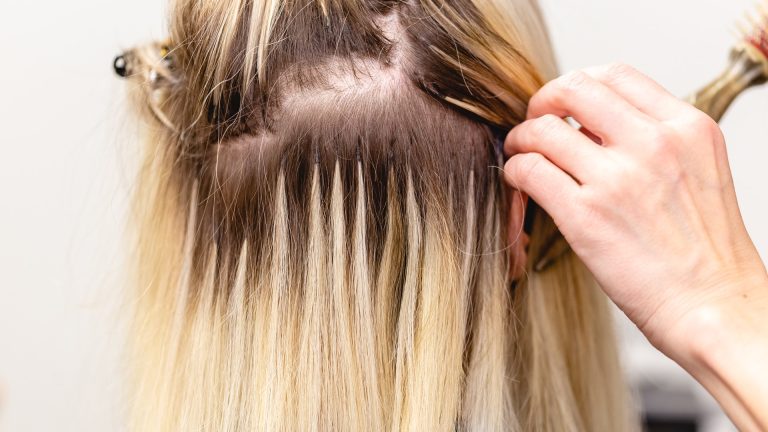
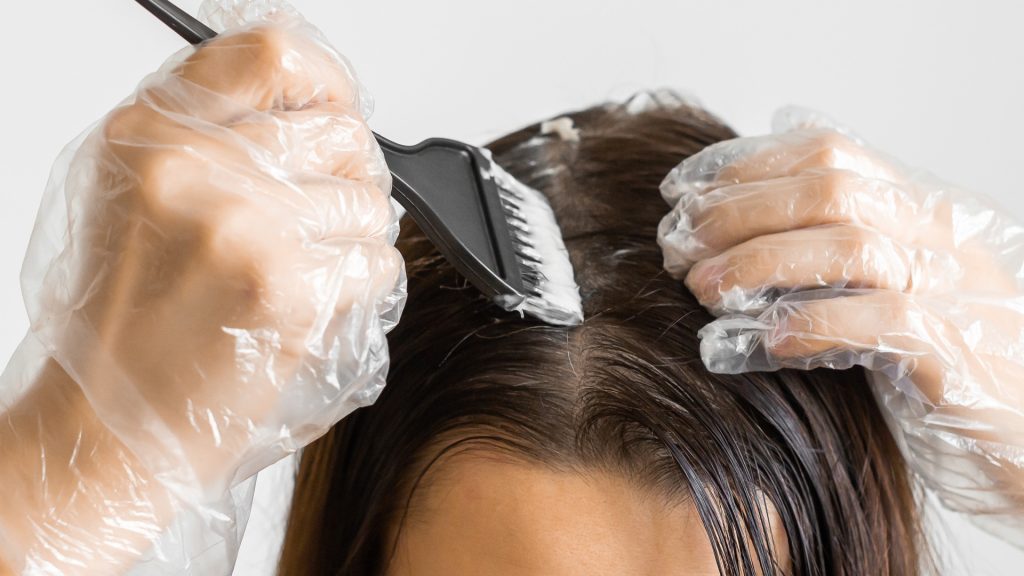
No. Hair dye and bleach are not head lice treatments, and neither the CDC nor the American Academy of Pediatrics names either one among the products that treat an infestation. The AAP’s position is plain: the most effective way to treat head lice is with head lice medicine, chosen with your child’s doctor. Coloring or lightening hair may change how hair looks, but it is not a plan for live lice or for the eggs glued near the scalp.
What the CDC and the AAP Say When a Parent Asks About Hair Color
They point parents to medicine, not to the color aisle. The CDC’s treatment page says, “You can treat head lice with medications (pediculicides) that are either over-the-counter or by prescription,” and the CDC names the active ingredients that an FDA-approved over-the-counter head lice product contains. Hair color, lightener and perm solution are not on that list. The AAP is just as direct: head lice can be treated at home, “but it’s important to check with the doctor first.”
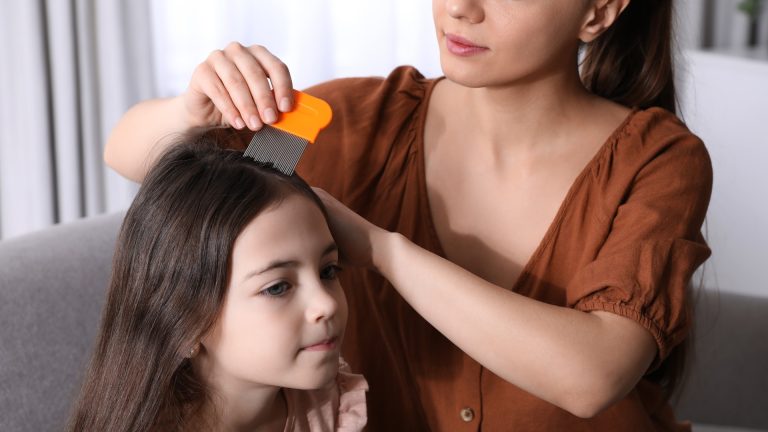
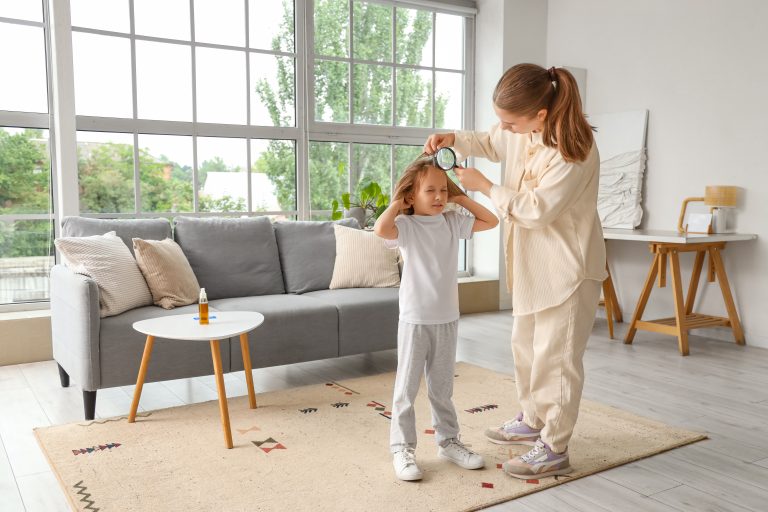
Confirming live lice comes first. The AAP says head lice medicine “should be used only when it is certain that your child has living head lice,” and MedlinePlus says a diagnosis “usually comes from seeing a louse or nit.” The CDC adds that “misdiagnosis of head lice infestation is common” and that nits get confused with dandruff, hair spray droplets and dirt particles. Bleaching a scalp that has no live lice on it treats nothing. Our guide to checking your child’s hair for lice walks through the comb-and-wipe method the AAP describes, and the dye question gets a closer look in whether hair dye actually kills head lice.
Bleach, Nits and the Egg Problem
Bleaching hair is not a way to kill lice or their eggs, and the egg half of this question is where even genuine lice medicines part company. The CDC says, “Some medicines kill lice and eggs; retreatment is usually not required for these,” while “other medicines kill lice but are not effective at killing eggs and so retreatment is recommended.” A product that leaves viable eggs on the hair has only paused the problem.
The schedule comes from the louse. Lice attach their eggs to hair close to the scalp, and the CDC says nits take about a week to hatch, with a range of 6 to 9 days; the AAP puts hatching at 7 to 12 days depending on the surrounding temperature. The AAP also says eggs are usually found within 4 to 6 mm of the scalp and do not survive farther away, and that the cycle can repeat every 3 weeks if head lice are left untreated.
Two CDC points keep parents from misreading the result. Nits may stay in hair after treatment, but successful treatment will kill crawling lice, and you should treat again only if live, crawling lice are there several days later. Nits attached more than 1/4 inch from the base of the hair shaft are “almost always hatched or dead.” If eggs are your worry, our post on whether lice shampoo kills the eggs stays on that point.
Perms, Peroxide and the Dye Versus Bleach Question
For this decision the difference between dye, bleach, a perm and a bottle of hydrogen peroxide does not matter, because none of them appears in the head lice guidance from the CDC, the AAP or MedlinePlus. The test those sources apply is narrow: does the product kill live lice, and does it kill unhatched eggs. Salon and drugstore hair chemistry is not measured that way, and no result for it is reported.
The warnings about improvising are worth reading first. The AAP says, “Never use dangerous products like gasoline or kerosene or medicines made for use on animals!” and MedlinePlus repeats that kerosene and gasoline are dangerous and flammable. The AAP also lists home remedies to skip, including petroleum jelly, mayonnaise, tub margarine, essential oils and olive oil, “because no studies prove they work.”
Heat deserves its own caution. The CDC’s clinical care guidance says, “Do not smoke or use electrical heat sources, including hair dryers, curlers, and curling or flat irons,” and notes that malathion can irritate skin and is flammable. Our post on whether a flat iron kills head lice takes that further.
What the CDC and the AAP Name Instead
Both name lice medicines, and the detail that shapes your next two weeks is whether the medicine kills eggs. The CDC says, “Both over-the-counter and prescription medications are available to effectively treat head lice,” and the AAP says several prescription treatments are safe to use on children as young as 6 months of age, with several suggesting only 1 application. Here is how the CDC describes each option and the second treatment it calls for.
| Medicine | What it kills | Second treatment |
|---|---|---|
| Permethrin lotion, 1% | Kills live lice but not unhatched eggs; can kill newly hatched lice for several days | Treat again on day nine |
| Pyrethrins combined with piperonyl butoxide | Kills live lice only, not unhatched eggs | Treat a second time 9 to 10 days after the first |
| Benzyl alcohol lotion, 5% | Kills lice; does not kill eggs | Treat again after 7 days |
| Ivermectin lotion, 0.5% | Kills lice; does not kill eggs, but “appears to prevent nymphs (newly hatched lice) from surviving” | Single application on dry hair; do not retreat without talking to a healthcare provider |
| Malathion lotion, 0.5% | Kills live lice and some lice eggs | Second treatment if live lice are still present 7 to 9 days later |
| Spinosad 0.9% topical suspension | Kills live lice and unhatched eggs; nit combing is not required | “Retreatment is usually not needed” |
The CDC gives a minimum age for each: two months and older for permethrin, two years and older for pyrethrins, six months and older for benzyl alcohol, ivermectin and spinosad, and six years and older for malathion. It also says to consult your healthcare provider before treating young children, and the AAP says to check with your child’s doctor before beginning any head lice treatment. The CDC adds that lice have developed some resistance to 1% permethrin, though the prevalence of resistance is unknown, and that the same medication should not be used more than 2 to 3 times if it is not working.
Treating Lice When Your Hair Is Colored: What the Medicine Rules Are
Treat the lice with a product meant for lice, and follow its label exactly. The CDC’s own list of reasons treatment fails includes recent application of combination shampoo or conditioner to the hair, alongside misdiagnosis, not following treatment instructions, resistance and reinfestation. These are the rules the CDC, the AAP and MedlinePlus give for the medicine itself:
- Do not use a combination shampoo/conditioner, or conditioner, before using lice medicine (CDC).
- Use the medicine as directed on the box or label, following the package directions exactly as written (CDC and AAP).
- An adult applies it; never let children apply the medicine, and do not leave a child alone with medicine in their hair (AAP).
- Rinse it off with the child’s head over a sink, using warm water, not hot water (AAP).
- Do not re-wash the hair for 1 to 2 days afterward; the AAP says not to shampoo for 24 to 48 hours (CDC and AAP).
- Use only one product at a time unless your health care provider says to use two (MedlinePlus).
For timing a color service around treatment, ask your child’s doctor and follow the color product’s label. The follow-up is the part that is scheduled: comb with a fine-toothed nit comb every 2 to 3 days for 2 to 3 weeks after treatment, which the AAP says helps remove nits and eggs, though it adds that “the comb-out method usually doesn’t work on its own to get rid of head lice.” Both also say household members and close contacts should be checked.
Frequently Asked Questions
Does bleach kill lice?
Nothing in the head lice guidance from the CDC, the AAP or MedlinePlus says bleach kills lice. Those sources name a short list of medicines and describe exactly what each one does to live lice and to eggs, and hair lightener is not among them. Confirm live lice first, then pick a treatment with your child’s doctor.
Does bleach kill lice eggs?
The CDC, the AAP and MedlinePlus do not report that bleach kills nits. Eggs are the harder target even for real lice medicines, which is why the CDC splits its advice between products that kill eggs and products that need a second round timed to hatching. Because nits stay stuck to the hair, counting leftover specks is a poor measure of success.
If I bleach my hair, will it kill the lice?
Lightening hair is not a lice treatment, so plan to treat separately. The cost of waiting is arithmetic: the CDC says an adult female can lay about six eggs each day, the AAP says up to 10, and those eggs hatch in roughly a week. Treat the lice on the schedule the medicine’s label sets, and ask your child’s doctor about timing any color.
Does hydrogen peroxide kill lice?
Hydrogen peroxide does not appear in the lice guidance published by the CDC, the AAP or MedlinePlus, so those sources report no result for it. They judge effectiveness in two parts, live lice killed and unhatched eggs killed, and they list the active ingredients FDA-approved over-the-counter head lice products contain. The AAP tells parents to call the pediatrician before treatment.
Does a perm kill lice?
A perm is not listed as a head lice treatment by the CDC, the AAP or MedlinePlus either. Head lice are insects that feed on human blood and live on the scalp, and the guidance measures a treatment by what it does to lice and unhatched eggs there. Salon services are not evaluated that way, so use a product meant for lice.
What does the CDC say about head lice and hair dye?
The CDC’s head lice pages cover medications, nit combing, laundry and household steps, and they do not present hair dye as a treatment. The treatment page says to use the lice medicine as directed on the box or label, and that extra measures beyond medication “are usually not necessary.”
What is the difference between hair dye and bleach for lice?
For lice, the difference changes nothing, because neither is a treatment in CDC or AAP guidance. The question that does separate products is the one those sources answer for every medicine they name: does it kill live lice, and does it kill unhatched eggs. Judge any option by those two answers, with your child’s doctor involved in the choice.
How Lice Lifters of Chester County Can Help
If you are weighing a box of color against a lice product, a head check is the faster way to know what you are actually dealing with. We check the whole family, which is also what the CDC and the AAP advise, and colored or lightened hair is parted and checked section by section like any other hair. If we find live lice, our professional lice treatment is non-toxic and finishes in one visit. Same-day appointments are available, and our 30 Day Guarantee applies when the whole family is checked. Questions about which medicine suits your child still belong with your child’s doctor, and we are glad to work alongside that advice. When you would rather have an answer today than a guess, book a head check.