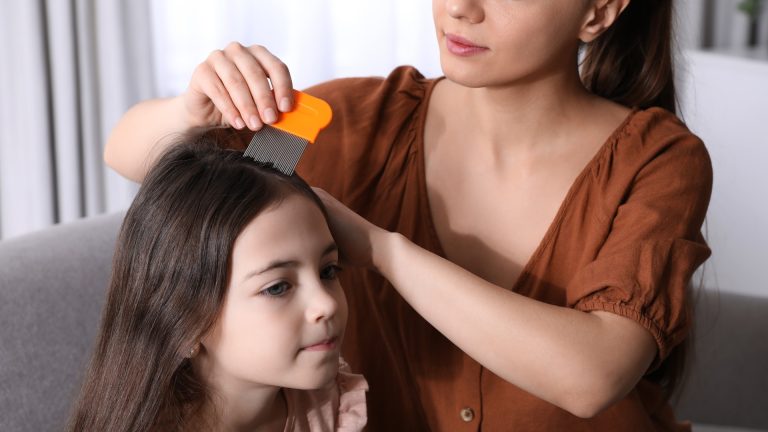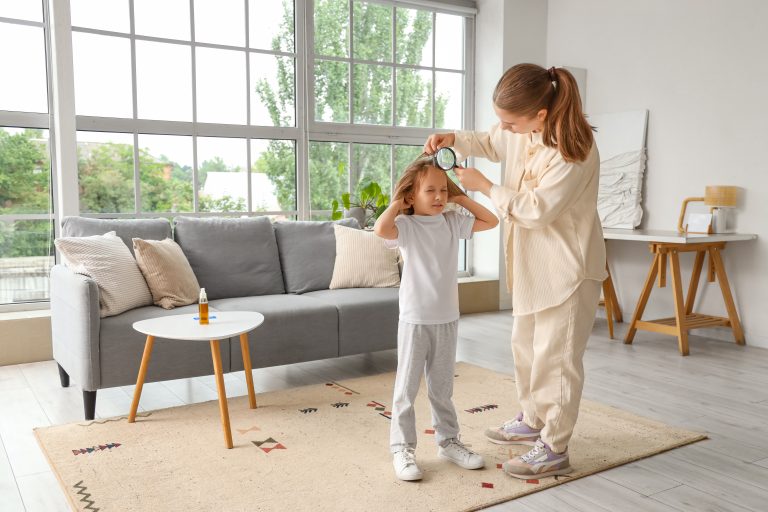


Head lice cannot jump or fly, yet many parents still believe lice can jump between children, a persistent misconception that drives unnecessary panic and wasteful spending across households nationwide.
Can Head Lice Actually Jump or Fly?
The short answer is no, and the biology behind this answer is definitive and well-established. Head lice (Pediculus humanus capitis) are wingless obligate human parasites that have never possessed wings. Unlike fleas, which have powerful specialized hind legs designed for leaping, lice have six short legs each tipped with a single hook-shaped claw built exclusively for gripping cylindrical hair shafts with remarkable tenacity.
Lice move exclusively by crawling along hair. They cannot leap, hop, or become airborne under any circumstances. When a louse accidentally falls off a host onto a flat surface, it becomes largely immobile and disoriented because its specialized gripping claws cannot effectively navigate smooth flat textures like tabletops, tile floors, or plastic furniture.
For Chester County families in West Chester and Downingtown, this biological fact should fundamentally reshape how you think about lice exposure and prevention. Lice are not lurking in classrooms, movie theaters, or playgrounds waiting to launch themselves onto your childs head from a distance. They require direct, sustained physical contact to transfer between individuals, and understanding this key mechanism changes the entire prevention equation from anxiety-driven avoidance to targeted practical measures.
Despite the clear scientific evidence, the jumping myth remains remarkably persistent among parents. Deeply held misconceptions about common lice myths require repeated factual reinforcement before they are fully replaced with accurate understanding of actual transmission mechanisms.
How Do Head Lice Actually Spread Between People?
Head lice spread mainly through direct head-to-head contact. This means heads must physically touch, hair must intermingle between two individuals, and a louse must crawl from one scalp to another during the contact window. The process requires both sustained physical proximity and enough time for the louse to navigate from one hosts hair to anothers.
Everyday activities like huddling over a shared phone screen, posing together for group selfies, sleeping head-to-head during sleepovers, and wrestling during play or organized sports all provide the head-to-head contact lice need, repeatedly throughout a typical day for active children and teens.
A smaller route is fomite transmission, where lice transfer between hosts via shared objects that contact the head. Hats, helmets, hairbrushes, pillows, and scarves are the most commonly cited fomites. However, the AAP says there is a very small chance that head lice spread by sharing items such as combs, brushes, hats and sports helmets. Lice that have separated from a host become sluggish, disoriented, and increasingly immobile, dying within two days without access to a human blood meal.
Why the Jumping Myth Persists
The widespread myth about jumping lice likely originated from confusion with fleas, which are a completely different order of insects that actually do jump impressive distances. Parents who discover lice on multiple family members within a few days naturally assume the insects must be able to leap between heads to spread so quickly. In reality, the close physical contact inherent in normal household interactions, including reading together, watching television on a shared couch, and bedtime routines, provides ample crawling opportunities for lice to spread without any jumping ability required.
Static Electricity and Hair Contact
Some parents report observing what appears to be lice jumping between heads via strands of hair that bridge the gap between two people through static electricity. While static charges can indeed cause individual hair strands to reach toward nearby surfaces or another persons hair, this is not the louse jumping. The insect is simply following a temporary hair bridge that static created between two heads. This phenomenon occurs more frequently in dry winter air with low humidity.
What Does This Mean for Lice Prevention in Chester County?
Understanding that lice can only crawl fundamentally changes the optimal prevention strategy for families. You do not need to fumigate your home with chemical sprays, demand that schools spray classrooms, or quarantine your child in isolation from family activities. The CDC explicitly and firmly states that environmental insecticide sprays are unnecessary for lice management and potentially harmful to household occupants. Instead, effective prevention focuses all effort on reducing direct head-to-head contact opportunities during the period of active infestation.
Several practical prevention strategies can help families. Teaching children to avoid unnecessary head-to-head contact during play and social interactions reduces the primary transmission route. Keeping long hair tied back in braids or buns reduces the available contact surface area. Assigning individual cubbies, hooks, or storage bins for hats, scarves, and jackets at school prevents fomite-based transmission through shared storage. Performing weekly head checks with a fine-toothed metal nit comb catches infestations early when they involve few lice and are easiest to treat. Recognizing the signs of head lice promptly is the most effective containment tool available to any family.
Families in Phoenixville and Coatesville should also know that preventing lice after known exposure is straightforward when you understand lice cannot jump across distances. Simply avoid direct hair-to-hair contact with the infested individual until their treatment is complete, and screen all household members with a nit comb within 48 hours of learning about the exposure to catch any cases before they can spread further.
Should Parents Worry About Lice on Furniture and Clothing?
Worried excessively, no. Taking basic reasonable precautions, yes. Lice found on combs, brushes, pillowcases, or bedding are typically already in the process of dying from lack of a blood meal.
The practical household steps are limited and manageable. Wash bedding and recently worn clothing in hot water above 130 degrees Fahrenheit to kill any stray lice immediately. Vacuum upholstered furniture cushions and car seat headrests to remove any fallen lice. Seal items that cannot be washed, such as stuffed animals or decorative pillows, in a plastic bag to ensure any lice present die from starvation. These simple measures eliminate any environmental lice without chemical sprays, professional cleaning services, or the extensive deep-cleaning rituals that anxious parents sometimes undertake unnecessarily.
Lice Lifters of Chester County advises families across West Chester, Downingtown, Exton, Malvern, Phoenixville, and Coatesville to focus the vast majority of their time, energy, and money on treating the affected individual or individuals thoroughly and professionally rather than deep-cleaning the entire home environment. When the infested person receives effective treatment, the environmental risk resolves itself completely within two days as any stray lice die naturally without a host.
Pets Cannot Carry Human Head Lice
Another common concern that generates unnecessary worry is whether the family dog or cat can serve as a lice reservoir that keeps reinfesting treated family members. The answer is a definitive no. Human head lice are strictly species-specific obligate parasites. CDC guidelines confirm that Pediculus humanus capitis cannot feed on, survive on, or reproduce on any animal host. Your pets are completely outside the lice transmission cycle and require zero treatment or precautions during a family lice event.
When to Seek Professional Help
If you have identified live lice or viable nits on any family member through screening, professional treatment offers the fastest and most reliable resolution available. Lice Lifters of Chester County provides single-visit enzyme-based treatment that eliminates both adult lice and cemented nits in approximately one hour, with a 30-day guarantee for complete peace of mind. No jumping-lice myths are required to understand why this approach works: the science is simple, direct, and effective.
Frequently Asked Questions
Can lice jump from head to head?
No. Head lice cannot jump. They lack the specialized hind leg structure that fleas use for jumping. Lice can only crawl and require direct sustained contact to transfer between hosts.
Can lice fly?
No. Head lice are completely wingless insects that have never possessed wings at any point in their evolutionary history. Any perception of lice jumping or flying is a misconception, likely confused with fleas or other household insects.
How far can a louse travel on its own?
A louse travels only by crawling along hair shafts. Off the head on flat surfaces, movement slows dramatically because their specialized claws are adapted for gripping cylindrical hair shafts, not smooth flat materials.
Can lice crawl on furniture and infest a home?
Lice can fall onto furniture or bedding but cannot establish a viable infestation outside a human scalp. The CDC states lice die within two days without access to human blood. Environmental fumigation of your home is unnecessary.
Do lice spread through swimming pools?
Lice grip hair tightly during submersion and can survive underwater for hours. The CDC notes that chlorinated pool water does not kill lice. However, lice do not release from hair into the water, so pools are not a meaningful transmission route.
What is the most common way head lice spread?
Direct head-to-head contact is the most common way head lice spread. A smaller risk comes from shared items touching the head such as hats, brushes, helmets, and pillows.
Can lice spread through a brief hug?
Brief social hugs rarely provide sufficient contact time for transfer. Lice typically need sustained head-to-head contact to crawl from one head to another. Prolonged embraces where hair intermingles do carry a small but real risk.