
According to the CDC, an estimated 6 to 12 million head lice infestations occur annually among U.S. children ages 3 to 11, and many parents wonder whether protective hairstyles like braids, buns, or updos can serve as a reliable barrier against these persistent parasites.
Can Lice Actually Crawl Through Braids and Tight Hairstyles?
Head lice are six-legged parasites roughly the size of a sesame seed, and their specialized claws are designed to grip individual hair shafts. When hair is braided tightly, the strands are bundled together, making it more difficult for a louse to transfer from one head to another during the brief head-to-head contact that drives most infestations.
However, braids do not make you immune. If a louse reaches the scalp, it can still feed, lay eggs, and establish a full infestation. Families in West Chester and Downingtown who rely solely on hairstyle changes often discover nits weeks later. The key distinction is that braids may reduce transmission risk but do not eliminate it. Learn more about how head lice actually spread.
How Lice Navigate Different Hair Textures
The CDC reports that head lice infestation is much less common among African American persons than among persons of other races. The CDC also notes that lice may have claws better adapted for grasping the shape and width of some types of hair than others.
Do Buns and Updos Offer Better Protection Than Braids?
A bun or updo tucks loose hair against the scalp, reducing the number of free-hanging strands that could brush against another child’s hair on a school bus or playground.
At Lice Lifters of Chester County, we regularly see families from Exton and Malvern who assumed a tight bun would keep their children safe during sleepovers. While the hairstyle helped, lice still found exposed sections around the hairline, ears, and nape of the neck.
The Nape and Hairline Vulnerability Zone
Even the most meticulous updo leaves small sections of hair exposed near the ears and nape. Parents in Phoenixville and Coatesville should understand that styling hair up is helpful but must be combined with other prevention measures for reliable results. Consider pairing hairstyles with lice prevention products that work.
What Hairstyle Practices Actually Reduce Lice Transmission Risk?
The most effective hairstyle strategy combines several elements. First, keep hair pulled back and secured during high-risk activities like sports, school, and group play. Second, use a lice-deterrent spray containing ingredients such as rosemary or peppermint oil. Third, avoid sharing hair accessories, helmets, and headphones, which the CDC lists among the less common ways lice spread.
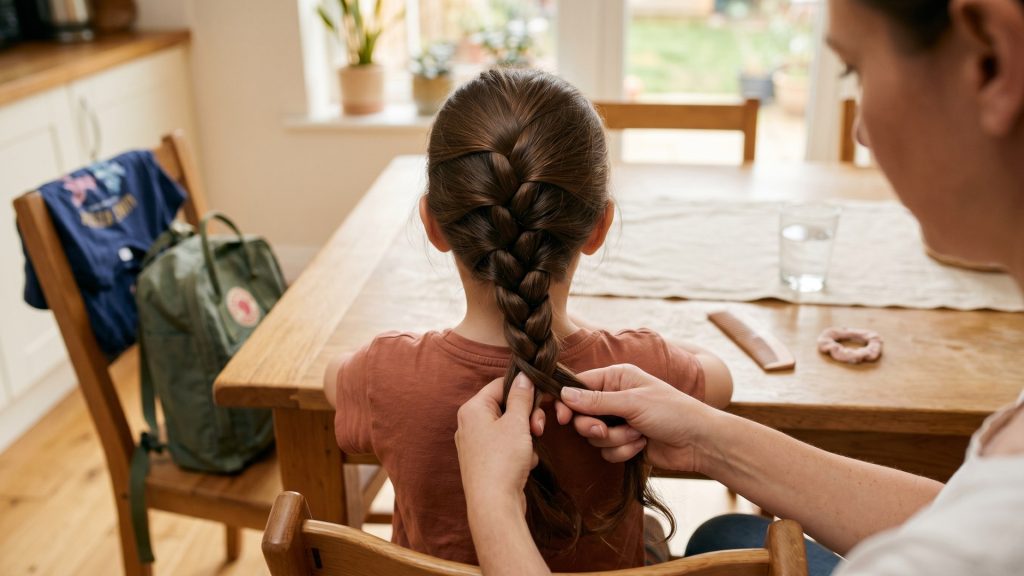
For Chester County families, combining a simple French braid with a daily deterrent spray is a practical approach.
Best Braid Styles for Lice Prevention
French braids and Dutch braids can help because they incorporate hair starting at the crown rather than leaving loose sections at the top. Box braids and cornrows also reduce exposed strands significantly. A single ponytail, while better than fully loose hair, still leaves a swinging tail that can contact other heads.
Should You Change Your Child’s Hairstyle During an Active Outbreak?
If your child’s school in Downingtown or West Chester has reported active lice cases, switching to a braid or bun is a smart interim measure. However, if your child already has lice, changing the hairstyle will not resolve the infestation. Lice that have already reached the scalp will continue to feed and reproduce regardless of how the hair is styled above.
In some areas lice have become resistant to the active ingredient in many over-the-counter products, so they can fail. If you discover nits during a routine check, learn how to check your child for lice and schedule an appointment promptly.
Why Braids Can Complicate Home Checks
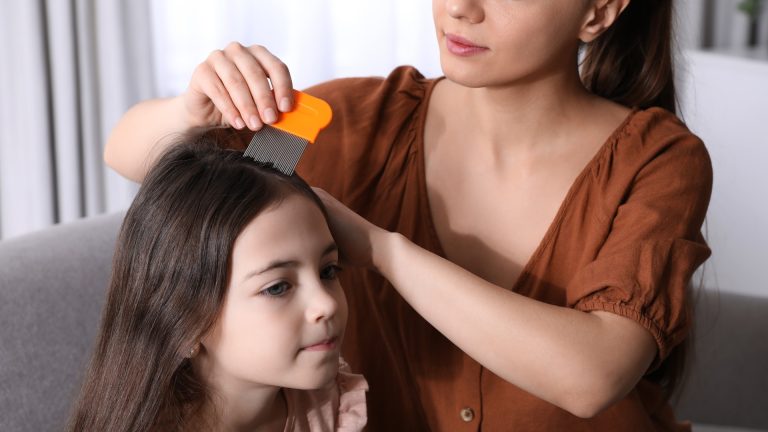
One drawback of tight braids is that they make thorough nit-combing more difficult. It is best to fully unbraid hair before performing a wet-comb check, because nits cemented within a braid can be invisible during a casual visual inspection. Families who braid their children’s hair daily should schedule weekly unbraided wet-comb checks to catch any infestation early, ideally within the first seven to ten days before eggs hatch.
Are There Any Hairstyles That Actually Make Lice Worse?
Long, loose hair that frequently falls across the face or shoulders creates the maximum opportunity for head-to-head transfer. Half-up, half-down styles offer moderate protection but leave the lower half fully exposed.
Shared hair accessories compound the problem. The CDC notes that while spread through objects is less common, sharing brushes, combs, hair ties, and hats can transfer lice or nits. Families in Malvern and Exton should establish a household rule: every child gets their own set of hair tools, clearly labeled and stored separately.
Frequently Asked Questions
Can lice live in braids permanently?
Lice cannot survive in braids indefinitely. They need direct access to the scalp to feed on blood. However, nits can be cemented to braided strands and hatch once the braid is loosened.
Do braids prevent lice completely?
No. Braids reduce transmission risk by limiting exposed hair, but the CDC confirms that any head-to-head contact can still allow transfer. Braids are a supplementary strategy, not a guarantee.
Should I braid my child’s hair every day during lice season?
If your school or daycare has reported cases, daily braids combined with a lice-deterrent spray are a practical option.
Can lice lay eggs in a tight bun?
Yes. If a louse reaches the scalp, it can lay eggs regardless of hairstyle. Nits are cemented close to the scalp, so buns do not prevent egg-laying once infestation occurs.
What is the best hairstyle to prevent lice?
A French braid or Dutch braid that incorporates all hair from root to tip offers the greatest reduction in exposed strands. Pair it with a peppermint-based deterrent spray for extra support.
Do boys need to worry about hairstyles and lice?
Boys with longer hair face similar transmission risks. Boys with longer hair should consider pulled-back styles during outbreaks.
Should I unbraid hair before a lice check?
Absolutely. Fully unbraid the hair and wet-comb with a fine-toothed nit comb for accurate detection. Nits hidden inside braids are easy to miss.
Can Lice Lifters of Chester County treat braided hair?
Yes. Our trained technicians in Exton can treat all hair types and styles. We recommend arriving with hair unbraided for the most thorough treatment, but we handle the rest from there.
Frequently Asked Questions
Can lice live in braids or updos?
Lice can still infest hair that is braided or in updos. While tight hairstyles reduce the risk of head-to-head transmission, lice that are already on the scalp can crawl through braids and continue to lay eggs near the hair shaft.
Do braids prevent lice?
Braids and buns can lower the chance of picking up lice because they limit exposed hair strands that come into contact with others. However, braids do not guarantee prevention and should be combined with other precautions such as regular head checks.
Should you unbraid hair to check for lice?
Yes. You should always take hair out of braids, buns, or ponytails before performing a thorough lice check. Lice and nits can hide deep within tightly woven sections and are easy to miss if the hair remains styled.
Are certain hairstyles better for lice prevention?
Tight buns, braids, and low ponytails all help reduce lice transmission because they keep hair close to the head and limit strand-to-strand contact. These styles are especially helpful during school or camp settings.
Can nits survive in braided hair?
Nits (lice eggs) are cemented to hair strands and survive regardless of the hairstyle. Braided hair does not kill or dislodge nits. Professional comb-out and treatment are still needed to remove them.
How do you treat lice in braided hair?
You must fully unbraid the hair before applying any lice treatment. Professional clinics like Lice Lifters of Chester County use specialized combs and enzyme-based treatments that require complete access to every section of hair for effective removal.