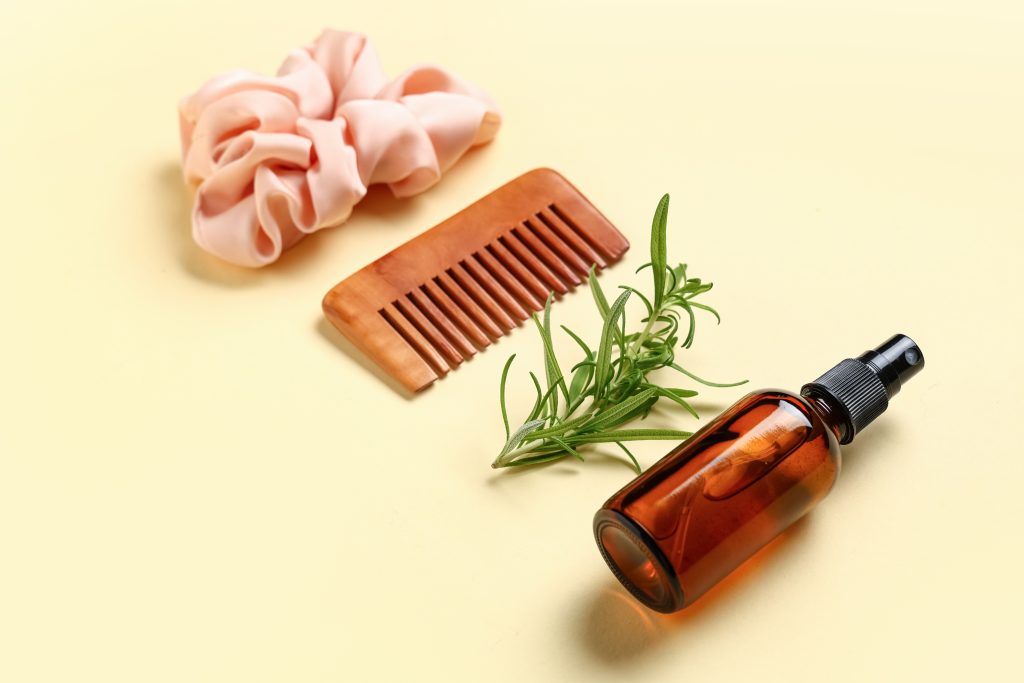
The prevention the CDC and the AAP put in writing is a short list of habits, not a product: avoid hair-to-hair contact during play, keep hats, brushes and towels personal, and check heads with a fine-toothed comb so a case is caught early. No repellent spray, shampoo or oil appears on that list. The products these sources do name are for finding lice and treating a case that already exists, not for keeping one away.
What The CDC And The AAP Actually Put In Writing
Their prevention advice aims at contact, because contact is how head lice travel. The CDC says head lice mainly spread by direct contact with the hair of a person infested with lice, and the AAP describes the main route as close, prolonged head-to-head contact. That is why the published guidance reads like a set of habits rather than a shopping list:
- Avoid hair-to-hair contact during play and other activities, including sports, sleepovers and camp.
- Do not share clothing such as hats, scarves, coats, sports uniforms, hair ribbons or barrettes.
- Do not share combs, brushes or towels.
- Teach children not to share items they put on their head, such as headphones, hair ties and helmets.
- Do not lie on beds, couches, pillows, carpets or stuffed animals that have recently been in contact with a person who has head lice.
Objects matter less than heads touching. The AAP puts it plainly: there is a very small chance that head lice will spread by sharing items such as combs, brushes, hats and sports helmets, and the CDC treats those routes as less common than direct contact. Two more facts shape what any product can do for you. Getting head lice is not related to cleanliness of you or your environment, and lice can attach to the hair of anyone’s head whether that hair is clean or dirty. So cleanliness is not what prevention has to address.
Do Commercial Sprays Keep Lice Off A Head?
No spray in this guidance is described as keeping lice off a head, and the sprays the CDC and the AAP do address are ones they tell families not to use. The CDC’s instruction is blunt: do not use fumigant sprays or fogs, because they are not necessary to control head lice and can be toxic if inhaled or absorbed through the skin. The AAP says do not spray pesticides in your home, since they can expose your family to dangerous chemicals and are not needed when a child’s scalp and hair are treated properly.
Sprays for rooms and furniture also aim at a risk the CDC calls very small. Head lice do not survive long if they fall off a person and cannot feed, and the CDC puts the risk of getting lice from a louse that has fallen onto a rug, carpet or furniture as very small. It adds that spending much time and money on housecleaning activities is not necessary to avoid reinfestation.
What the CDC does list for a household is ordinary and specific: wash and dry the clothing, towels and bed linens the person used in the two days before treatment, using the hot water cycle at 130 degrees Fahrenheit and the high heat drying cycle; seal items you cannot wash or dry clean in a plastic bag for two weeks; soak combs and brushes in hot water of at least 130 degrees Fahrenheit for 5 to 10 minutes; and vacuum the floor and furniture where the person sat or lay. If a bottle marketed for prevention is in your hand right now, our longer look at whether lice prevention sprays work stays with these same sources.
Is Lice Medicine A Sensible Precaution After A Close Call?
No. The CDC’s instruction is to treat head lice if you have an active infestation, and the AAP is more direct still: head lice medicine should be used only when it is certain that your child has living head lice.
Two reasons sit behind that. The first is accuracy. The CDC says misdiagnosis of head lice infestation is common, and that nits are confused with dandruff, hair spray droplets and dirt particles, so a dose given on a hunch may be treating nothing at all. The second is that these are insecticides. The CDC says the drugs used to treat lice can be dangerous if misused or overused. The AAP notes that head lice can be resistant to the active ingredients in over-the-counter treatments in some communities, that the likelihood of resistance varies across the country, and that parents sometimes treat their children with over-the-counter products up to 5 times before asking their pediatrician for help.
After a close call, the guidance is checking, not dosing. Check all household members and other close contacts for head lice, then treat the people who actually have it at the same time. The AAP asks parents to check with their child’s doctor before beginning any head lice treatment, and the CDC says to consult your healthcare provider before treating young children. For what these bottles are built to do once a case is confirmed, see how lice removal products compare.
Where Oils And Kitchen Remedies Stand
The AAP tells parents not to use home remedies such as petroleum jelly, mayonnaise, tub margarine, essential oils or olive oil, because no studies prove they work. The CDC says it does not have scientific evidence that suffocating head lice with mayonnaise, olive oil, margarine, butter or similar substances is an effective form of treatment, and MedlinePlus, from the National Institutes of Health, says there is no clear scientific evidence that lice can be suffocated by home remedies of that kind. On its myths page the AAP adds that mayonnaise, olive oil, margarine, butter and similar remedies have not been proven as effective head lice treatments, and that substances like gasoline or kerosene are flammable, carrying substantial risk.
Three warnings in that guidance are worth repeating out loud. Never use dangerous products like gasoline or kerosene, or medicines made for use on animals. It is dangerous to place anything made of plastic on a child’s head, and a plastic bag should never go on a child’s head. While a flammable product is in the hair, the CDC says not to smoke or use electrical heat sources, including hair dryers, curlers, and curling or flat irons. We have taken two of these ideas apart on their own: whether tea tree oil kills head lice, and whether mayonnaise or olive oil kills lice.
The One Product Worth Owning Before Anyone Itches
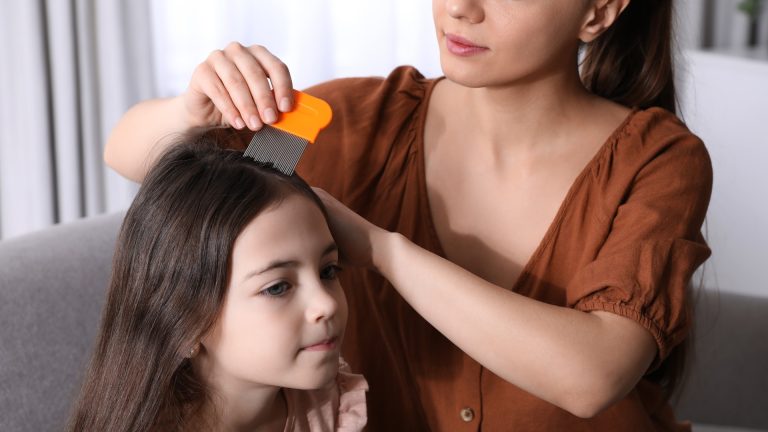
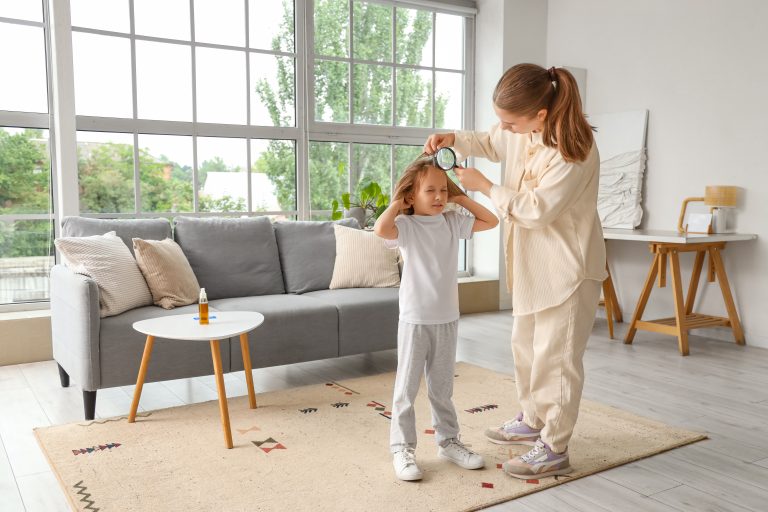
A fine-toothed comb is the only product in this guidance that does useful work before a case exists, and what it does is help you find lice. The CDC says a fine-toothed louse comb may help you find lice, and that a magnifying lens may help you spot crawling lice or nits even though both can be visible with the naked eye. You need that help, because adult and nymph lice are very small, move quickly and avoid light, so they may be difficult to find.
The AAP’s method runs in four steps. Wet the hair. Comb through it in small sections with a louse or nit comb. Wipe the comb on a wet paper towel after each pass, then examine the scalp, the comb and the towel. Repeat until all of the hair has been combed. Work in a brightly lit room, part the hair down to the scalp in very small sections, and start where lice are easiest to find: the hairline at the back of the neck and behind the ears. What you find tells you what comes next.
| What you find | Size and look | What the CDC and the AAP say it means |
|---|---|---|
| A crawling adult louse | Roughly 2 to 3 mm long, about the size of a sesame seed; bodies usually pale and gray, though color may vary | Finding a live nymph or adult louse on the scalp or hair is the best way to diagnose a head lice infestation |
| A nymph | Like an adult but much smaller, about the size of a pinhead (1.5 mm) | It takes about seven days to mature into an adult louse |
| A nit within 1/4 inch of the scalp | Oval, about the size of a knot in thread (0.8 mm long and 0.3 mm wide), yellow to white, firmly attached to the hair | Nits take about a week, a range of 6 to 9 days, to hatch into nymphs |
| A nit more than 1/4 inch from the scalp | The same shape, sitting further out along the hair shaft | Almost always hatched or dead; if no nymphs or adults are found, the infestation is probably old and does not need treatment |
| Specks that brush off | Dandruff, hair spray droplets or dirt particles | Nits are firmly attached to hair, while dandruff, dirt or other particles are not |
A comb is not a cure. The AAP says the comb-out method usually doesn’t work on its own to get rid of head lice, which is why combing belongs in the detection half of this job rather than the treatment half. Our post on whether lice combing actually works follows that distinction further.
Frequently Asked Questions
Do Commercial Sprays Prevent Head Lice?
No guidance from the CDC, the AAP or MedlinePlus describes a spray that stops lice from arriving. Head lice move by crawling and cannot hop or fly, so they transfer when two heads stay close long enough for a louse to walk across. That is the moment prevention has to address, and the published advice addresses it with behavior rather than with something applied to hair.
Which Head Lice Products Do The CDC And The AAP Name?
Two kinds, and both are for an infestation that is already present. The first is lice medicine, which the CDC says comes either over the counter or by prescription. The second is a nit comb, used to remove nits and lice from the hair shaft. MedlinePlus adds that if an over-the-counter treatment does not work for you, you can ask your health care provider for a prescription product.
Can A Shampoo Or Conditioner Keep Lice Away?
No shampoo or conditioner in this guidance is described as preventing lice. The only instructions the CDC gives about them concern timing around lice medicine: do not use a combination shampoo and conditioner, or a conditioner, before applying the medicine, and do not rewash the hair for 1 to 2 days after removing it. Washing is hygiene, and hygiene is not what decides whether lice arrive.
How Long Should We Keep Checking After A Case In The House?
For 2 to 3 weeks after each treatment, checking every 2 to 3 days. The CDC and the AAP describe the same rhythm: comb the hair and remove nits and lice every 2 to 3 days for the next 2 to 3 weeks. MedlinePlus frames the reason simply, saying to keep going for 2 to 3 weeks to be sure that all lice and nits are gone.
Is A Nit Comb Worth Having Before Anyone Has Lice?
Yes, because itching is a late signal. The AAP says it may take up to 4 to 6 weeks after lice get on the scalp before the scalp becomes sensitive to lice saliva and begins to itch, and the CDC notes that a person may have no symptoms at all with a first or light infestation. Regular checks are a good way to spot head lice before they have time to multiply.
Do Pets Need To Be Treated For Head Lice?
No. The CDC states that animals do not get or spread head lice. Head lice feed on small amounts of blood from the scalp and need human blood to survive, so a dog or cat is not part of the chain and nothing bought for a pet changes your family’s risk. Keep the checking, and any treatment, on human heads.
Does Braiding Or Hair Type Prevent Lice?
Neither the CDC nor the AAP lists a hairstyle as prevention. The CDC does note that lice may have claws better adapted for grasping the shape and width of some types of hair than others, but its prevention advice stays on contact and sharing. These sources do not credit tying long hair back with stopping an infestation.
How Lice Lifters of Chester County Can Help
If a check at home has left you unsure, or you would rather not run a treatment yourself, that is what our clinic is for. We check the whole family in one appointment, because a single unchecked head is how a household keeps passing lice back and forth. Our professional lice treatment is non-toxic and finished in one visit, and same-day appointments are available when the day cannot wait. The 30 Day Guarantee applies when the whole family is checked. Your child’s doctor stays the right call before any medicine, and the label is the authority on how a product is used. When you would rather hand the checking to someone else, book a head check.