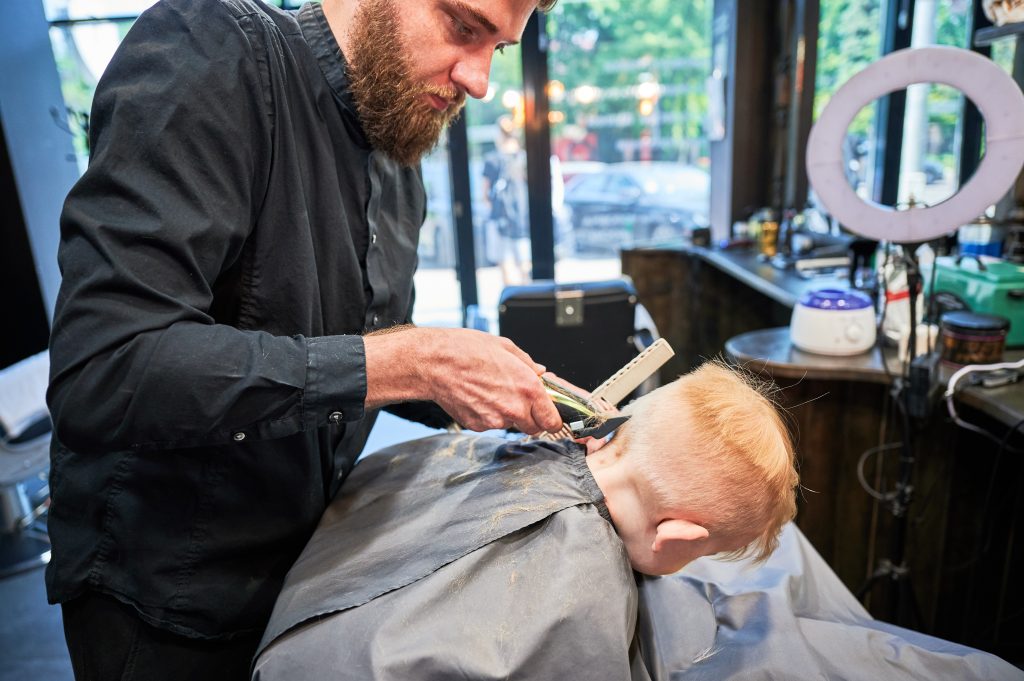
No, you do not have to shave a head to get rid of head lice. The American Academy of Pediatrics says the most effective way to treat head lice is with head lice medicine, and it asks parents to check with their child’s doctor before any treatment starts. What settles a lice problem is a real find, treatment for everyone who has them, and patience with the label instructions, not a pair of clippers.
What the CDC and the AAP Say Gets Rid of Head Lice
Lice medicine, used exactly as the label directs, is the treatment both sources name. The CDC’s treatment guidance says you can treat head lice with medications that are either over the counter or by prescription, and that medications are generally safe and effective when used correctly. It tells you to use the lice medicine as directed on the box or label and to follow all provided instructions. The AAP adds that an adult should apply the medicine, that children should never apply it themselves, and that a child should not be left alone with medicine in the hair. It describes rinsing the medicine off over a sink with warm water, not hot, and not shampooing for 24 to 48 hours afterward.
Two other steps decide whether the first round holds. The CDC says to check all household members and other close contacts, and to treat everyone who is infested, along with anyone they share a bed with, at the same time. It also says that after each treatment you check the hair and remove nits and lice every 2 to 3 days for the next 2 to 3 weeks. Our post on how long it takes to get rid of lice completely goes into that window.
Why Cutting Hair Does Not Change How Lice Spread
Lice travel from head to head by contact. The AAP says the main way head lice spread is from close, prolonged head-to-head contact. The CDC’s overview of head lice describes the same route, with lice spreading mainly by direct contact with the hair of a person who has them. Both are clear that these are crawling insects that cannot jump, hop or fly. A shorter cut does not put a scalp out of reach of a head resting against it.
Cleanliness does not invite them. The AAP says lice can attach to the hair of anyone’s head and that it does not matter whether the hair is clean or dirty, and the CDC says getting head lice is not related to cleanliness of you or your environment. The one hair detail the CDC does raise is that lice may have claws better adapted for grasping the shape and width of some types of hair, but not others, which is the question behind lice and different hair types. MedlinePlus describes the age pattern: children ages 3 to 11 and their families get head lice most often, because young children have head-to-head contact while playing together. The step the CDC names for prevention is avoiding hair-to-hair contact during play.
Where Lice and Their Eggs Sit on a Head
Lice and their eggs stay close to the scalp, and that is where a check has to look. The CDC describes head lice as parasitic insects that live on the scalp, and says they can also turn up on the eyebrows and eyelashes. An adult louse is roughly 2 to 3 mm long, about the size of a sesame seed, and a nymph is about the size of a pinhead. The AAP says lice attach their eggs to hair close to the scalp, that eggs are usually found within 4 to 6 mm of it, and that eggs do not survive farther away. The CDC draws the same line in inches: look for nits attached firmly within a quarter inch of the base of the hair shaft, because nits more than a quarter inch out are almost always hatched or dead.
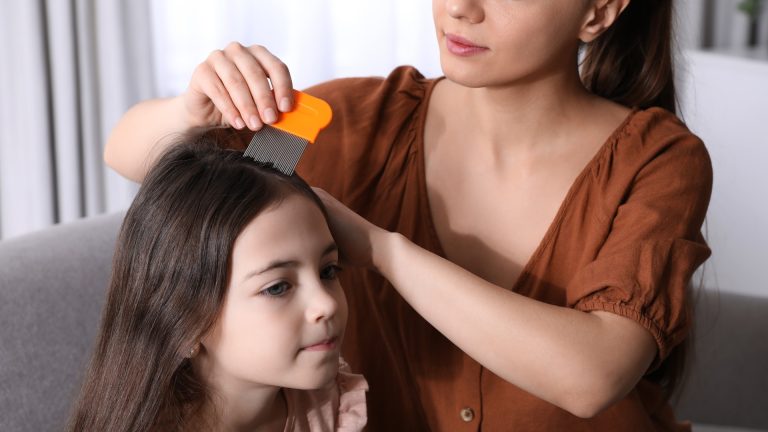
Finding them is the hard part. The AAP says live lice are hard to find because they avoid light and move quickly, and it describes seating the child in a brightly lit room, parting the hair, and searching section by section with a fine-tooth comb. MedlinePlus says to part the hair all the way down to the scalp in very small sections, and the CDC says a magnifying lens may help. The AAP calls the hairline at the back of the neck or behind the ears the easiest place to start. It also helps to know what live head lice look like in hair before you begin, because the CDC says misdiagnosis is common and nits get confused with dandruff, dirt particles and hair spray droplets. The AAP’s tell is the heart of telling lice from dandruff: nits are firmly attached to the hair, while flakes and other particles are not.
The Shortcuts Parents Ask About, and What the Evidence Shows
The shortcuts below do not treat lice on their own, and some of them carry real risk. Here is what the guidance says about the ones that come up when a family is weeks in and out of patience.
| Shortcut | What the CDC and the AAP say |
|---|---|
| Shaving or clipping the hair off | The CDC and the AAP point to medication used as the label directs. The AAP says head lice medicine should be used only when it is certain that a child has living head lice. |
| Mayonnaise, olive oil, margarine or petroleum jelly | The CDC says there is no scientific evidence that suffocating head lice with mayonnaise, olive oil, margarine, butter or similar substances is an effective form of treatment. The AAP says no studies prove such home remedies work. |
| Gasoline, kerosene or products made for animals | The AAP says never use dangerous products like gasoline or kerosene or medicines made for use on animals. MedlinePlus says they are dangerous and flammable. |
| A plastic bag or cap on the head | The AAP says never place a plastic bag on a child’s head, and that it is dangerous to place anything made of plastic on a child’s head. |
| Fumigant sprays or fogs in the house | The CDC says do not use fumigant sprays or fogs, that they are not necessary to control head lice, and that they can be toxic if inhaled or absorbed through the skin. |
| Combing on its own | The AAP says the comb-out method can be used to help check for nits and head lice, but usually does not work on its own to get rid of them. |
The house is not the lever either. The CDC says spending much time and money on housecleaning activities is not necessary to avoid reinfestation, and that the risk of getting lice from one that has fallen onto a rug, carpet or furniture is very small, because lice die within two days if they fall off a person and cannot feed. What it does suggest is modest: machine wash and dry the clothing, towels and bed linens used in the two days before treatment, using the hot water cycle at 130 degrees Fahrenheit and high heat drying; seal what cannot be washed in a plastic bag for two weeks; and soak combs and brushes in hot water of at least 130 degrees Fahrenheit for 5 to 10 minutes.
When Treatment Keeps Failing, Call the Doctor Before the Clippers
A treatment that has not worked is a reason to call your child’s doctor, not a reason to escalate on your own. Head lice may be a nuisance, the AAP says, but they do not cause serious illness or carry any diseases, so there is room to slow down. The AAP also says parents sometimes treat their children with over-the-counter treatments up to five times before seeking help from their pediatrician, that those treatments sometimes are not the most effective, and that head lice can be resistant to their active ingredients in some communities, with the likelihood of resistance varying across the country. The CDC lists the reasons treatment fails: misdiagnosis, recent application of a combination shampoo or conditioner to the hair, not following the treatment instructions, lice resisting the medication, and reinfestation after successful treatment.
A few guardrails come straight from those sources. The CDC says not to treat a person more than 2 to 3 times with the same medication if it is not working, and not to use different head lice drugs at the same time unless a healthcare provider or pharmacist instructs it. The AAP says to check with your child’s doctor before beginning a second or third medicine, and that a child may just need to repeat the same medication or switch to a new one. The CDC also points out that leftover evidence is not the same as live lice: nits may stay in the hair after treatment while successful treatment kills the crawling lice. Treat again only if live, crawling lice are there several days later, the CDC says, and talk to a provider before re-treating.
Frequently Asked Questions
Does the CDC say shaving a head is necessary for lice?
No. The CDC’s treatment steps point to medications, over the counter or by prescription, used as the box or label directs, with treatment reserved for an active infestation. The CDC also says that if you are not sure whether a person has head lice, you should see your healthcare provider rather than guess.
Will a buzz cut keep lice from coming back?
A shorter cut does not change the route lice take. The CDC’s prevention advice is about contact and shared belongings: avoid head-to-head contact during activities, do not share combs, brushes or towels, and do not share hats, scarves, coats, sports uniforms, hair ribbons or barrettes. MedlinePlus adds headphones, hair ties and helmets to the list of things not to pass around.
Can lice live on very short hair?
Hair length is not what a check turns on. The CDC says head lice live on the scalp, and the AAP says they feed on small amounts of blood from it and that eggs are usually found within 4 to 6 mm of it. A check has to cover that band, however short the hair is.
Do lice die once the hair is cut off?
A louse that is off a person and unable to feed does not last long. The CDC says they will die within two days in that situation, and the AAP says they cannot survive more than a day without a blood meal. The CDC says nits cannot hatch and usually die within a week if they are not kept at the same temperature as those close to the scalp.
Can head lice get into eyebrows or eyelashes?
Yes. The CDC says you can find head lice mostly on the head, but also on the eyebrows and eyelashes, and MedlinePlus says the same. That is one reason a thorough check covers more than the top of the head. The CDC also says to keep lice medications out of the eyes and to flush them immediately if any gets in.
My child still itches after treatment. Does that mean we need something drastic?
Itching by itself does not prove the treatment failed. The AAP says itching caused by head lice can last for weeks, even after the lice are gone, and the CDC says the itch is an allergic reaction to louse bites that can take four to six weeks to appear the first time. The AAP suggests asking your child’s doctor when a treatment has not gotten rid of lice.
How Lice Lifters of Chester County Can Help
If you would rather not sort this out alone at the kitchen table, we can take it from here. At Lice Lifters of Chester County we check the whole family, because lice move between heads that spend time close together, and one missed head can start the cycle again. Our treatment is non-toxic and done in one visit, and we hold same-day appointments for the day you actually find something. Our 30 Day Guarantee applies when the whole family is checked. Professional lice treatment is also a reasonable answer when you simply cannot face another round of combing. If you are not certain whether that speck is a nit or a flake, book a head check and let us look.