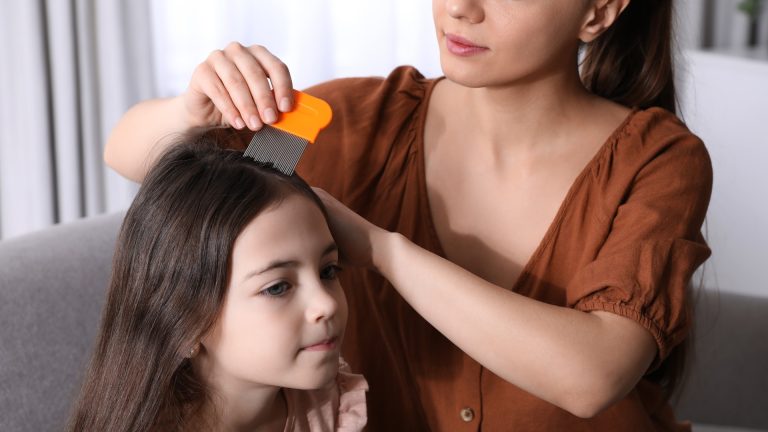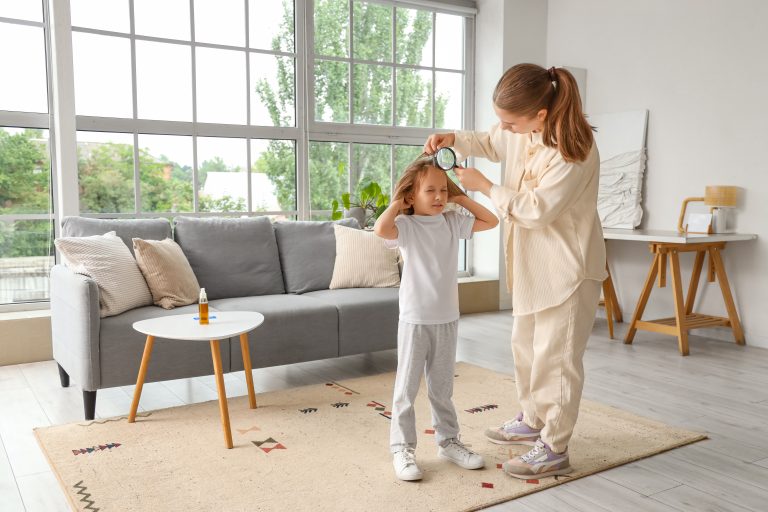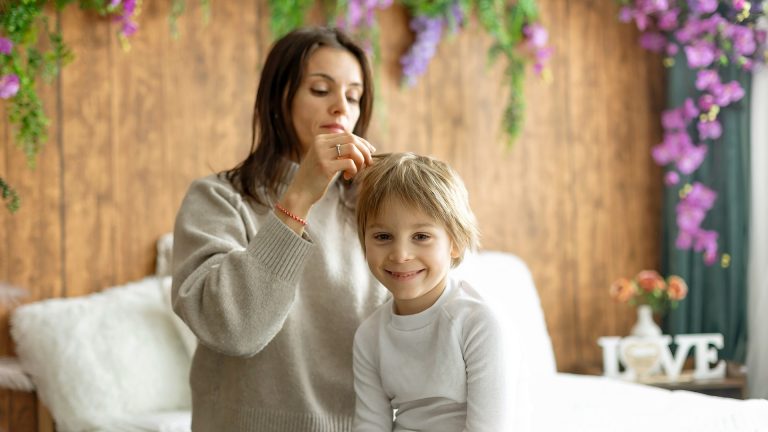

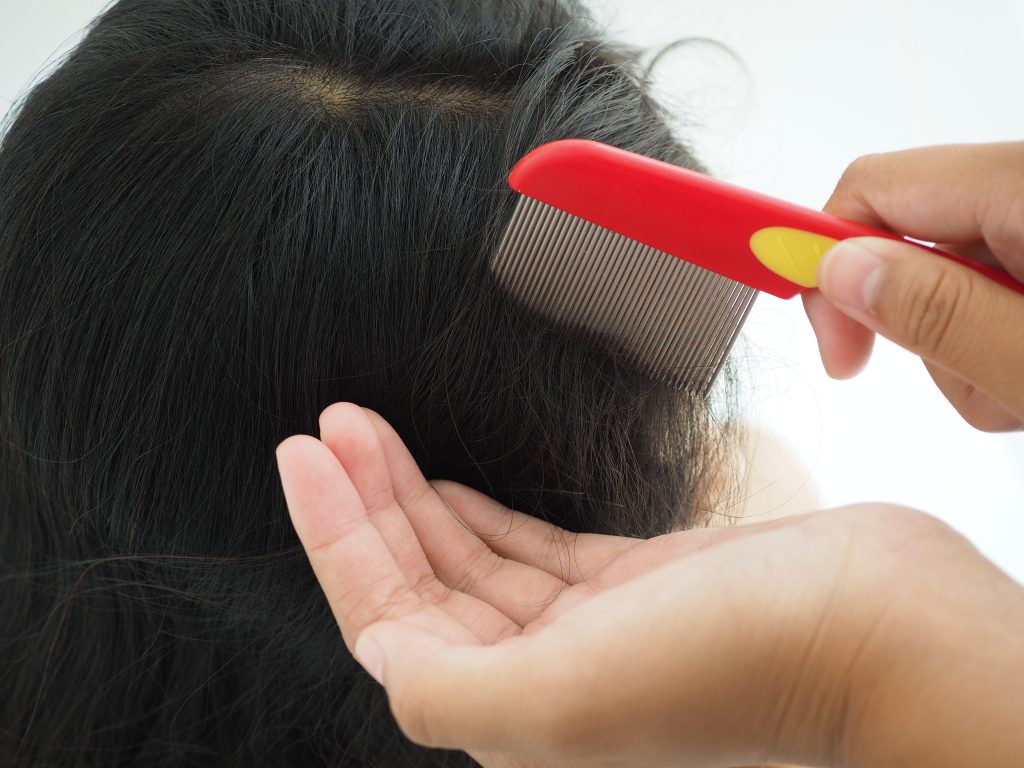
The CDC reports that head lice die within two days if they fall off a person and cannot feed.
Can Lice Actually Live on Pillows and Bedding?
Head lice are obligate parasites, meaning they depend entirely on human blood for survival. A louse that falls onto a pillow in a West Chester bedroom has a limited lifespan. The CDC states that head lice survive no more than two days away from the scalp. Without a blood meal they cannot survive long, which makes re-infestation from bedding unlikely.
Lice Lifters of Chester County educates families in Downingtown and Exton on this important distinction: pillows may harbor a stray louse briefly, but they are not a meaningful source of re-infestation.
Do Lice Survive on Hairbrushes and Hair Accessories?
Hairbrushes, combs, hair ties, and headbands present a slightly higher risk than bedding because they make direct contact with the scalp. However, the same survival limits apply. A louse on a brush in a Downingtown bathroom will die within two days without a blood meal. The CDC recommends soaking brushes and combs in hot water at least 130 degrees Fahrenheit for 5 to 10 minutes as a precaution. Hair ties and headbands can be placed in a sealed bag for two weeks.
What About Nits That Fall Onto Bedding?
Nits are glued to the hair shaft with a cement-like substance produced by the female louse. They rarely detach on their own. Even when a nit does end up on a pillowcase, it requires the stable warmth found close to the human scalp to develop. Room-temperature bedding does not provide that environment, so fallen nits will not hatch.
How Long Do Lice Survive on Furniture and Upholstery?
Couches, recliners, and fabric chairs present the same limited risk as pillows. A louse that leaves the scalp and lands on a couch cushion in a Malvern living room will begin to deteriorate within hours.
The practical takeaway is straightforward: vacuum upholstered furniture once after discovering an infestation and avoid direct head-to-furniture contact for 48 hours. The CDC explicitly states that fumigant sprays and pesticide treatments for furniture are unnecessary and may introduce harmful chemicals into the home environment. Families in Phoenixville and Coatesville can skip the deep-clean frenzy and focus on the only surface that truly matters: the human scalp. For a broader look at treatment approaches, read our article on lice removal products compared.
Families in West Chester and Malvern often ask about car seats and headrests, which follow the same pattern. A louse that transfers to a car headrest during a school pickup run in Exton is unlikely to survive long enough to transfer to the next person who sits there. A quick vacuuming of car seat headrests and a 48-hour avoidance of shared head-contact surfaces is more than sufficient.
Are Shared Surfaces in Schools a Risk?
Shared surfaces like classroom rugs, reading nooks, and bus seats are frequently cited as lice transmission vectors, but the evidence does not support this concern. Head-to-head contact during play, selfies, and sleepovers remains the dominant route. Learn more in our guide on preventing lice after exposure.
Can Lice Survive on Clothing and Hats?
Clothing that has been in close contact with an infested head, such as scarves, hoodies, and hats, can harbor a louse temporarily. The risk from a jacket hanging on a shared hook at school is minimal compared to two children pressing their heads together on a playground in Exton.
To address clothing safely, wash recently worn items in hot water at 130 degrees Fahrenheit or above, or tumble dry on high heat. The CDC confirms these temperatures kill both lice and nits. Items that cannot be washed, like winter coats or costume hats, can be sealed in a plastic bag for two weeks.
What Cleaning Steps Are Actually Necessary After a Lice Infestation?
The evidence-based cleaning checklist is shorter than most families expect. Machine-wash bed linens, pillowcases, and recently worn clothing in hot water. Dry on high heat. Vacuum carpeted floors and upholstered furniture in areas where the infested person rested their head. Soak hair accessories, combs, and brushes in hot water above 130 degrees for 10 minutes. Seal non-washable items in bags for two weeks. That is the complete list.
Laundry Tips That Save Time Without Sacrificing Safety
Many parents in Phoenixville and Coatesville feel compelled to wash every piece of fabric in the house after discovering lice. The evidence does not support this level of effort. Only items that had direct contact with the infested person’s head in the prior 48 hours need laundering. That typically means one set of bed linens, the pillowcase, and two to three recently worn tops or hoodies. The CDC specifies hot water at 130 degrees Fahrenheit and a high-heat dryer cycle as the standard. Items that cannot be machine-washed, such as decorative pillows or winter hats, simply need to be sealed in a plastic bag for two weeks. This targeted approach saves families unnecessary laundry compared to the whole-house wash that many online guides recommend.
What you do not need to do is equally important. Do not use lice sprays or foggers on furniture. Do not steam-clean carpets for lice reasons alone. Do not discard pillows, mattresses, or stuffed animals.
How Lice Lifters of Chester County Helps Families Prioritize
At our clinic in Chester County, we walk every family from West Chester to Coatesville through a simple post-treatment home protocol that takes less than one hour. Our technicians explain which items to wash, what to vacuum, and what to ignore entirely. This evidence-based approach prevents the exhausting multi-day cleaning marathons that drain families emotionally and financially without reducing lice recurrence. The focus stays on thorough scalp treatment, which is where it belongs.
Why Does the Myth of Household Lice Contamination Persist?
Several factors fuel the misconception. OTC lice product packaging often includes instructions to spray furniture and bag household items, which implies a level of environmental risk that is larger than it really is. Social media amplifies anecdotal stories of re-infestation, which are often caused by missed lice on a family member rather than contaminated pillows.
Understanding the biology of head lice reduces unnecessary stress and expense. Lice have evolved over thousands of years to live exclusively on the human scalp. Their claws are shaped specifically to grip human hair, not fabric fibers. Their thermal needs match scalp temperature, not room temperature. Once families in Downingtown and Malvern internalize this science, they can treat the problem efficiently and move on. For more myth-busting, visit our post on lice myths parents should stop believing.
Frequently Asked Questions
Can lice live on pillows?
Lice can survive on pillows for only about two days without a blood meal.
Do lice survive on furniture?
Lice on furniture cannot feed and die within two days. A single vacuuming of upholstered surfaces is sufficient.
Can you get lice from clothing?
Shared clothing is a less common route of lice transmission than head-to-head contact. Washing worn items in hot water at 130 degrees Fahrenheit or sealing them in a bag for two weeks addresses the concern.
Do you need to spray furniture for lice?
No. The CDC explicitly states that fumigant sprays and pesticide treatments for furniture are unnecessary and may introduce harmful chemicals into the home.
How long can nits survive off the scalp?
Nits require the stable warmth found near the human scalp to develop. The CDC says nits cannot hatch and usually die within a week if they are not kept at the same temperature as those close to the scalp.
Can lice spread through car seats?
Spread through objects like car seats is less common than head-to-head contact, according to the CDC. A quick vacuum of headrests is sufficient.
What cleaning is actually needed after lice?
Wash bed linens and recent clothing in hot water, vacuum furniture where heads rested, soak brushes in hot water for 10 minutes, and bag non-washable items for two weeks. No deep cleaning or fumigation is needed.