No. A short haircut does not prevent head lice, and no haircut makes a child lice-proof. Head lice spread mainly by direct contact with the hair of a person who already has them, and the CDC’s head lice guidance says getting head lice is not related to cleanliness of you or your environment. Hair length changes how big the comb-out job is. It does not change whether a louse can crawl from one head to another during a hug, a huddle or a nap.
Head Lice in Short Hair: Where They Live and What They Hold Onto
Yes, head lice can live in short hair, and a buzz cut is no exception. The CDC describes head lice as parasitic insects that usually live on your scalp and feed on human blood, so the scalp is the address and the hair is the handhold. An adult louse is roughly 2 to 3 mm long, about the size of a sesame seed, and the CDC says it can live on a person’s head for about 30 days. An adult female can lay about six eggs each day during that stretch.
Here is where each stage sits, using the measures the CDC and the AAP give parents:
| Stage | Size | Where it sits |
|---|---|---|
| Adult louse | 2 to 3 mm, about the size of a sesame seed | On the scalp, and also on the eyebrows and eyelashes |
| Nymph (young louse) | About the size of a pinhead, 1.5 mm | On the scalp; the CDC says it takes about seven days to mature into an adult louse |
| Nit (egg) | 0.8 mm long and 0.3 mm wide, about the size of a knot in thread, yellow to white | Attached firmly to the hair within a quarter inch of the base of the shaft |
That last column is the one that decides the haircut question. Lice lay and attach their eggs to hair close to the scalp, and the CDC says nits attached more than a quarter inch from the base of the hair shaft are almost always hatched or dead. The AAP puts the live zone at 4 to 6 mm from the scalp and says eggs do not survive farther out than that. The first quarter inch of hair is where an active case lives, and that is the exact stretch a short cut leaves behind. Our post on what a quarter inch of hair tells you about active lice covers that measure in more detail.
None of that depends on who the child is. The AAP says the lice can attach to the hair of anyone’s head, and that nymphs become adults about 9 to 12 days after hatching. The AAP also says the cycle can repeat every three weeks if head lice are left untreated. A haircut does not interrupt that cycle at any point in it.
What a Haircut Does to an Active Case of Lice
It takes off hair and leaves the lice on the scalp. Cutting does not kill a live louse, and the eggs are fixed to the hair closest to the skin. The AAP says nits attach with a sticky substance that holds them firmly in place, and that this is how you tell a nit from dandruff, dirt or a hair spray droplet: the particles brush off, the nit does not. Trimming the ends moves none of that.
Treatment is a different matter. The AAP says the most effective way to treat head lice is with head lice medicine, that the medicine should be used only when it is certain the child has living head lice, and that you should check with your child’s doctor before beginning any head lice treatment. An adult applies it; the AAP says never to let children apply the medicine, and never to leave a child alone with medicine in their hair. The CDC’s treatment guidance adds that both over-the-counter and prescription medications treat head lice infestations, and that the medicine should be used as directed on the box or label.
Whether a second round is needed depends on the product, not the haircut. The CDC says some medicines kill lice and eggs, so retreatment is usually not required for those, while others kill lice but not eggs and call for treating again about a week after the first treatment, 7 to 9 days depending on the drug. It also says to treat again only if live, crawling lice are seen several days after treatment, and to talk to a healthcare provider if you think re-treatment is necessary.
Combing has a real role alongside the medicine. The AAP says the comb-out method can help check for nits and head lice, and that using it every 2 to 3 days for 2 to 3 weeks after each treatment may help remove the nits and eggs; it also says the comb-out method usually does not work on its own to get rid of head lice. That plan does not depend on hair length. If the worry is long or locked hair, our post on lice in locs covers it.
How Short Is Short Enough? The Prevention Advice Is About Contact
For the shaving question, the CDC and the AAP both point somewhere other than hair length: at contact.
The CDC’s prevention list reads like this, and hair length is not in it:
- Avoid head-to-head, or hair-to-hair, contact during play and other activities at home, school and elsewhere, including sports activities, the playground, slumber parties and camp.
- Do not share clothing such as hats, scarves, coats, sports uniforms, hair ribbons or barrettes.
- Do not share combs, brushes or towels.
- Do not lie on beds, couches, pillows, carpets or stuffed animals that have recently been in contact with a person who has head lice.
Every one of those steps is about how a louse travels. The CDC says head lice move by crawling and cannot hop or fly, and that the most common way to get head lice is head-to-head contact with a person who already has them. A shave does not change the contact, and the hair comes back. The CDC also notes that lice will die within two days if they fall off a person and cannot feed.
Two more CDC points help take the urgency out of the clippers. Head lice do not transmit any disease and are not considered a health hazard, and spending much time and money on housecleaning activities is not necessary to avoid reinfestation. A case is a nuisance that needs a plan, not an emergency that needs a drastic gesture. If treatments you have already tried have not gotten rid of the lice, the AAP’s instruction is to ask your child’s doctor, and that question is a better use of the afternoon than a trip to the barber.
One Thing Short Hair Does Change: The Size of the Job
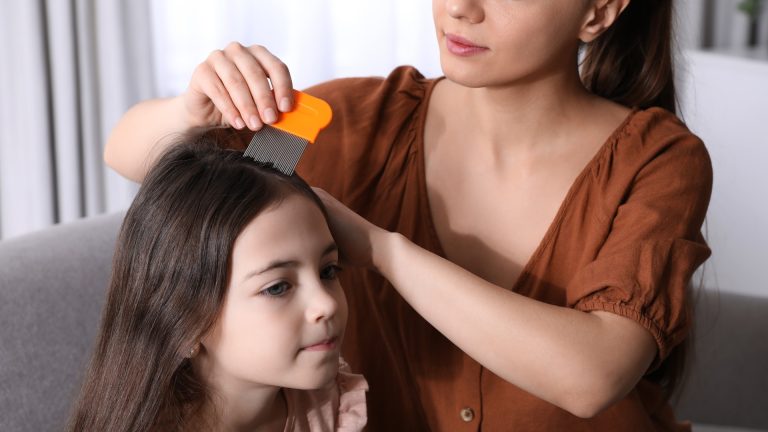
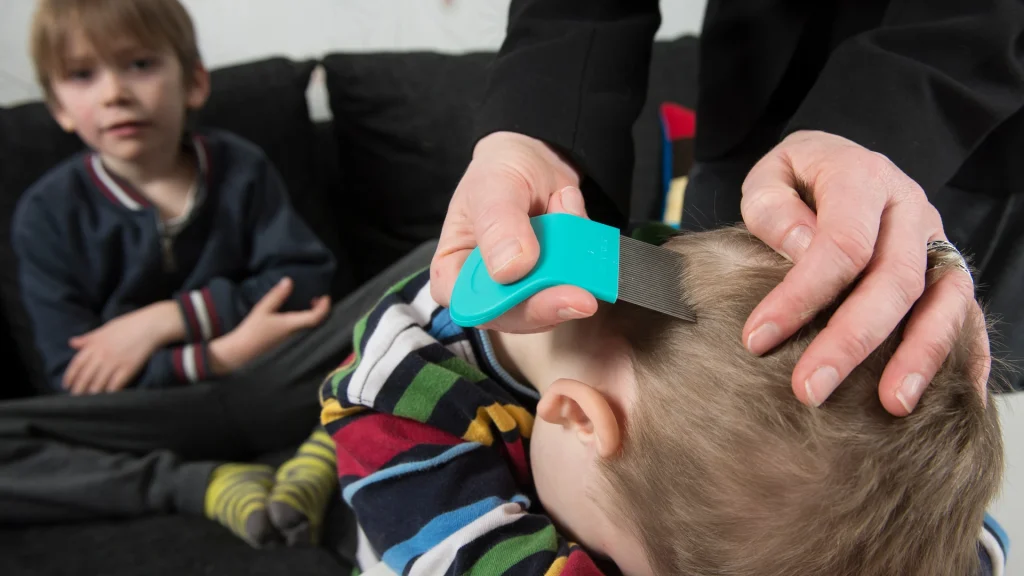
Short hair can shorten the work, and that is the real, limited value in it. The CDC’s treatment guidance does mention hair length: it notes that shoulder-length hair or longer might need a second bottle of medicine. The combing arithmetic runs the same way. The AAP’s comb-out method asks you to wet the hair, work through it with a fine-tooth comb in small sections, wipe the comb on a wet paper towel after each pass, examine the scalp, comb and towel, and repeat until all of the hair has been combed. Less hair means fewer sections to get through, and a family that can finish the session is a family that finishes the plan.
Checking is the same job at any length. The AAP says to seat the child in a brightly lit room, part the hair, and look for crawling lice and nits a section at a time, and that the easiest place to find them is at the hairline at the back of the neck or behind the ears. The CDC puts the hot spots in the same two places: nits show up on hair behind the ears and near the back of the neck. A fine-toothed louse comb helps, and so can a magnifying lens; head lice and nits can be visible with the naked eye, but adult and nymph lice are very small, move quickly and avoid light.
What a shorter cut does not do is make the nits obvious. The AAP says some nits blend in with a person’s hair color, which makes them hard to see and easy to confuse with dandruff or hair spray droplets; our post on nits in blonde hair covers the same problem. The CDC says finding a live nymph or adult louse on the scalp or hair is the best way to diagnose an infestation, and that is as true of a crew cut as of a ponytail. If the social side is what is really driving the haircut conversation, the AAP offers a gentler lever: removing nits may help decrease embarrassment for a child or teen.
When Lice Keep Coming Back, a Haircut Is Not the Missing Step
On a second or third round, look at the household before the hair. The CDC says to check all household members and other close contacts for head lice, and to treat all infested people, plus anyone they share a bed with, at the same time. The AAP says the same thing: all household members and close contacts should be checked and treated if necessary. One child’s haircut does nothing about an untreated head in the next room.
The CDC also lists the reasons a head lice treatment can fail: misdiagnosis, recent application of a combination shampoo and conditioner, or conditioner, to the hair, not following the treatment instructions, head lice resisting the medication, and reinfestation after successful treatment. Hair length is not on that list. Because the CDC says misdiagnosis of head lice infestation is common, the first thing worth settling is whether what is in the hair is lice or a particle that was never alive. Our post on fleas or lice in a child’s hair covers one mix-up.
Two CDC notes keep families from chasing the wrong finish line. Nits may stay in hair after treatment, but successful treatment will kill crawling lice, so leftover specks are not proof that the medicine failed. And a second treatment is recommended if live lice are still present 7 to 9 days after the first. If you have been around that loop more than once, start with the reasons head lice will not go away rather than the clippers, and book an appointment for everyone in the house on the same day.
Frequently Asked Questions
Can boys with short hair get lice?
Yes. The CDC reports that some studies suggest girls get head lice more often than boys, and ties that pattern to more frequent head-to-head contact. A boy with a fade or a crew cut can pick up lice the way any other child can, and the AAP says anyone can get head lice. A short cut does not rule it out.
Can lice live in buzzed hair?
Yes. A buzz cut removes length, not the scalp, and the scalp is where the CDC says head lice live and feed. The eggs sit in the stretch of hair closest to the skin, within a quarter inch of the base of the shaft by the CDC’s measure. The check and the treatment plan do not change.
Do lice like short hair?
Lice are after blood, and what they need from hair is something to hold. The CDC says lice may have claws better adapted to some hair shapes and widths than others, and the AAP says they can attach to the hair of anyone’s head. Both describe spread as contact between heads, not hair style.
Can you get nits with short hair?
Yes. The AAP says lice lay and attach their eggs to hair close to the scalp, and that nits attach with a sticky substance that holds them firmly in place. It also says eggs hatch in 7 to 12 days depending on the surrounding temperature, and do not survive if they are farther than 4 to 6 mm from the scalp. After they hatch, the empty nits stay on the hair shaft and can linger after the lice are gone.
Do you have to cut your hair if you have lice?
No. The AAP asks parents to check with the child’s doctor before beginning any head lice treatment and to follow the directions on the package exactly as written. If taking a few inches off the ends would make a long comb-out session easier to finish, that is a practical choice about your evening, not a treatment step.
Can people with short hair get lice, including adults?
Yes. The CDC says that in the United States, infestation with head lice is most common among preschool- and elementary school-age children and their household members and caretakers. Caretakers have whatever haircut they have. That is why a check that stops at the child who first itched can miss the case that restarts the whole thing.
How Lice Lifters of Chester County Can Help
If the haircut question came up because nobody is sure what is in the hair, we can help. Lice Lifters of Chester County checks the whole family, not only the child who started itching, and our professional lice treatment is non-toxic and finished in one visit. Same-day appointments are available, and the 30 Day Guarantee applies when the whole family is checked. When you are ready, book an appointment.