When head lice won’t go away, the next step is working out what broke down, not buying another box. The Centers for Disease Control and Prevention lists five reasons treatment for head lice can fail: misdiagnosis, recent application of a combination shampoo/conditioner or conditioner to hair, not following treatment instructions, head lice resisting the medication, and reinfestation after successful treatment. Each one points somewhere different. And one question comes before all five: are live, crawling lice really still there?
There are five things worth sorting out, in order: whether this is a real failure or leftover nits and itching, when to treat again, what is actually known about resistance, who else in the house needs a check, and when a professional head check makes sense.
Why Does Your Head Lice Infestation Keep Coming Back?
Lice keep coming back for one of the five reasons the CDC names, and each one calls for a different response.
- Misdiagnosis. The American Academy of Pediatrics says nits can be confused with dandruff, dirt particles or hair spray droplets, and that head lice medicine should be used only when it is certain that your child has living head lice.
- Conditioner or combination shampoo first. The CDC says do not use a combination shampoo/conditioner, or conditioner, before using lice medicine.
- Not following the instructions. The CDC says to use the lice medicine as directed on the box or label, and that if you have shoulder-length hair or longer, you might need a second bottle. The AAP says to follow the directions on the package exactly as written.
- Head lice resisting the medication. The CDC says lice have developed some resistance to 1% permethrin, but that the prevalence of resistance is unknown. The next section has the details.
- Reinfestation after successful treatment. The CDC says to treat all infested persons (household members and close contacts) and people they share a bed with at the same time.
No CDC or AAP page ranks these five, and no page says which one is to blame most of the time, so check them one at a time instead of guessing. A string of new cases can also be one case that never cleared, so read the pattern before you treat again.
Are There Really Still Live Lice, or Is It Something Else?
Only live, crawling lice mean the treatment may not have worked. The CDC says you should treat again only if there are live (crawling) lice several days after treatment. So settle what is on the head before you count rounds of medicine.
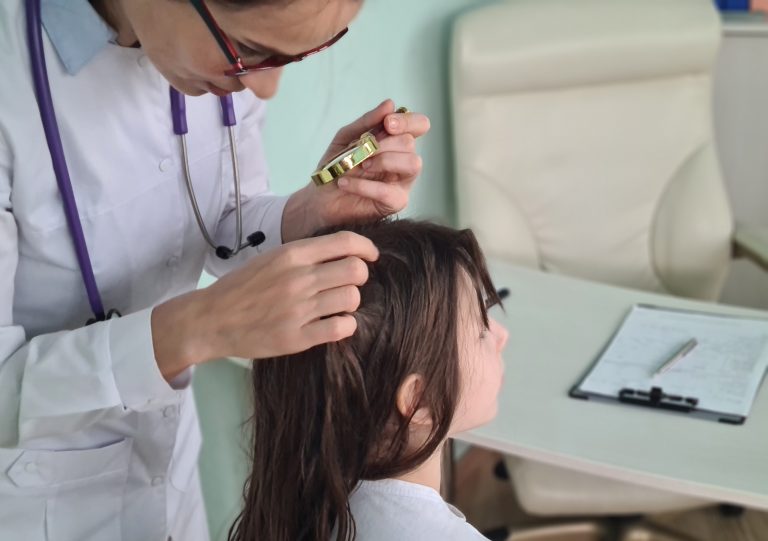
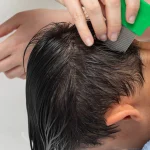
Live lice are hard to catch in the act. The AAP says they avoid light and move quickly, so our suggestion is to look in small sections, in bright light, close to the scalp.
Nits are a separate test. The AAP says nits can be confused with many other things such as dandruff, dirt particles or hair spray droplets, and that the way to tell the difference is that nits are firmly attached to hair while dandruff, dirt or other particles are not. It also says eggs are usually found within 4 to 6 mm of the scalp and do not survive if they are farther away. How to spot dead nits after treatment goes through that check.
Itching proves nothing by itself. The AAP says itching caused by head lice can last for weeks, even after the lice are gone, and that it may take up to 4 to 6 weeks after lice get on the scalp before the scalp becomes sensitive to the lice saliva and begins to itch. There is more on why a head can stay itchy after treatment.
How Can You Tell If Your Treatment Actually Failed?
Two checkpoints tell you more than a feeling does: the hours right after treatment, and the days after that.
Hours after. The CDC says that if you notice a few lice still moving slowly 8 to 12 hours after treatment, you do not need to reapply the medicine, because it takes time to kill all the lice. What is different is finding no dead lice at all, or lice as active as they were before you treated. Then the medicine may not be working, and the CDC says to talk to your healthcare provider before re-treating, and that they may suggest a different medicine. When crawling after treatment means a recheck covers that situation.
Days after. Live crawling lice several days later is the CDC’s trigger to treat again, and which day depends on the product. The CDC says some medicines kill lice and eggs, and retreatment is usually not required for these, while other medicines kill lice but are not effective at killing eggs, so retreatment is recommended about a week after the first treatment (7 to 9 days depending on the drug). The AAP gives product-specific days: retreatment between days 9 and 10 if live lice are seen for the permethrin and pyrethrin products, and a second treatment in 7 days if live lice are seen for spinosad. How the second treatment decides the result goes through that timing.
A calendar cannot do the whole job. A failed treatment and a new infestation both put live lice back on a head, and the CDC lists them as two separate reasons.
Our suggestion, not a CDC or AAP instruction: keep a short treatment log. Write down the date you treated, what you used, how long it stayed on the hair, when you rinsed it, and every day you saw a live louse. A healthcare provider can work from that log more easily than from memory.
Is Lice Resistance Why Treatment Isn’t Working?
Sometimes, but no CDC or AAP page says how often. The CDC’s clinical care guidance for head lice says lice have developed some resistance to 1% permethrin, but prevalence of resistance is unknown, and that the efficacy of pyrethrins may be reduced because of development of resistance, but the prevalence of resistance has not been well studied and is unknown. It also says incorrect use of or resistance to medicine can reduce effectiveness, which is why the label questions come first.
If crawling lice are still present after a full course of treatment and retreatment, the CDC says to consider an alternative medication. That is a decision for a healthcare provider. The CDC also says not to treat a person infested with lice more than 2 to 3 times with the same medication if it isn’t successful, not to use different head lice drugs at the same time unless instructed to do so by your healthcare provider or pharmacist, and not to use extra amounts of any lice medication unless instructed to do so by your physician and pharmacist, because the drugs used to treat lice are insecticides and can be dangerous if misused or overused.
The AAP says to check with your child’s doctor before beginning a second or third medicine, and that your child may just need to repeat the same medication, or switch to a new one. Prescription lice treatments may come up in that conversation.
Are You Making Common Lice Treatment Mistakes?
The slips that keep a treatment from working are small and ordinary, and the CDC and the American Academy of Pediatrics guidance for parents name them directly.
| Common slip | What the CDC and AAP say |
|---|---|
| Conditioner or combination shampoo before the medicine | The CDC says do not use a combination shampoo/conditioner, or conditioner, before using lice medicine. |
| Guessing at the label on time or amount | The CDC says use the lice medicine as directed on the box or label. The AAP says follow the directions on the package exactly as written. |
| Not enough product for long hair | The CDC says if you have shoulder-length hair or longer, you might need a second bottle. |
| Shampooing the hair too soon | The AAP says do not shampoo for 24 to 48 hours afterward. |
| Skipping the second treatment when the product does not kill eggs | The CDC says medicines that kill lice but are not effective at killing eggs need retreatment. The AAP says retreatment is recommended between days 9 and 10 if live lice are seen. |
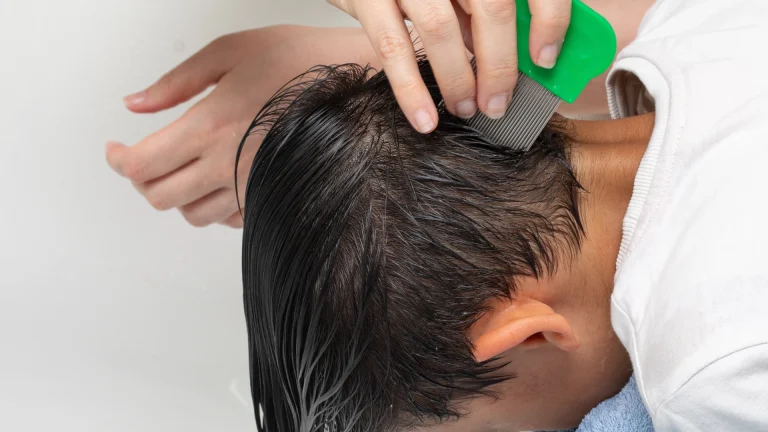
| Stopping the comb-outs | The CDC says after each treatment, check hair and remove nits and lice every 2 to 3 days for the next 2 to 3 weeks, using nit combs to remove nits and lice from the hair shaft. The AAP says the comb-out method usually doesn’t work on its own, but every 2 to 3 days for 2 to 3 weeks it may help remove the nits and eggs. |
Two more details. For rinsing, the AAP says to place your child’s head over a sink and rinse the medicine off with warm water, not hot water. And more product is not a workaround: the CDC says not to use extra amounts of any lice medication, and not to use different head lice drugs at the same time, unless a healthcare provider or pharmacist tells you to. If the combing is where things fall apart, how to use a lice comb walks through the technique.
Who Else Needs a Check Before the Lice Come Back?
Everyone in the household gets checked, and everyone who has lice gets treated at the same time. The CDC says to treat all infested persons (household members and close contacts) and people they share a bed with at the same time. The AAP says all household members and close contacts should be checked and treated for head lice if necessary.
Close contact has a specific meaning here. The AAP says the main way that head lice spread is from close, prolonged head-to-head contact, and that there is a very small chance that head lice will spread by sharing items such as combs, brushes, hats and sports helmets. So start with the heads that touch your child’s head.
No CDC or AAP page puts a number on how many people in a household turn out to have lice, so there is nothing to predict and no reason to assume. Our suggestion is to have the whole family checked in one sitting rather than one person at a time. Whether siblings should be checked and treating the whole family cover the practical side of that.
Do Home Remedies Like Mayonnaise or Olive Oil Help?
No. The CDC says it does not have scientific evidence that suffocating head lice with mayonnaise, olive oil, margarine, butter, or similar substances is an effective form of treatment. The AAP says not to use home remedies, such as petroleum jelly, mayonnaise, tub margarine, essential oils or olive oil, because no studies prove they work. After two rounds of medicine, another round of a kitchen remedy adds days without evidence behind it, and it still leaves the real question unanswered: are live lice there or not? What mayonnaise or olive oil does to lice has the longer answer.
What Should You Do When Lice Products Stop Working?
When you can’t get rid of lice after two careful rounds, confirm what you are dealing with and get a second opinion before a third box.
- Confirm there are live, crawling lice, not leftover nits or an itch that is taking its time to settle.
- Re-check the steps you actually used: conditioner before the medicine, time on the hair, amount of product, and whether shoulder-length or longer hair needed a second bottle.
- Talk to a healthcare provider before re-treating. The CDC says they may suggest a different medicine.
- Check everyone in the household and treat everyone who has lice at the same time, rather than one person a week.
- Or book a professional head check and let someone else do the looking.
Lice Lifters of Chester County offers head checks and professional lice treatment for Chester County families. Our in-clinic treatment is our enzyme-based solution and it is non-toxic, and there is more background on enzyme-based lice treatment. A treatment visit typically takes about an hour, and the time varies with hair thickness and how much lice are present. Our professional lice treatment page has the rest.
How Can You Prevent Lice From Coming Back After Treatment?
Preventing a repeat comes down to combing, treating together and a short list of laundry, not a deep clean of the house.
- Keep combing. The CDC says after each treatment, check hair and remove nits and lice every 2 to 3 days for the next 2 to 3 weeks, using nit combs to remove nits and lice from the hair shaft. The AAP says the comb-out method every 2 to 3 days for 2 to 3 weeks may help remove the nits and eggs.
- Treat together. The CDC says to treat all infested persons and people they share a bed with at the same time.
- Wash what was in use. The CDC says to machine wash and dry clothes, beddings, and items used by the infested person in the two days before treatment, with hot water (130 degrees Fahrenheit) and high heat drying, and that items you can’t wash or dry clean can be sealed in a plastic bag for two weeks.
- Soak the tools. The CDC says to soak combs and brushes in hot water of at least 130 degrees Fahrenheit for 5 to 10 minutes.
- Skip the heavy cleaning. The CDC says the risk of getting lice by a louse that has fallen onto a rug or carpet or furniture is very small.
- No sprays. The CDC says do not use fumigant sprays or fogs, and the AAP says do not spray pesticides in your home.
- Watch the heads. The AAP says the main way that head lice spread is from close, prolonged head-to-head contact.
Frequently Asked Questions
How many times can I use the same lice medicine?
The CDC says do not treat a person infested with lice more than 2 to 3 times with the same medication if it isn’t successful. If you are at that point, the AAP says to check with your child’s doctor before beginning a second or third medicine, and that your child may just need to repeat the same medication, or switch to a new one. That call belongs to a provider who can look at the head.
Can dirty hair or stress make lice come back?
No. The AAP says it doesn’t matter if the hair is clean or dirty. Stress is not on the list either: the five reasons the CDC gives for a failed treatment are misdiagnosis, recent application of combination shampoo/conditioner or conditioner to hair, not following treatment instructions, head lice resisting the medication, and reinfestation after successful treatment.
Is it possible to have lice for weeks without knowing?
Yes. The AAP says it may take up to 4 to 6 weeks after lice get on the scalp before the scalp becomes sensitive to the lice saliva and begins to itch. So a case can be weeks old before anyone scratches, and a quiet head is not proof of a clear head. Looking through the hair, section by section, is what settles it.
Do I need to spray my home for lice?
No. The CDC says do not use fumigant sprays or fogs, and the AAP says do not spray pesticides in your home. What the CDC does advise is laundry: machine wash and dry clothes, beddings, and items used by the infested person in the two days before treatment, with hot water (130 degrees Fahrenheit) and high heat drying, or seal items you can’t wash in a plastic bag for two weeks.
How do I know when the lice are really gone?
No CDC or AAP page gives a single all-clear day. What they do say is this: treat again only if there are live (crawling) lice several days after treatment, and after each treatment check hair and remove nits and lice every 2 to 3 days for the next 2 to 3 weeks. How to know if lice are completely gone covers what to look for at each of those checks.
Can lice become resistant to every treatment?
No CDC or AAP page says that. The CDC says lice have developed some resistance to 1% permethrin, but that the prevalence of resistance is unknown, and that the efficacy of pyrethrins may be reduced because of resistance, with prevalence not well studied and unknown. It also says both over-the-counter and prescription medications are available to effectively treat head lice, and that if crawling lice are still present after a full course of treatment and retreatment, consider an alternative medication. A healthcare provider makes that choice.
Still Fighting Lice in Chester County?
You don’t have to guess whether the lice are still alive, or whether what you are seeing is a nit that has been there for weeks. Lice Lifters of Chester County offers head checks and professional lice treatment for families in West Chester, Downingtown, Exton, Malvern, Phoenixville and Coatesville, and across Chester County. Our 30 Day Guarantee applies when the whole family is checked. If you have treated twice and you are still finding something you can’t identify, book a head check and have someone look with you.